Most hosting stress has nothing to do with cooking skill. It comes from trying to do everything on the same afternoon: shopping, chopping, cooking, cleaning, and greeting guests, all while three dishes want the oven at once. The fix is a countdown that moves as much work as possible to earlier days, when it is quiet and nothing is hot.
This plan works for a holiday dinner, a milestone birthday, or any meal for six or more. Scale the timing up or down to match your menu.
One Week Out: Decide Before You Shop
Start with the headcount and any dietary needs. Ask guests about allergies and restrictions now, not the morning of. Then build the menu around a simple rule: only one or two dishes should need the oven, and only one should need last-minute attention.
- Pick one showpiece main and make the sides do different jobs: one roasted, one stovetop, one served cold or at room temperature.
- Choose at least two dishes that taste as good or better when made ahead, such as casseroles, soups, cranberry-style sauces, braises, and most desserts.
- Write a single page with every dish, its cooking method, its oven temperature, and its timing. Conflicts jump out immediately.
Check the equipment too. Count serving bowls, platters, serving spoons, and chairs. Borrowing a roasting pan or a second folding table is easy a week ahead and hard an hour before dinner.
Five Days Out: Shop in Two Trips
Turn the dish list into a grocery list sorted by store section, and split it in two. Trip one covers everything shelf-stable and frozen: canned goods, broth, flour, sugar, spices, drinks, foil, and disposable containers. Trip two, two days before, covers produce, dairy, bread, and anything fresh.
If a main needs to be ordered or thawed, do it now. A large frozen roast or bird can take several days to thaw safely in the refrigerator, so give it the full time. Our guide to thawing food safely covers the timing.
Clear fridge space on the same day. A packed refrigerator is the quiet bottleneck of big meals, and a few minutes spent using up or consolidating leftovers pays off later.
Two Days Out: Do the Make-Ahead Cooking
This is where the plan pays for itself. Anything that reheats well gets cooked and chilled now:
- Soups, gravies, and sauces, which often taste better after a night in the fridge
- Casseroles, assembled and ready to bake but not yet baked
- Desserts that need to set, such as pies, cheesecakes, and puddings
- Salad dressings and marinades. Our salad dressing formula makes a jar you can store for days
Label each container with the dish and its reheating instructions. Tape a note to the lid if you must: "350 degrees, 30 minutes, covered" saves you from relying on memory.
The Day Before: Prep, Set Up, Clean
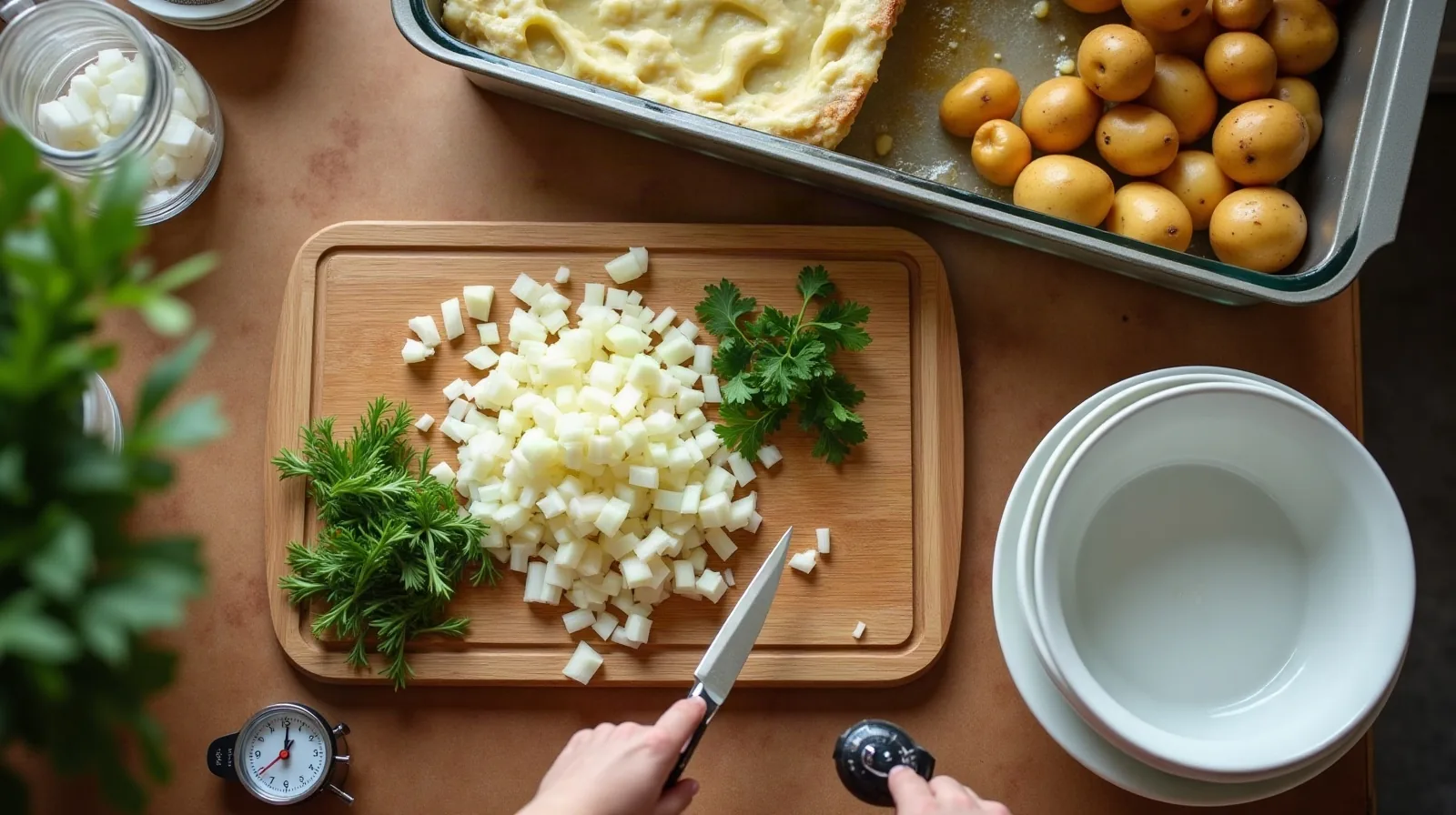
Chop every vegetable, measure dry ingredients into bowls, and wash and dry salad greens, then store each in its own container. Set the table, lay out serving dishes with a sticky note on each saying what goes in it, and clear a landing spot for coats and bags.
Do the cleaning that people will actually notice: the bathroom, the entry, the trash, and the dishwasher emptied and ready. Our fifteen-minute home reset is a good fit for the last pass.
Finish by writing a day-of schedule working backward from the time you plan to sit down. List oven times, resting times, and when each side goes on the stove. Keep it on the fridge.
The Day Of: Work Backward From Serving Time
With the prep done, the day is mostly timing. A few habits keep it calm:
- Start with the longest-cooking item. Put the main in first and let the schedule flow from there.
- Let big roasts rest. Resting for 20 to 30 minutes after cooking frees the oven for sides and makes the meat juicier. Cover it loosely with foil.
- Use every surface for heat. A slow cooker or a pot on a low burner can hold mashed potatoes, soup, or gravy warm without tying up the oven.
- Serve some dishes at room temperature. Salads, roasted vegetables, and breads do not need to be hot.
- Use a timer for every item. A phone timer with a label per dish removes the need to track things in your head.
Check food temperatures with a thermometer rather than guessing, and keep hot food hot and cold food cold. The danger zone guide explains the numbers.
Accept Help and Plan the Leftovers
When a guest asks what to bring, give them a real job: a dessert, a drink, bread, or ice. Hand someone the task of filling water glasses or taking coats. Most people like being useful.
Also decide what happens after. Set out lidded containers so guests can take plates home, and package the rest within two hours of serving. Cooled leftovers keep better and the kitchen is clean sooner.