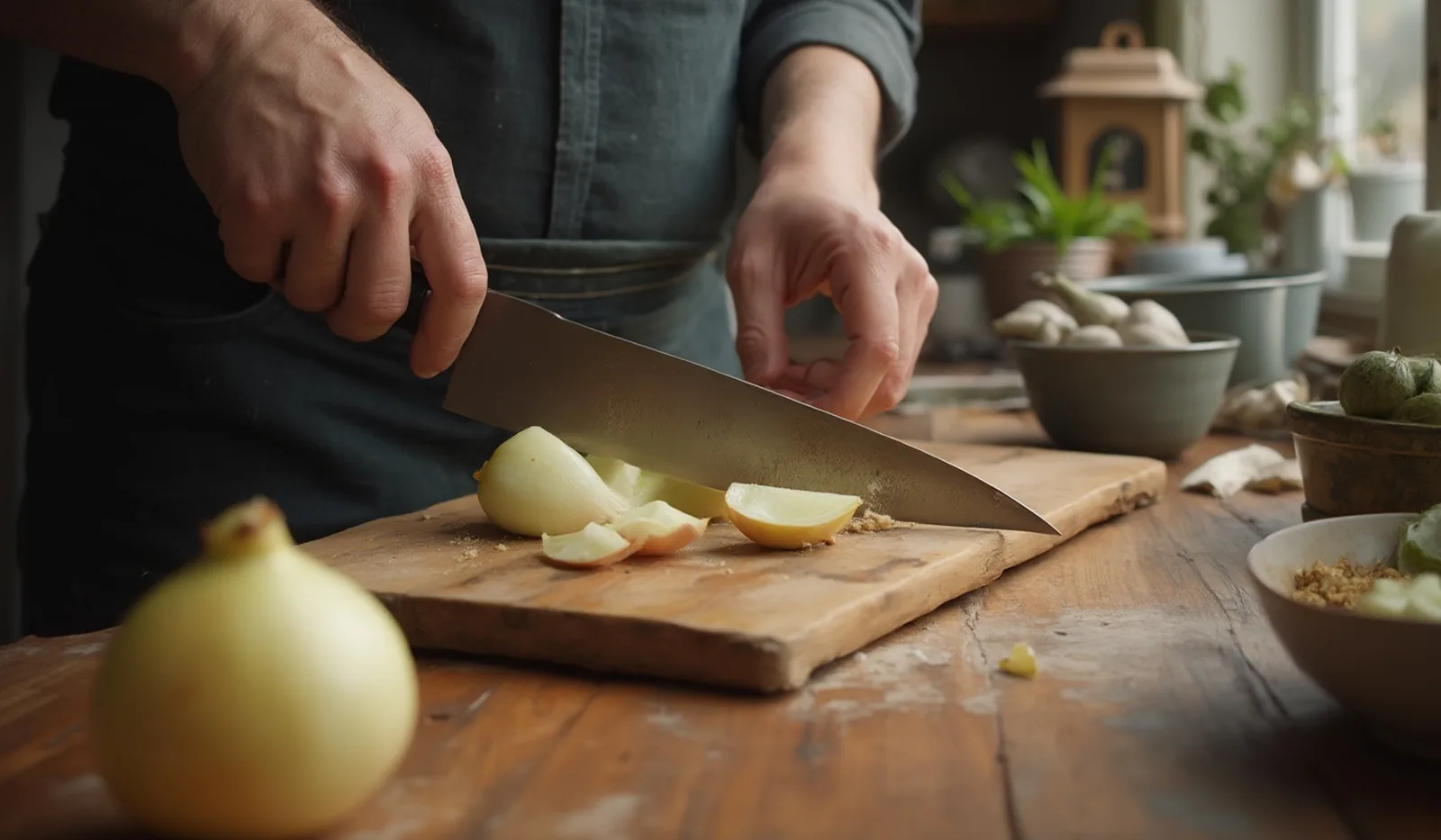
The wood-versus-plastic cutting board debate gets treated like a safety verdict, but the material matters far less than one habit: keeping raw meat off the board you use for produce and ready-to-eat food. Once that’s sorted, caring for either material properly is straightforward, and the choice between wood and plastic becomes more about preference than risk.
Wood or plastic — what actually differs
Studies on bacteria and cutting boards consistently find that wood isn’t the health risk it’s sometimes made out to be — its surface can trap bacteria below the reach of a rinse, where they tend to die off, while deep plastic knife scars can shelter bacteria right at the surface, protected from a normal wash. The real differences are more practical than bacterial.
- Wood is gentler on knife edges and tends to last for years with basic care.
- Plastic is dishwasher-safe and easier to sanitize with heat, which matters more for raw meat.
- Wood scars less visibly but still needs regular oiling to stay in good shape.
- Plastic scars more visibly and needs replacing once cuts get deep.
- Wood is heavier and more stable on the counter, while plastic is lighter and easier to store standing on edge.
- Both take on odors and stains from strong-smelling or brightly colored foods, though a wood board is usually easier to freshen with a lemon-and-salt scrub.
The cross-contamination rule
The habit that matters more than the material: designate one board for raw meat and poultry, and a separate one for produce, bread, and anything eaten raw. Color-coding helps if more than one person cooks in the kitchen — a specific board that’s always the meat board removes the guesswork entirely, even for a guest or a kid helping out who doesn’t know the household’s usual system.
- Assign boards by task, not by whichever is closest at the moment.
- Wash between tasks even on the same board if you have to reuse one — hot soapy water, every time, before it touches anything else.
- Never let raw meat juice touch a board that’s about to hold a salad or bread.
- Keep the meat board away from the produce prep area while cooking, not just cleaned between uses — splatter and drips travel further than expected on a busy counter.
This one habit does more to prevent foodborne illness at home than any material choice, sealant, or sanitizing routine layered on top of it. It costs nothing beyond owning two boards and remembering which is which.
Sanitizing each material properly
Both materials can be sanitized effectively, but the method differs.
- Plastic: the dishwasher’s heat is genuinely effective sanitizing, so run it through after raw meat whenever possible.
- Wood: never put it in the dishwasher — the heat and prolonged soaking crack and warp it. Instead, scrub with hot soapy water, then a mix of water and a little vinegar or a diluted bleach solution, rinsed well and dried standing up.
- Both: let boards air-dry standing on edge rather than flat, so no moisture sits trapped against the counter.
- A produce board that never touches raw meat can be sanitized less aggressively — hot soapy water after each use is generally enough, with the vinegar or bleach solution reserved for occasional deeper cleaning.
Keeping boards in good condition
A little maintenance keeps either board safer and more pleasant to use.
- Oil a wood board regularly with a food-safe mineral oil — a dry board cracks, and cracks are exactly where bacteria and odor take hold.
- Replace a plastic board once knife scars run deep across the surface; at that point no amount of washing fully reaches into the grooves.
- Stop a board from sliding by placing a damp kitchen towel underneath it before cutting — it grips the counter and keeps the board still.
- Keep a third board free for bread and cheese if you have the space — it avoids picking up onion or garlic smells from the produce board.