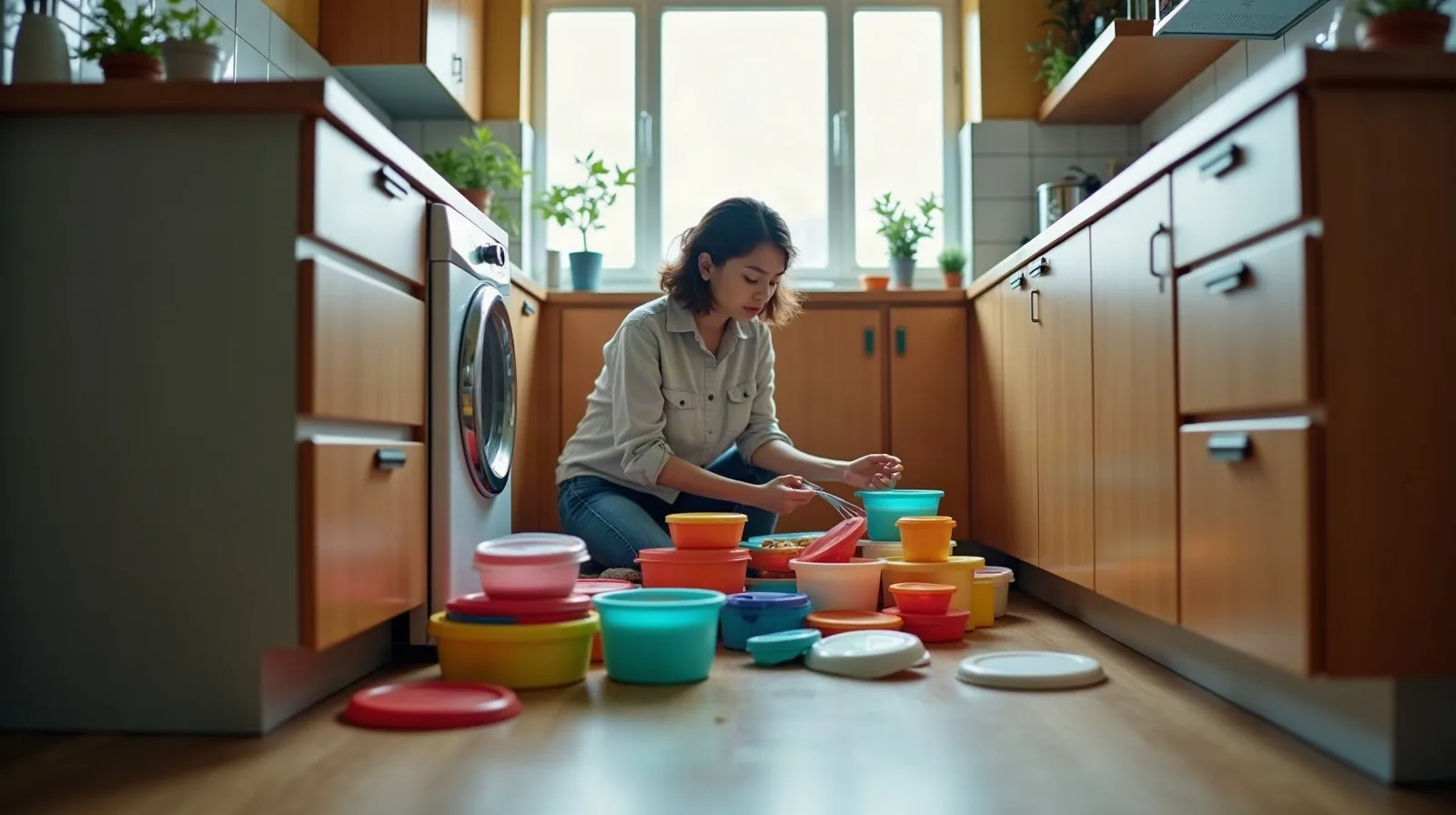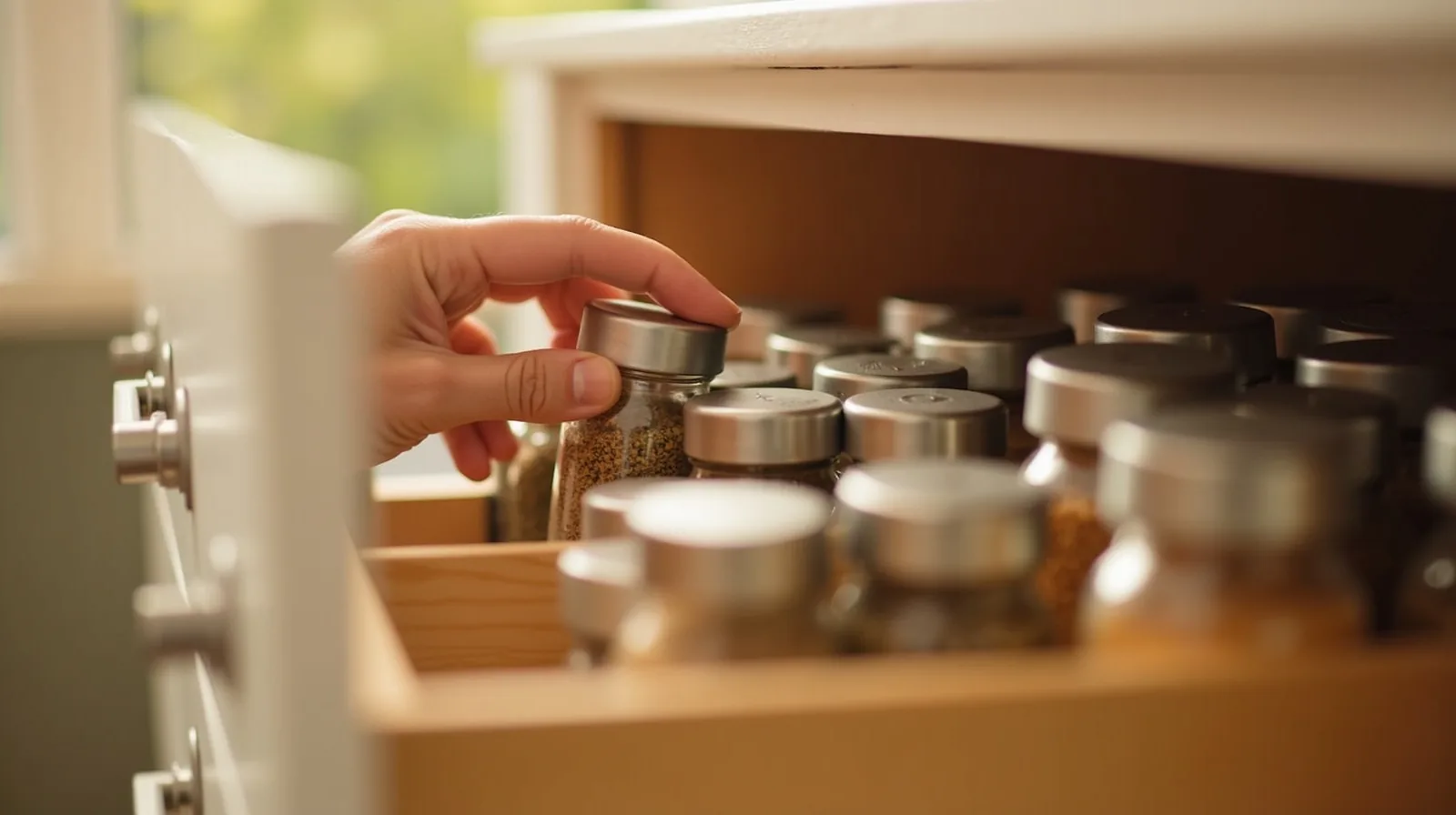
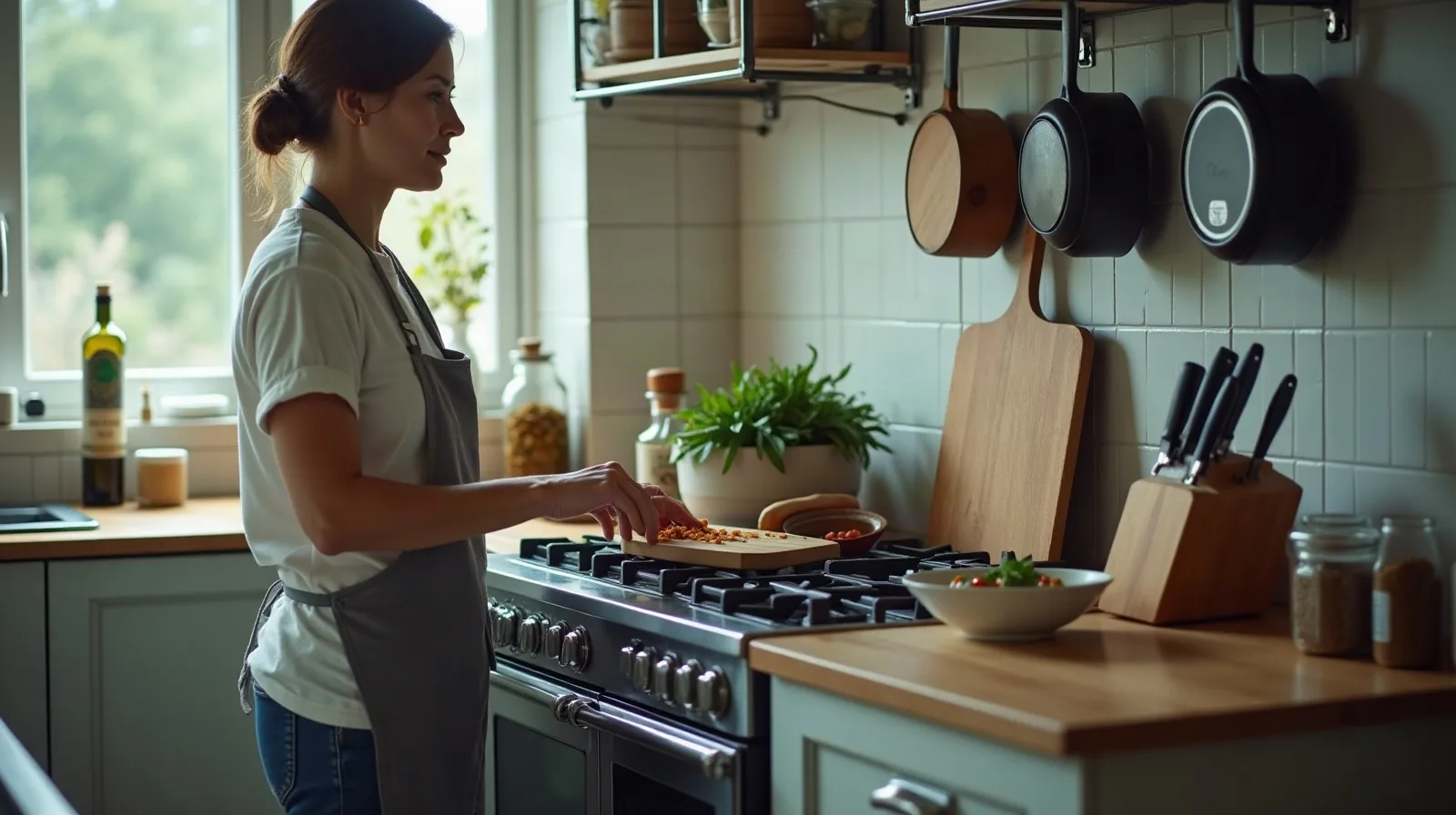
Open most home kitchens and the layout gives away nothing about how anyone actually cooks in it. The knife block sits across the room from the cutting board. The oil used in nearly every dish lives in a cabinet three steps from the stove. The colander is stored with the mixing bowls instead of near the sink, where it’s the only place it ever gets used. None of this is because the kitchen is too small or the cook too disorganized — it’s because most kitchens get organized by what got unpacked where on move-in day, not by how food actually moves through the room while it’s being made. Restaurant kitchens don’t have that problem, and it isn’t because they have more space or better equipment. It’s because every station is built around one job, and everything that job needs lives within arm’s reach of it. A home kitchen can borrow the same idea with nothing more than five stations and an honest look at what belongs in each one.
Why Storing by Category Slows You Down
Most kitchen organizing advice groups things by what they are: every pot in one cabinet, every spatula in one drawer, every spice on one shelf. That looks tidy on paper, but it ignores the sequence an actual meal follows — chop, season, cook, plate, clean — which pulls you back and forth across the room for something as simple as a weeknight stir-fry. A workflow-first kitchen groups things by when they’re needed instead of what they are. The colander that only ever gets used at the sink lives at the sink. The oil that goes into nearly everything lives at the stove, not in a pantry across the room. Once storage follows the sequence of cooking instead of a category system, the number of trips across the kitchen for an ordinary dinner drops fast — and so does the friction that makes cooking at home feel like more work than it needs to.
The Five-Station Map
Professional kitchens are built around stations — prep, sauté, grill, plating — because each one is where a specific set of tasks happens, over and over, for hours at a stretch. A home kitchen only needs five to cover the same ground: a prep station for washing, cutting, and measuring; a cook station at the stove and oven; a clean station at the sink and dishwasher; a cold storage station in the fridge and freezer; and a pantry station for shelf-stable goods. Once you can name which station a task belongs to, deciding where its tools should live stops being a guess and starts being obvious.
Setting Up the Prep Station
The prep station is wherever chopping, washing, and measuring actually happen — usually the stretch of counter nearest the sink. It needs the cutting board, the knives, the mixing bowls and measuring cups, and a compost bowl or trash bin within reach so scraps don’t have to travel. Keep the counter itself clear as working surface only: anything that lives there permanently, from the fruit bowl to the mail pile, is competing with the one job this spot exists for. If knives and boards currently live in different cabinets, that single move — putting them within the same reach — does more for how a kitchen feels to cook in than almost any other change on this list.
Setting Up the Cook Station
The cook station is the stove, the oven, and everything an active pan needs in the next thirty seconds. Cooking oil, the salt and pepper, and the handful of spices used in nearly everything belong on the counter or in a drawer right beside the range, not in a pantry down the room. Spatulas, tongs, and a wooden spoon do better standing in a crock beside the burners than buried in a drawer, and potholders earn a hook within arm’s reach instead of a drawer across the kitchen. Pot lids are worth matching to their pots and storing together nearby — the five seconds spent hunting for the right lid mid-sizzle is exactly the kind of friction a station system exists to remove.
Setting Up the Clean Station
The clean station covers the sink, the dishwasher, and everything involved in getting a dish from dirty to put away. Dish soap, a sponge, and a drying rack belong right at the sink; trash and recycling do too, since scraping a plate shouldn’t mean a walk across the room. The cabinet nearest the dishwasher is the best home for everyday dishware and glasses — unloading a rack is a chore that gets skipped when the dishes have to travel to the far side of the kitchen to reach their shelf, and a skipped unload is how the clean station backs up into the sink and takes the prep station down with it.
Cold Storage and the Pantry
The fridge works best organized by how often something gets grabbed, not by strict food category: eye-level shelves for the eggs, milk, and leftovers reached for daily, the door for condiments, lower shelves for anything opened less than weekly. The pantry follows the same logic — group staples by how they’re actually used in cooking, a baking shelf, a grains-and-pasta shelf, a canned-goods shelf, rather than alphabetizing a cabinet nobody reads that carefully anyway. One small addition pays off out of proportion to the effort: a shallow bin or a low shelf near the cook station holding a backup bottle of the oil and the two or three spices you reach for almost daily, so a normal dinner doesn’t require a trip to the pantry at all.
Making Five Stations Work in a Small Kitchen
A galley kitchen or a single wall of appliances doesn’t have room for five separate zones, and it doesn’t need them — stations can overlap. Prep and clean often share the same stretch of counter around the sink in a small kitchen, which is fine as long as the tools for each still live close to where that task happens. Going vertical recovers real square footage without adding a single cabinet: a magnetic strip or a hanging rail near the stove holds knives and utensils off the counter, and a few hooks under a shelf do the same for pot lids and potholders. A small rolling cart is the closest thing a tight kitchen has to a moveable station — stocked with active oils, spices, and a cutting board, it can sit beside the stove while cooking and tuck against a wall when it’s not needed.
The One Habit That Keeps a Station System Working
A station system falls apart the same way any organizing system does — not all at once, but one item set down in the wrong place at a time until the whole layout drifts back to chaos. The fix isn’t a weekly deep reset; it’s a two-minute pass right after cooking, while everything used is still out on the counter anyway. Wipe the prep station, return the cook station’s tools to their crock and hooks, and let the clean station do its job on whatever’s left. Done at that moment, it takes less time than deciding what to watch while the dishes air dry. Skipped even a few nights running, it turns back into the same drawer of rubber bands and takeout menus this whole system was built to fix.