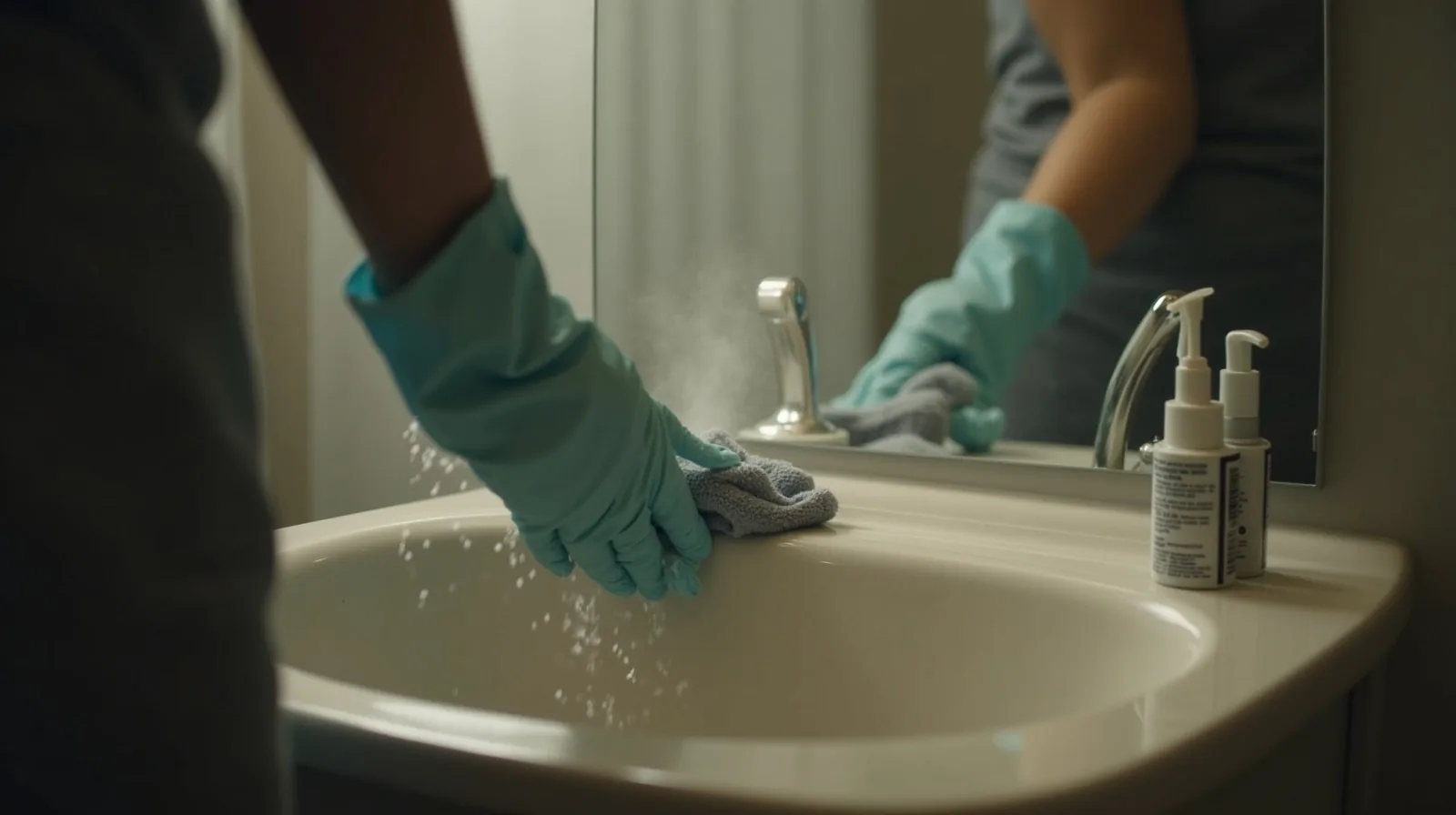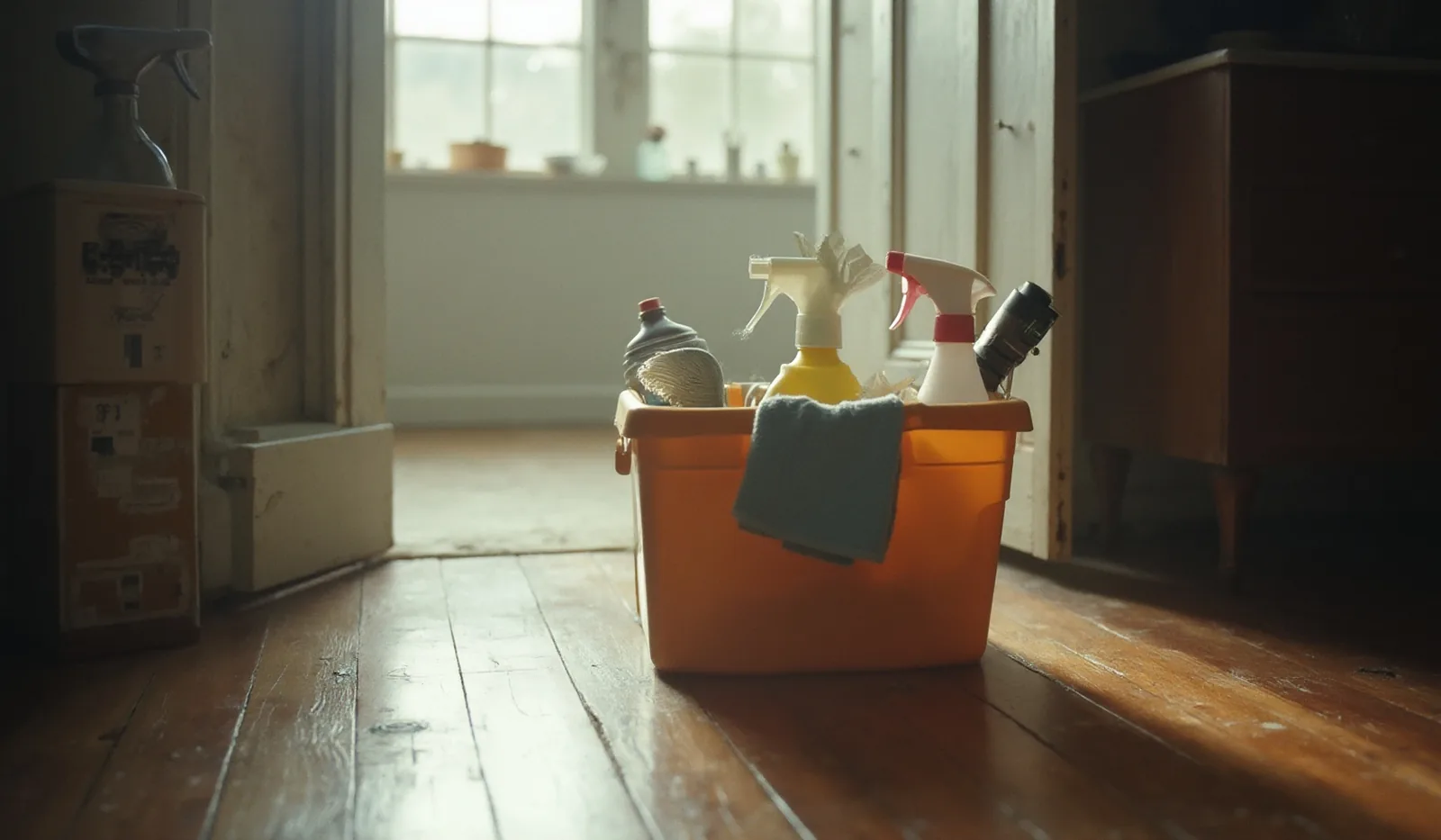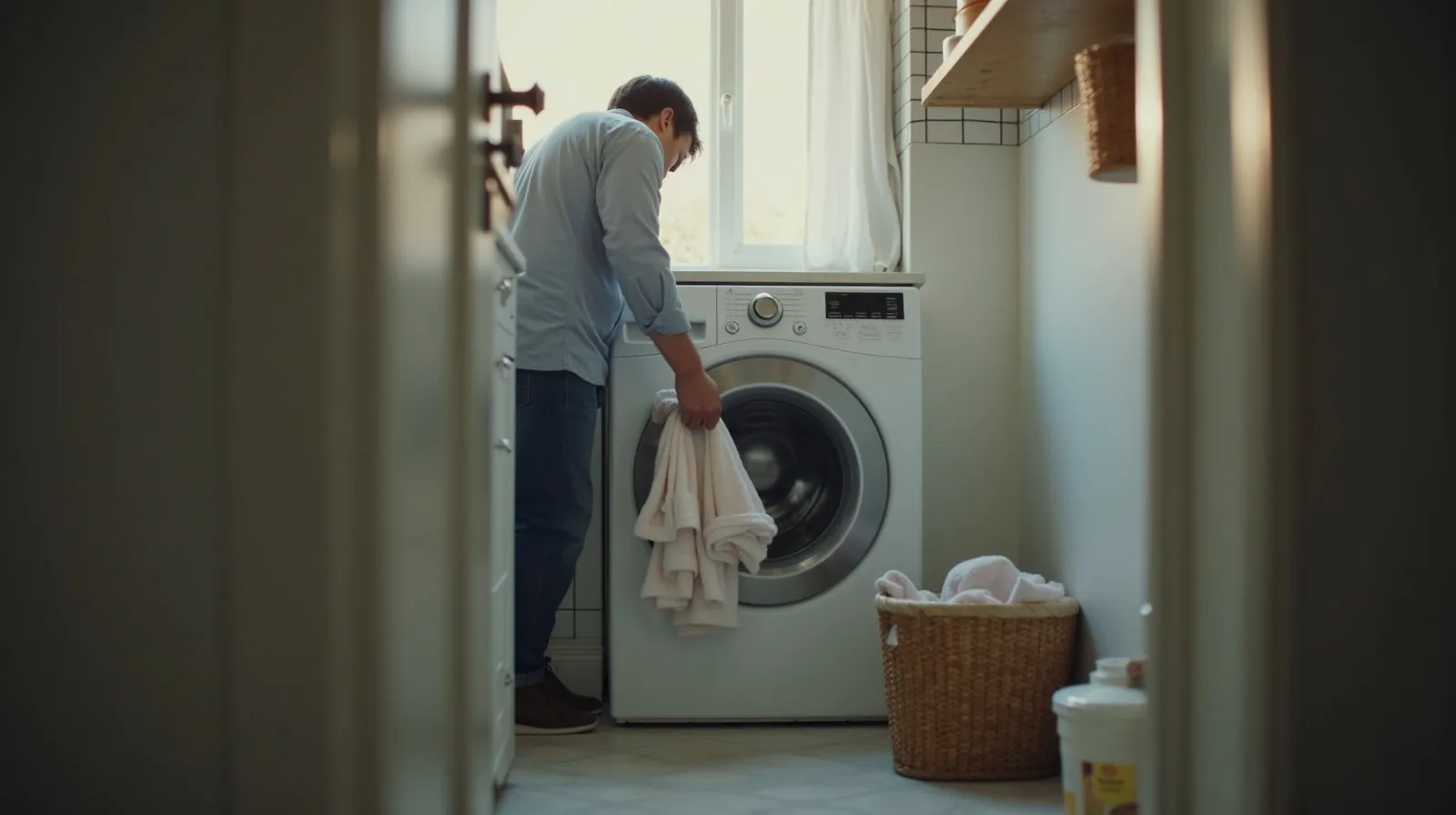
There's a difference between cleaning your home and resetting it. Cleaning is scrubbing, dusting, and disinfecting — important, but a project. A reset is just putting the room back to its calm baseline: surfaces clear, things where they belong, cushions straightened. It's what actually makes a space feel good to be in, and it takes a fraction of the time. Fifteen minutes, done right, will transform how a home feels — even if you haven't deep-cleaned in a week.
The whole system rests on two tools: a timer and a basket.
Why the timer matters
A reset expands to fill whatever time you give it. Without a clock, you start reorganizing a drawer you opened by accident and lose twenty minutes. Setting a timer for fifteen minutes turns tidying into a game with a finish line. You move faster, you make quicker decisions, and you stop when it rings — which is the point. Done beats perfect.
The one-basket rule
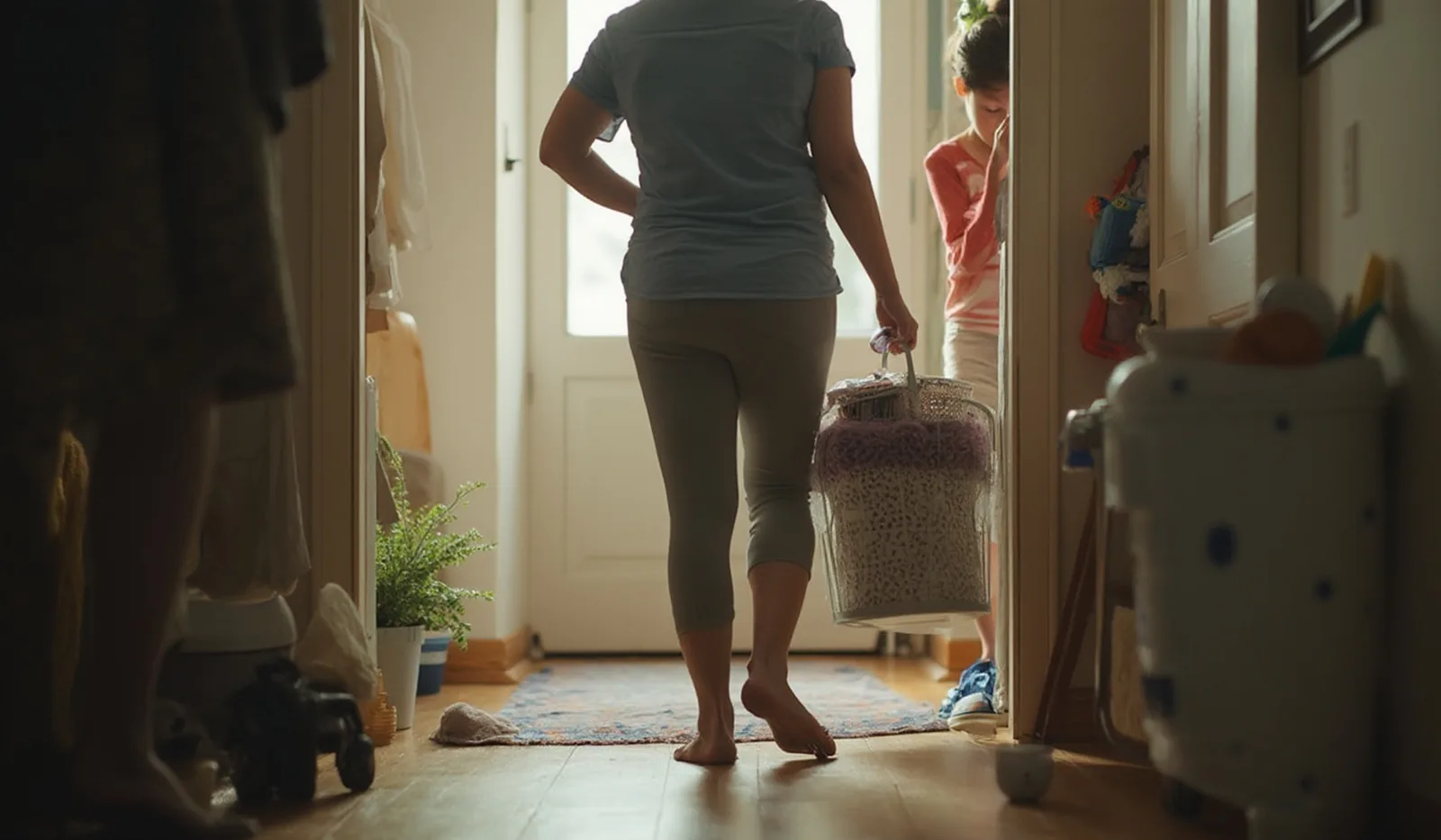
Grab a laundry basket or a bin and carry it with you. Anything that's out of place goes in the basket — you don't leave the room to put things away one at a time, because that's where resets go to die. You collect as you go, and only when you reach a room do you unload what belongs there. One lap, one basket, no backtracking.
The lap, room by room
Move in a loop through your main living spaces. In each room, hit the same three things in this order:
- Clear the flat surfaces. Counters, coffee tables, and the dreaded catch-all by the door. Flat surfaces are what your eye reads as “messy,” so clearing them delivers the biggest visual payoff per second.
- Reset the soft stuff. Fluff and square the cushions, straighten the throw blanket, smooth the bedspread. It takes ten seconds and reads as “someone cares for this room.”
- Collect the strays. Anything that lives somewhere else goes in the basket — mugs to the kitchen, toys to the bin, mail to its spot.
Give the kitchen and the main living area the most time, since that's where guests land and where clutter shows most. Bedrooms can be a ten-second door-close if you're short on time.
The finishing touches that punch above their weight
With your last two or three minutes, do the small things that signal “clean” even when a room isn't spotless: run the vacuum or a dust mop over the most visible stretch of floor, wipe the one counter people actually see, empty the fullest trash can, and turn on a lamp or open the blinds. Light and clear surfaces do more for the feel of a room than an hour of scrubbing in the corners.
Make it a rhythm, not an event
The reset works best as a habit rather than a rescue. A quick lap most evenings means the mess never compounds, and the fifteen minutes stays fifteen minutes instead of ballooning into an afternoon. If a full lap feels like too much, shrink it: five minutes, one basket, just the kitchen and living room. A small reset done often beats a big one you dread.
None of this makes your home objectively cleaner in the deep sense — the grout still needs scrubbing eventually. But calm isn't about spotless. It's about clear surfaces, straightened soft goods, and a little light, and you can have all three before the doorbell rings.