A dull knife is the most dangerous tool in the kitchen. It slips instead of biting, forces you to press harder, and turns simple prep into a fight. Yet most people either never sharpen their knives or reach for a cheap gadget that makes things worse. The good news: keeping knives sharp is genuinely easy once you understand the one distinction that trips everyone up — the difference between honing and sharpening.
Honing vs. sharpening (this is the whole thing)
These are two different jobs, and confusing them is why people ruin knives. Honing doesn't remove metal — it realigns the edge. With use, a knife's thin edge rolls slightly to one side, going “dull” even though it's still sharp; running it along a honing steel straightens it back true. This is what you do often. Sharpening actually removes a little metal to grind a fresh edge when the blade is truly worn. This is what you do occasionally. A knife that feels dull usually just needs honing; only a genuinely worn edge needs sharpening.
Hone often — it takes seconds
Get in the habit of running your knife along a honing steel every few uses, or even before each cutting session. Hold the steel upright or lay it flat, keep the blade at a consistent shallow angle, and draw the whole length of the edge along it a handful of times per side, alternating. It takes ten seconds and keeps a properly sharp knife performing like new far longer between real sharpenings. Most people who think their knife “won't stay sharp” simply never hone it.
Sharpen occasionally — the whetstone way
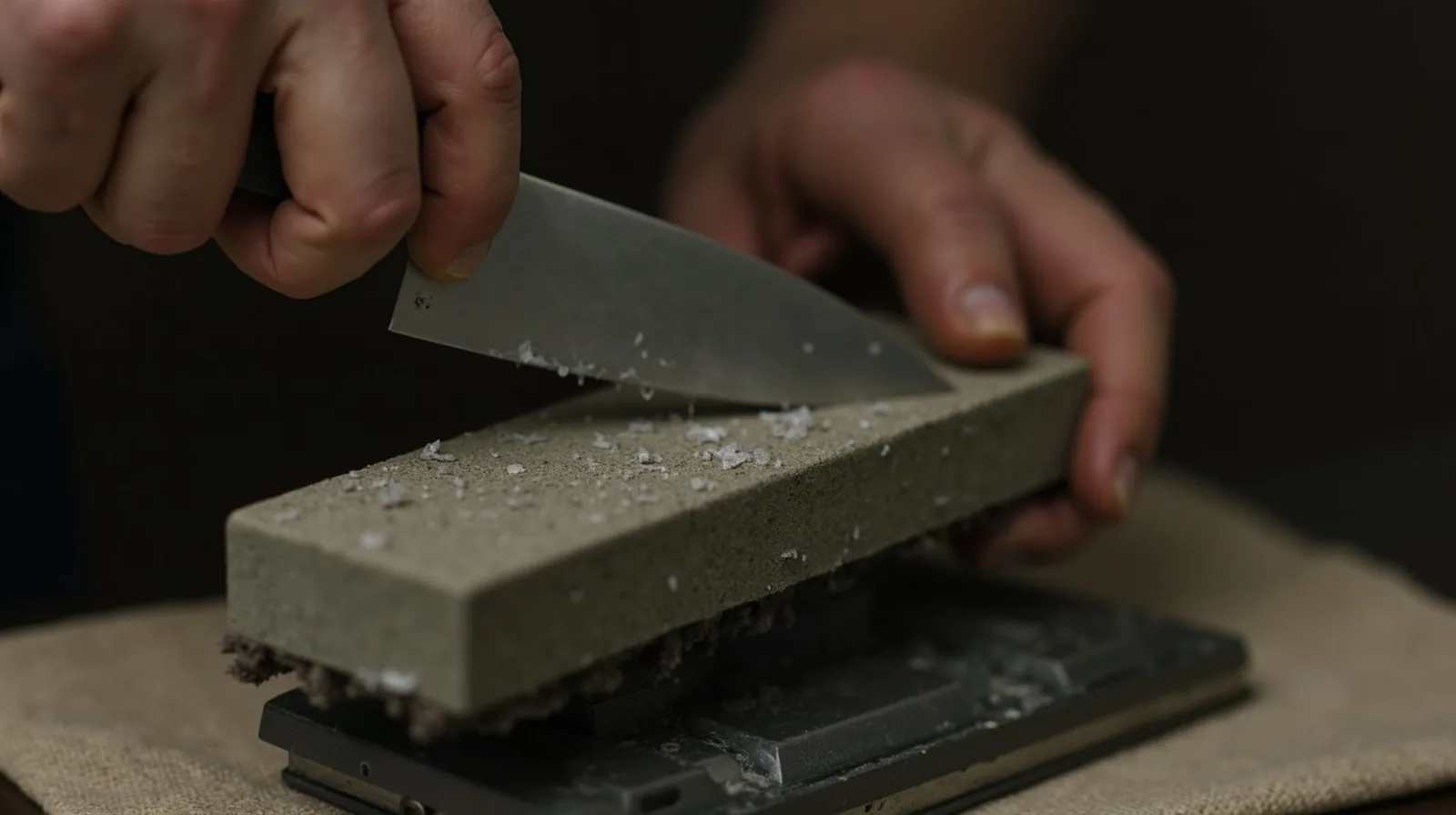
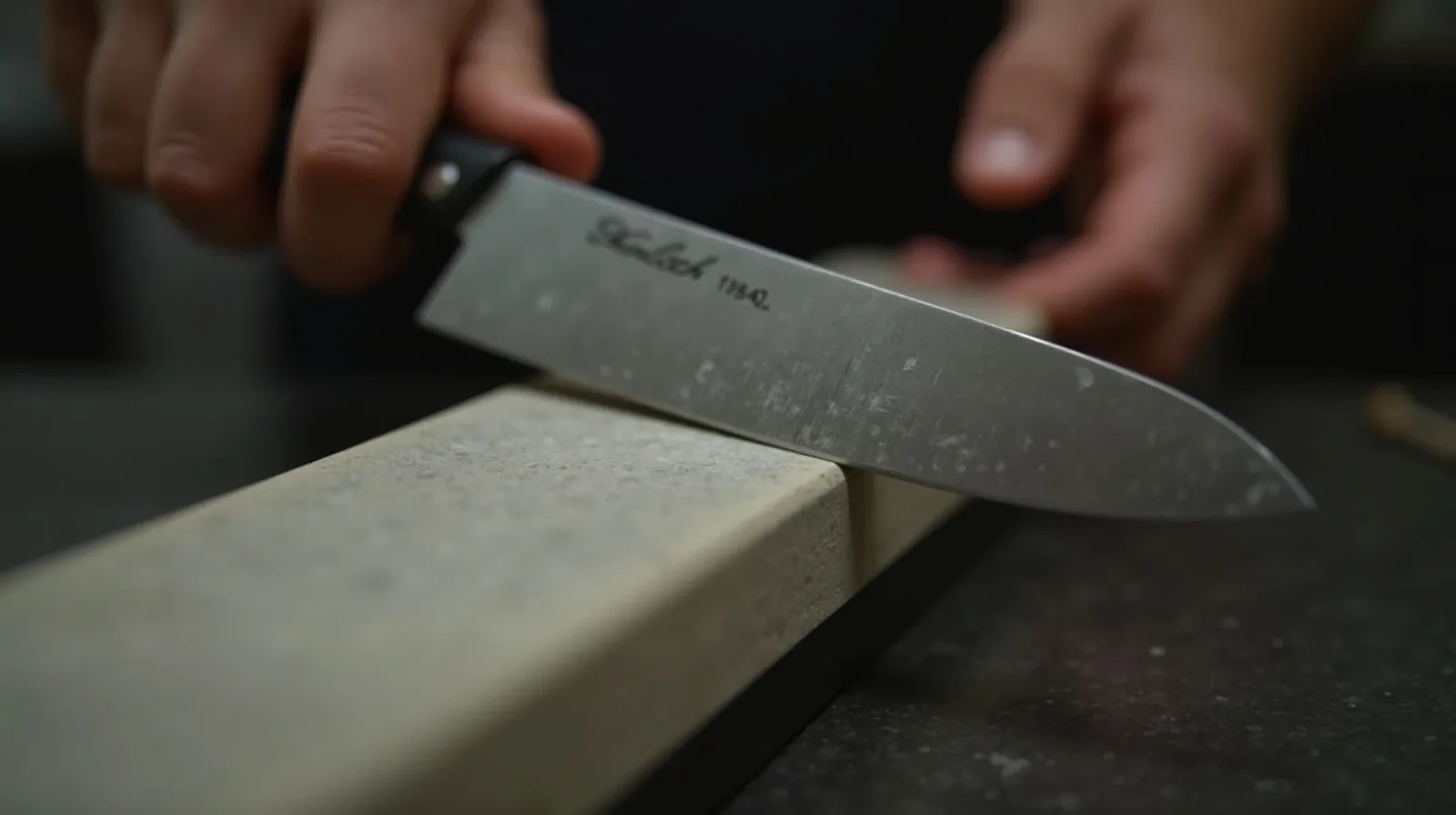
When honing no longer restores the edge, it's time to actually sharpen. The best tool for the job is a whetstone (a sharpening stone). It gives you control, removes only as much metal as needed, and works on almost any knife. The core skill is holding a consistent low angle against the stone and drawing the blade across it evenly, working both sides until a fresh edge forms, then finishing on a finer grit. It takes a little practice, but it's a genuinely satisfying skill — and a whetstone will keep your knives excellent for a lifetime. A couple of times a year is plenty for a home cook.
What to avoid (this is where knives die)
The cheap pull-through sharpeners — the ones where you drag the blade through a fixed slot — are the villains here. They use aggressive fixed abrasives that rip metal away at a set angle, chewing up your edge and grinding good blades down noticeably over time. They'll make a knife “sharp” for a day while shortening its life dramatically. For a knife you care about, skip them. If a whetstone feels intimidating, a reputable professional sharpening service a couple of times a year is a far better choice than a pull-through gadget.
Protect the edge between sharpenings
A few habits keep edges keen longer: cut on wood or plastic boards, never glass or stone, which are hard enough to blunt a blade in one use; hand-wash knives and dry them rather than letting them knock around in a dishwasher; and store them in a block, on a magnetic strip, or with blade guards rather than loose in a drawer where the edges bang together. Treat the edge gently and you'll hone far more than you sharpen.
Sharp knives make cooking faster, more pleasant, and safer. Hone often, sharpen occasionally and carefully, skip the gadgets that grind your blades away, and one good knife will serve you brilliantly for decades.