It is five o’clock, dinner is chicken, and the chicken is a solid block in the freezer. The tempting move is to set it on the counter and hope. It is also the one move food-safety guidance consistently warns against. A package sitting out for hours has an outside that warms into the temperature range where bacteria multiply quickly, while the center is still frozen.
The good news is that safe thawing isn’t complicated. There are three reliable methods, each fitting a different amount of time, and one more option that skips thawing entirely.
Why the Counter Is the Wrong Place
Food is safest below 40°F (4°C) or above 140°F (60°C); the stretch in between is the danger zone covered in our temperature guide. A frozen roast on the counter doesn’t thaw evenly. Its outer layer sits at room temperature for hours while the middle stays hard, so the surface spends a long time in that zone. Cooking afterward kills many bacteria, but it doesn’t undo every problem, and the safer approach is simply never to give them the head start.
The same goes for a bowl of warm or hot tap water. It speeds up the outside while the inside lags, which brings the same uneven result.
Method One: The Fridge (Slow, Hands-Off, Safest)
Thawing in the refrigerator is the easiest method because the food never leaves a safe temperature. The only cost is planning ahead.
- Plan on roughly a day for every 4–5 pounds. A pound of ground meat or a couple of chicken breasts is usually ready overnight; a whole turkey takes several days.
- Put it on a rimmed plate or in a pan on the bottom shelf. That catches drips so raw juices never land on produce or leftovers below.
- Leave it in its wrapping. Sealed packaging keeps the food clean and contained.
- Use the extra time. Meat thawed in the fridge can stay there for another day or two before cooking, so a change of plans costs you nothing. Ground meat and poultry are best used within a day or two; whole cuts of beef, pork, and lamb hold a little longer.
Thaw early and you can even refreeze it uncooked, though some texture is lost.
Method Two: Cold Water (Faster, Needs Attention)
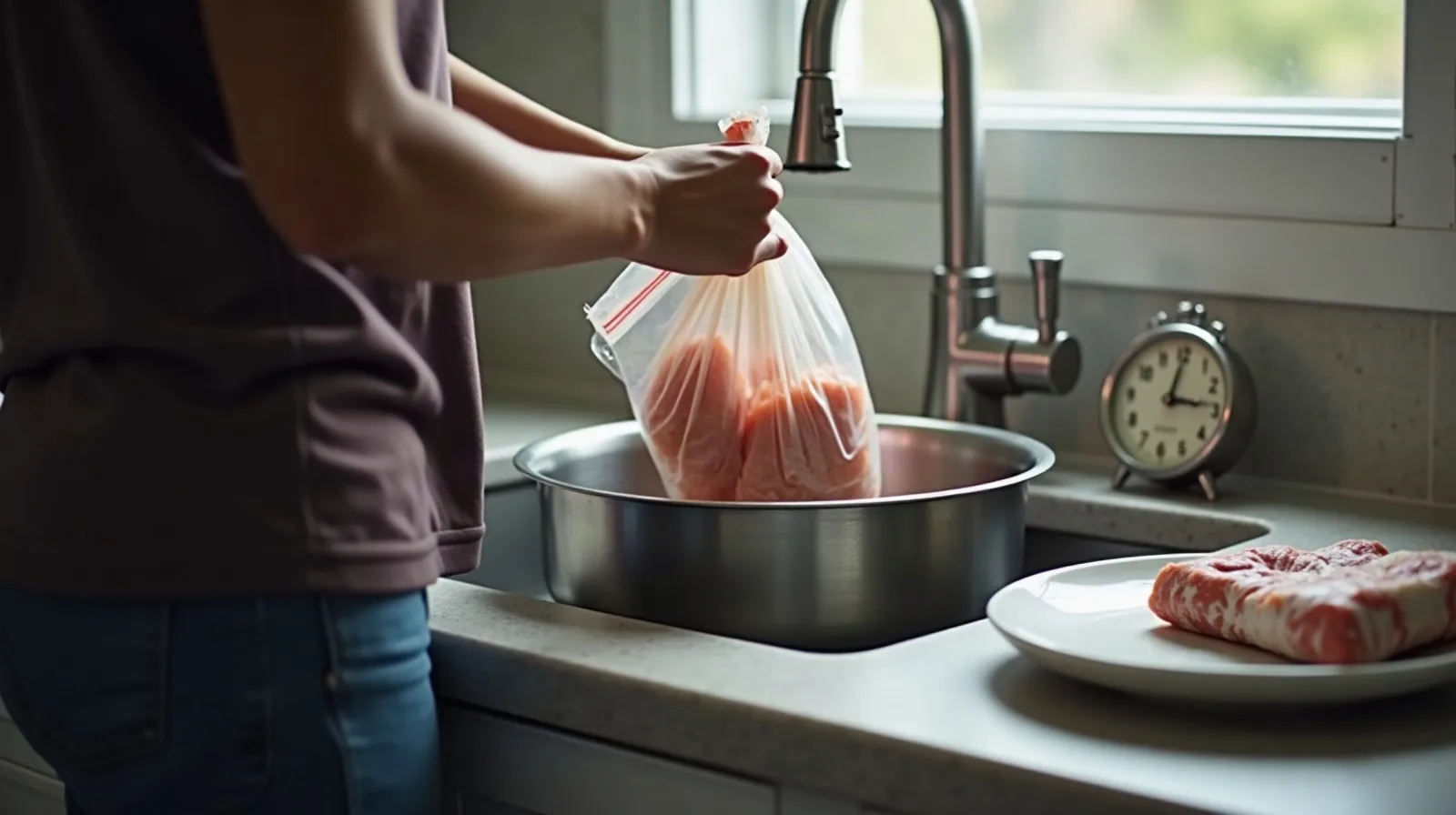
When dinner is a few hours away rather than a day, a cold-water bath gets there in about an hour per pound for small packages. It takes more attention than the fridge, but not much.
- Seal the food in a leak-proof bag. If the store package is torn, move the food to a zip-top bag and press out the air. Water leaking in makes the food soggy and can spread bacteria.
- Submerge it in a bowl or the sink of cold tap water. Use a plate or a heavy mug to hold the bag under if it floats.
- Change the water every 30 minutes. As the food thaws, it cools the water around it. Fresh cold water keeps the process moving and keeps the surface from warming.
- Cook it right away. Unlike fridge-thawed food, cold-water thawed food shouldn’t go back in the freezer or fridge raw to wait for another day. Plan the meal for tonight.
A running trickle of cold water from the tap works too and is quicker, though it uses a lot of water. Changing the bowl by hand is plenty.
Method Three: The Microwave (Fastest, Cook Immediately)
The defrost setting on a microwave handles small amounts in minutes. It is the right choice when the plan changed an hour before dinner.
- Use the defrost function and weight or time prompts. Full power cooks the edges before the center thaws.
- Remove store wrapping and any foam tray. Put the food on a microwave-safe plate with a rim.
- Pause to turn and break apart. Flip a steak, separate ground meat into chunks, and rotate the plate partway through so it thaws evenly.
- Cook right away. Some spots may have started to warm, so move the food straight into a pan or oven instead of leaving it on the counter.
If a corner turns gray or starts to cook, that is normal. It will finish cooking along with the rest.
Or Skip Thawing and Cook From Frozen
Many foods don’t need thawing at all. Cooking from frozen takes about 50 percent longer, and a few foods do it especially well:
- Chicken breasts, thighs, and fish fillets in the oven or a covered pan. Check that the thickest part is fully cooked through with a thermometer.
- Frozen vegetables straight into a skillet, soup, or sheet pan; thawing first only makes them soft.
- Soups, stews, and sauces in a pot over low heat with a splash of water, stirred as they loosen.
- Burgers and meatballs from frozen on a griddle or in the oven.
The exceptions are large, dense pieces, like a whole turkey or a thick roast, and anything being stuffed or breaded at home. Those need a proper thaw first so the center cooks safely and the outside doesn’t burn. Slow cookers are also the wrong place to thaw: they warm food too slowly to get past the danger zone.
Habits That Make Thawing Painless
- Freeze in flat, meal-sized portions. A flat bag of ground meat or chicken thaws in a fraction of the time of a thick block. Press the bags flat before freezing.
- Label with the date and contents. A marker on the bag saves guessing, and a short freezer list helps you pick what to thaw.
- Move tomorrow’s dinner to the fridge tonight. A reminder on your phone at bedtime works better than good intentions.
- Don’t refreeze what went through cold water or the microwave unless it has been cooked first. Cooked food that was thawed safely can go back in the freezer.
- Trust your nose and a thermometer, not luck. If a thawed package smells off or was left out more than two hours, throw it out.