Eggs are one of the cheapest, fastest foods in the kitchen, and also one of the easiest to get wrong. A few seconds too long and a boiled yolk turns chalky with a green-gray edge; a few degrees too hot and scrambled eggs go from silky to squeaky. The fix isn’t a gadget. It’s knowing that eggs set at low temperatures, and that they keep cooking after they leave the heat.
Why Eggs Overcook So Easily
Egg whites start to set at around 140°F and yolks a little higher, which is far cooler than a pan or a boiling pot. Past that point, the proteins keep tightening and squeeze out moisture, which is the rubbery texture people blame on “bad eggs.” The green ring on an overcooked hard-boiled yolk is a harmless reaction between sulfur in the white and iron in the yolk, and it shows up when eggs sit hot for too long.
So the whole game is two habits: use gentler heat than instinct suggests, and stop the cooking on purpose instead of letting the pan or the hot water finish the job.
Boiled Eggs: Time Them, Then Chill Them
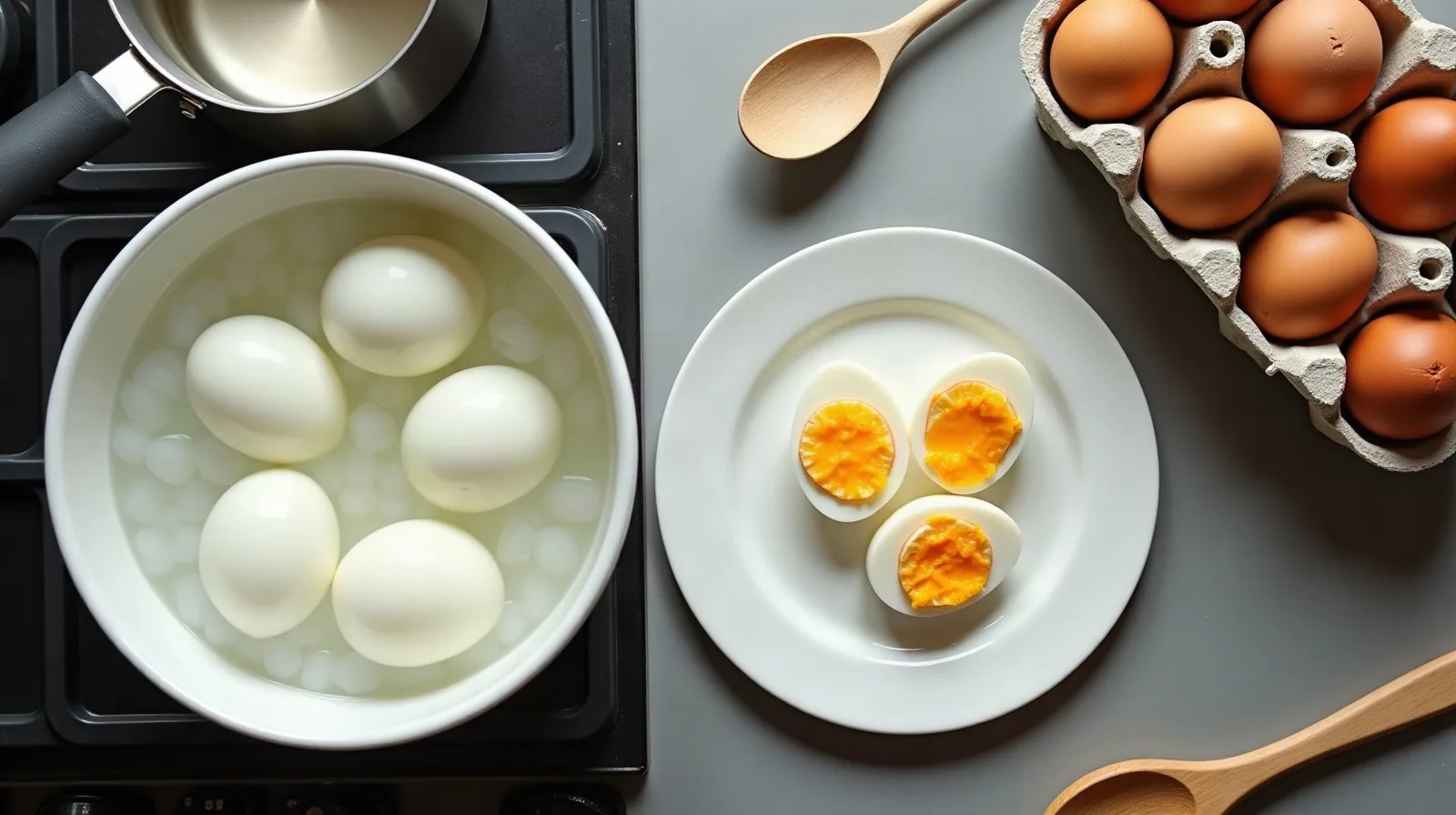
Lower large eggs straight from the fridge into gently boiling water with a spoon, set a timer, and move them to a bowl of ice water the moment it rings. The timer does the work:
- 6 minutes: set whites with a liquid, runny yolk — good for toast and ramen.
- 7 to 8 minutes: a soft, jammy yolk that’s creamy but holds its shape.
- 9 to 10 minutes: a fully set but still tender yolk, ideal for salads and sandwiches.
- 11 to 12 minutes: firm and dry all the way through, best for deviled eggs and egg salad.
The ice bath matters as much as the timer. Five minutes in cold water stops the cooking, prevents the green ring, and makes the shell easier to remove because the egg shrinks slightly away from the membrane. Steaming eggs in a covered pot with an inch of boiling water, using the same timings, is a nice alternative that cracks fewer shells.
Scrambled Eggs: Low Heat and an Early Exit
The creamiest scrambled eggs come from medium-low heat, a nonstick or well-seasoned pan, and constant, gentle movement. Whisk the eggs well with a pinch of salt, melt a little butter or oil over the heat, then push the eggs slowly from the edges toward the center with a spatula so they form large, soft curds.
The key is the exit. Take the pan off the heat when the eggs still look slightly wet and glossy — they’ll finish cooking from residual heat on the way to the plate. If they look done in the pan, they’ll be dry on the plate. A tablespoon of milk, cream, or water per couple of eggs makes a softer curd, but it isn’t required.
Fried Eggs: Medium-Low and a Lid
A fried egg with crisp lacy edges and a runny center needs a hot start and a gentle finish. Heat the pan with a thin layer of oil or butter over medium until it shimmers, crack the egg into a small bowl first so it slides in whole, and turn the heat down to medium-low as the white sets.
- Sunny-side up: cover the pan for the last minute so steam sets the glossy white on top without flipping.
- Over easy: flip once the white is nearly set, count about 15 seconds, and slide it out.
- Over hard: flip, press lightly on the yolk with the spatula, and cook another 30 seconds.
If the white spreads thin and watery, the egg is probably old — or the pan is too hot. Both tighten up with a bit of patience.
Freshness, Peeling, and Storage
To check an egg, lower it into a bowl of water. Fresh eggs lie flat on the bottom; an egg that stands upright on its tip is older but still fine to cook; one that floats should go in the trash. Ironically, very fresh eggs are the hardest to peel when boiled, so the carton that’s been in the fridge for a week or two is the better pick for boiling.
Keep eggs in their carton on a fridge shelf instead of the door, where the temperature swings. Hard-boiled eggs keep for about a week, unpeeled, in a sealed container. Cook eggs until the whites are fully set, and keep dishes with runny yolks for healthy adults — anyone pregnant, elderly, or immunocompromised should stick to fully cooked eggs.