When the power goes out, the refrigerator and freezer become a slow countdown. Most of the food inside will be fine if you handle the next few hours well, and some of it will not be safe no matter how normal it looks or smells. The trouble is that nobody wants to throw out a full fridge on a guess, and nobody wants a stomach bug from keeping the wrong thing.
The good news is that the decision comes down to a couple of numbers and a short list. Learn them once, set up a few cheap tools ahead of time, and an outage turns into a manageable chore instead of a costly mystery.
The Numbers That Decide Everything
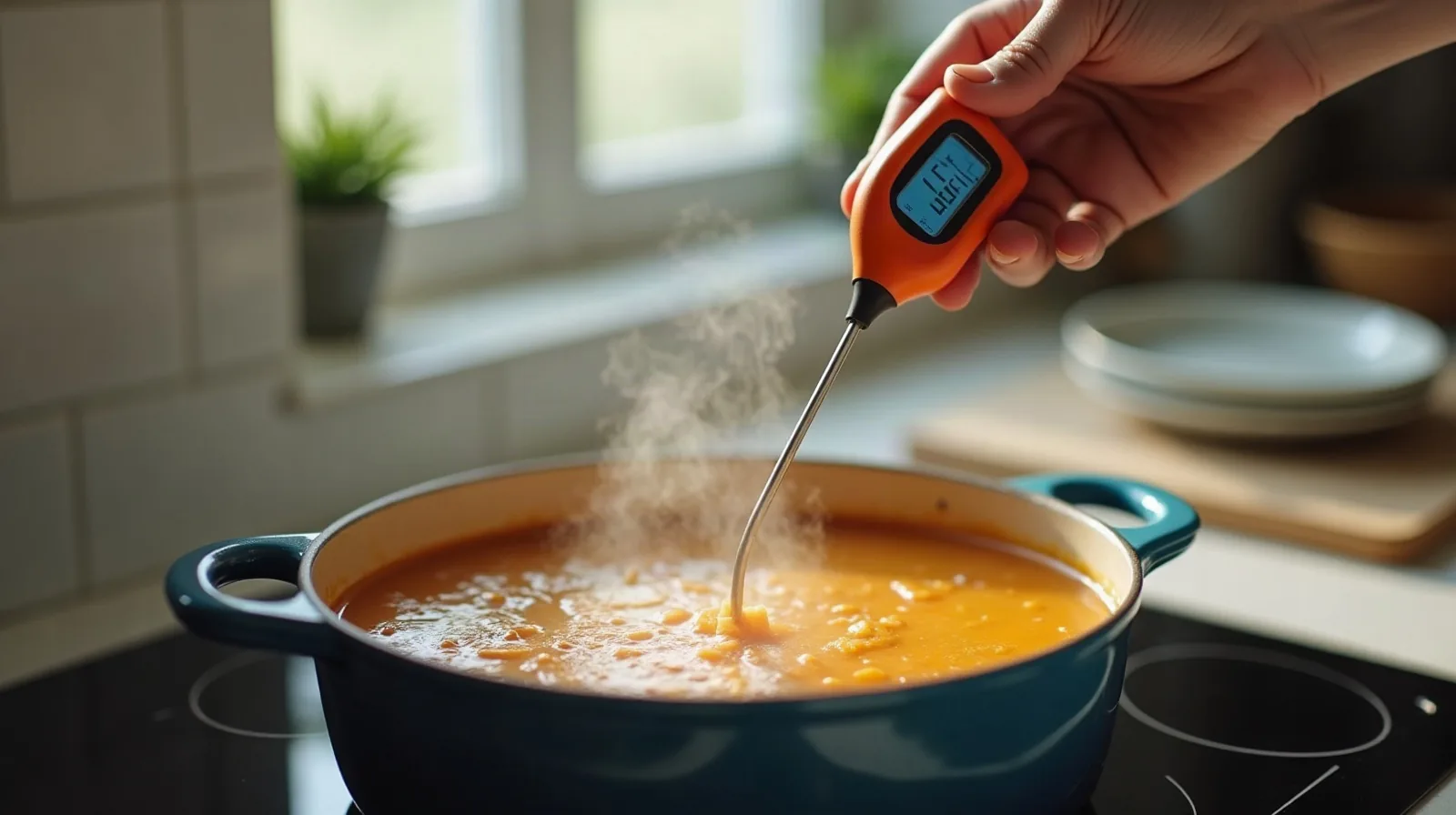
Food safety during an outage hinges on one temperature: 40°F (4°C). Above that, the bacteria that cause food poisoning multiply quickly, and perishable food that sits above 40°F for more than two hours should be thrown out. Our guide to the food temperature danger zone explains why that line matters.
How long your appliances hold the cold depends on keeping them closed:
- Refrigerator: about 4 hours if the door stays shut.
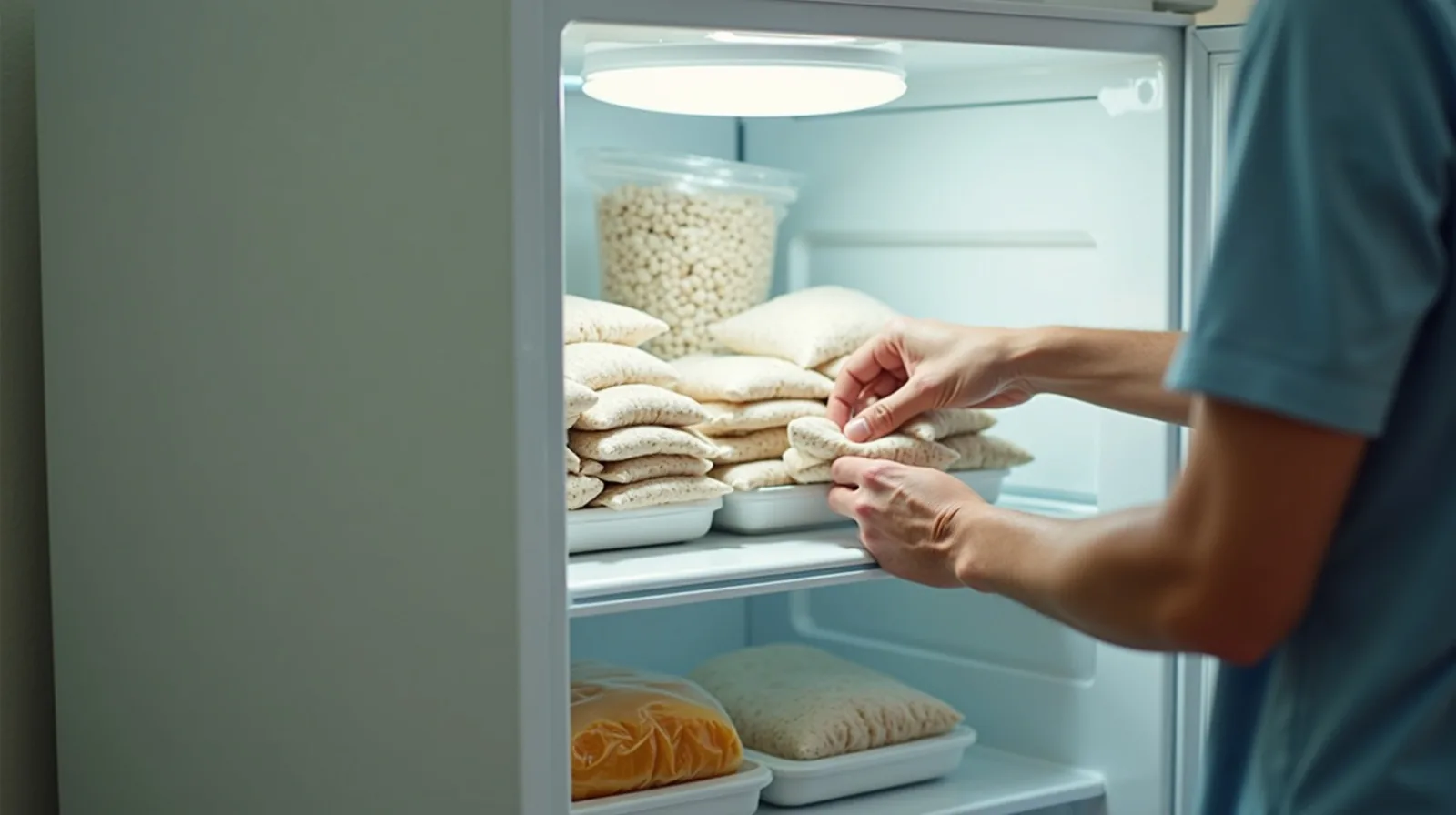
- Full freezer: about 48 hours if the door stays shut.
- Half-full freezer: about 24 hours. Frozen food keeps itself cold, so a packed freezer holds out far longer than a sparse one.
These are general guidelines, not guarantees. A fridge in a hot kitchen in summer warms faster than one in a cool basement. That is why a thermometer reading always beats a clock.
Before the Power Goes Out: A Ten-Minute Setup
Almost everything that makes an outage easier happens beforehand. None of it costs much:
- Put an appliance thermometer in both compartments. A small dial thermometer on a fridge shelf and another in the freezer tells you the actual temperature when the lights come back. Without one, every decision is a guess. The fridge should read 40°F or below and the freezer 0°F (−18°C) or below.
- Fill empty freezer space with water. Freeze a few containers or zip-top bags of water flat. They act as extra cold mass during an outage, and once thawed they double as drinking water or cooler ice.
- Group food together. Packed tightly, frozen items keep each other cold longer. Keep raw meat on a low shelf or in a tray so thawing juices cannot drip onto anything else.
- Know where your coolers are. A cooler or two and a plan for where to get ice saves a lot of food if the outage drags past four hours.
- Keep an inventory. A running freezer list lets you check contents without opening the door, which is exactly what you want during an outage.
The coin-in-a-cup trick is worth setting up if you travel or live where storms are common. Freeze a cup of water solid, then set a coin on top of the ice and keep the cup in the freezer. If you come home and the coin is still on top, the freezer stayed frozen. If it has sunk partway or to the bottom, the freezer thawed at some point and refroze, even if everything looks frozen now. That tells you to be suspicious of meat, seafood, and leftovers in there.
During the Outage: Keep the Doors Shut
Every time the refrigerator door opens, cold air spills out and warm air rushes in. The single most useful thing you can do in the first few hours is nothing: leave both doors closed.
- Note the time the power went out. Write it down or take a quick photo of a clock. Hours blur together during an outage.
- Plan meals around shelf-stable food first. Bread, peanut butter, canned goods, fruit, and crackers do not need the fridge.
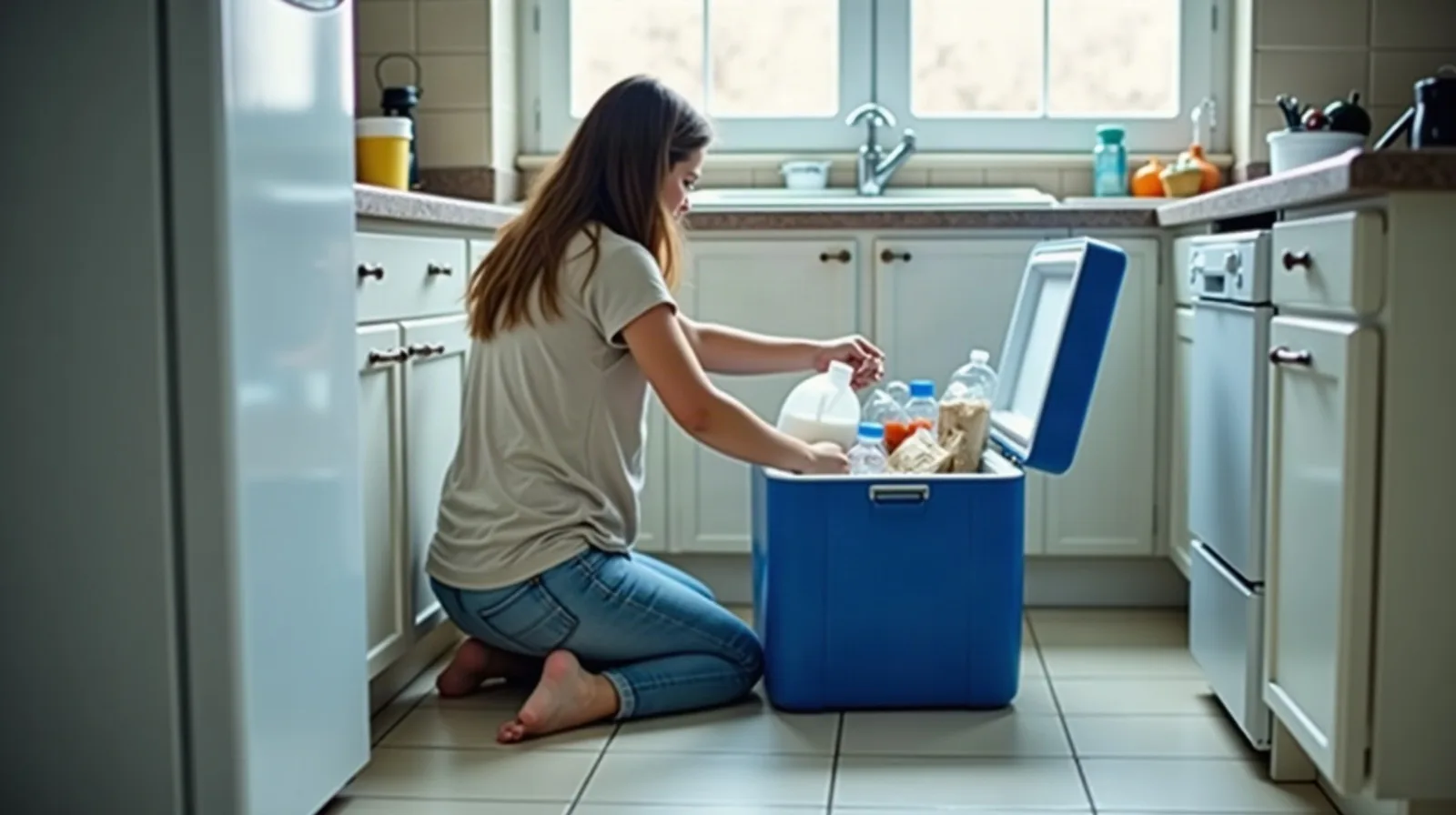
- Move food to coolers if the outage passes four hours. Pack milk, meat, leftovers, and other perishables into a cooler with ice or frozen water bottles, then open the fridge only once to do it. Keep a thermometer in the cooler too.
- Use block ice or dry ice for long outages. Block ice lasts longer than cubes. Dry ice can keep a freezer frozen for a day or two, but handle it with heavy gloves, never touch it bare-handed, and keep the space ventilated because it releases carbon dioxide as it warms.
Do not put food outside in the snow or on a cold porch. Sun can warm it unexpectedly, outdoor temperatures swing, and animals find it. A closed cooler with ice is more reliable.
If you run a portable generator, it belongs outdoors and well away from windows, doors, and vents. Never run one in a garage or basement, even with the door open. Carbon monoxide builds up fast and has no smell, which is why working carbon monoxide alarms matter most during an outage.
After the Power Comes Back: Sort It Out
Start with the thermometers. If the fridge reads 40°F or below, perishable food is generally fine. If it reads above 40°F, or you do not know how long it was warm, sort item by item using the guide below.
Throw out if held above 40°F for more than two hours:
- Raw or cooked meat, poultry, and seafood, including lunch meat and hot dogs
- Milk, cream, yogurt, and soft cheeses such as cottage cheese, ricotta, and shredded cheese
- Eggs and egg dishes, including custards and puddings
- Cooked leftovers: pasta, rice, potatoes, casseroles, soups, and stews
- Cut fruit, cut melon, and prepared salads
- Opened baby formula and creamy dressings or dips
Usually safe to keep even after a warm spell:
- Hard and aged cheeses
- Butter and margarine
- Whole, uncut raw fruits and vegetables
- Bread, rolls, and baked goods without cream or custard fillings
- Most condiments: ketchup, mustard, jam, pickles, soy sauce, hot sauce, and vinegar-based dressings
- Peanut butter and opened fruit juices
Two rules override everything else. First, never taste food to check it. The bacteria that make people sick do not change how food looks, smells, or tastes, and reheating does not undo the toxins some of them leave behind. Second, when in doubt, throw it out. A pound of chicken costs less than a sick day.
Refrigerated medications such as insulin are a separate question. Check the label or call a pharmacist; many have specific guidance on how long they stay effective unrefrigerated.
The Freezer: What Can Be Refrozen
A freezer that stayed shut through a shorter outage usually comes through fine. To check each item:
- Still has ice crystals, or reads 40°F or below? It is safe to refreeze or cook.
- Fully thawed and above 40°F for more than two hours? Treat it like refrigerated food and follow the throw-out list above.
- Fully thawed but still cold? Cook it soon rather than refreezing if you can. Refrozen food is safe but may lose texture, especially vegetables and seafood.
Bread, plain baked goods, hard cheese, and whole fruit can be refrozen even if they thawed. Ice cream that softened is best tossed; once it has melted and refrozen, its texture is gone and it was held in the danger zone. Afterward, wrap anything going back in tightly to avoid freezer burn.
Clean Up and Keep the Receipts
Once you have sorted everything, wipe out the fridge and freezer before restocking. Thawed meat juices and melted ice can leave spills and smells behind. Warm water with a little dish soap handles most of it, followed by a wipe with a mild solution of baking soda and water to freshen. Leave the doors open for a few minutes to dry, then let the appliance reach temperature before reloading it.
If you lost a lot of food, photograph the discarded items before the trash goes out and note roughly what they cost. Some homeowners and renters policies include food spoilage coverage, and some utilities or stores offer credits after long outages. Our guide to renters insurance basics covers what policies typically include.