You pull a bag of chicken or a tub of leftovers out of the freezer and find it covered in grey, dry, ice-crystalled patches. Freezer burn. Most people treat it as inevitable — the price of freezing food. It isn't. Freezer burn has one cause, it's entirely preventable, and once you prevent it, your freezer turns into the best anti-waste appliance you own: a pause button for food that would otherwise spoil.
What freezer burn actually is
Freezer burn is dehydration. Where air touches the surface of frozen food, moisture slowly escapes from the food and forms those ice crystals, leaving the surface dry, tough, and off-flavored. It's not dangerous — the food is still safe to eat — but it tastes and feels bad. The key insight: the enemy is air, and time only matters because it gives the air longer to do damage. Remove the air and you remove the problem.
Get the air out
Everything else follows from that one idea. However you store food for the freezer, your goal is to minimize the air touching it:
- Press the air out of bags. Fill a freezer bag, then squeeze or roll out as much air as you can before sealing. For an almost-vacuum on a budget, seal the bag most of the way, lower it into a bowl of water so the water pressure pushes the air out, then seal the last bit.
- Fill containers to the top. Air gaps in a rigid container are air touching your food. Choose a container size that your food nearly fills, or press a layer of wrap directly onto the surface before you put the lid on.
- Wrap, then bag. For things like meat, wrap tightly first and then put it in a bag — a double barrier against air.
Portion before you freeze
Freeze food in the amounts you'll actually use, not one giant block. Portioning means you thaw only what you need instead of refreezing the rest (which degrades quality and invites more freezer burn), and smaller flat packages freeze faster and thaw faster too. Freezing things flat — sauces, soups, ground meat pressed thin in a bag — also lets you stack them like files and saves enormous space.
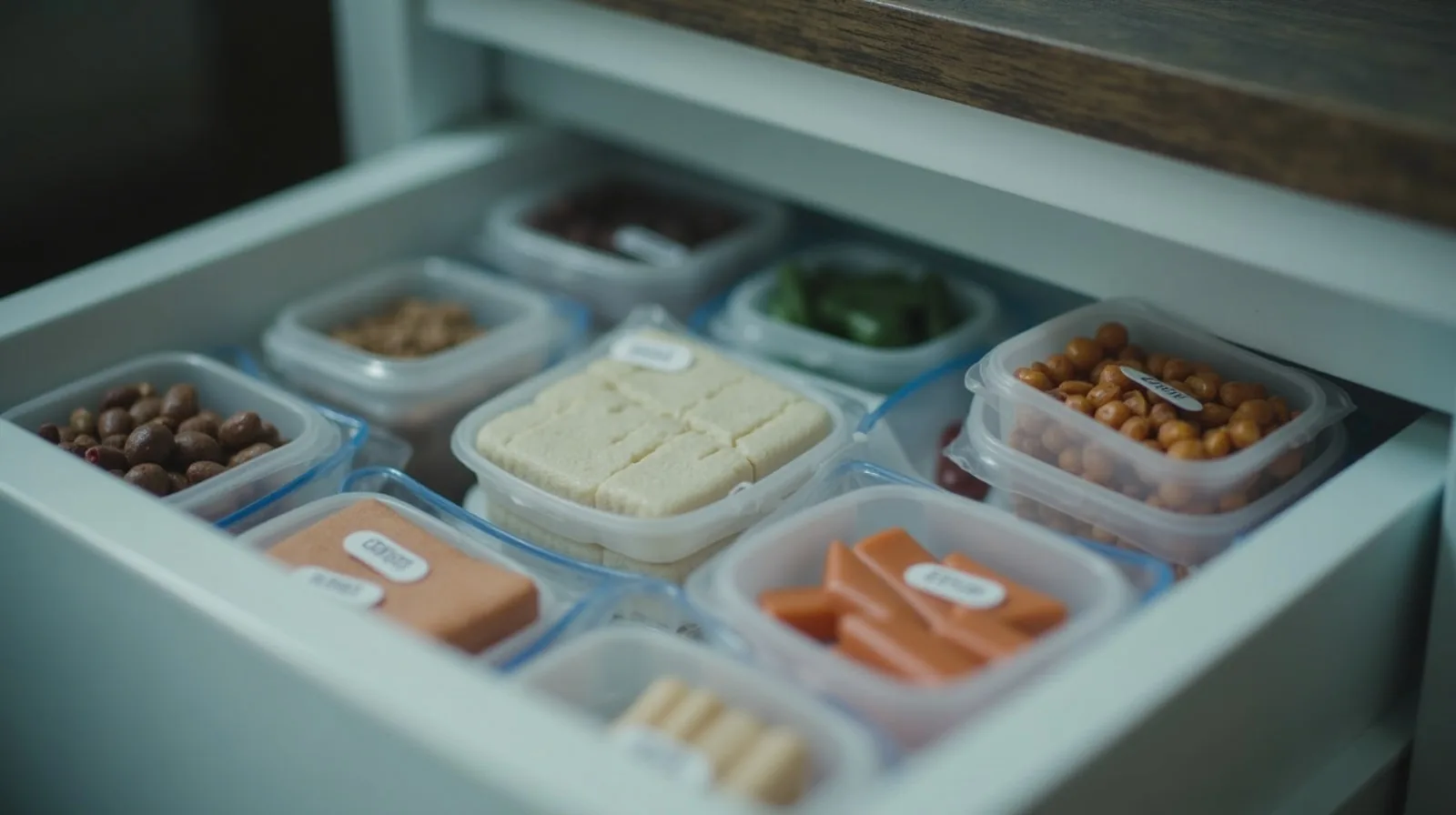
Label everything with a date
The other half of freezer waste is the mystery bag you can't identify and won't risk eating. A date and a name on every package fixes that instantly. Then use a simple first-in, first-out habit: newest at the back, oldest at the front, so you naturally reach for what needs using. Frozen food doesn't last forever at peak quality, but well-sealed and labeled, most things are great for months — long enough to genuinely rescue food you couldn't use in time.
A quick word on thawing
Thaw in the fridge overnight when you can — it's the safest way and keeps texture best. Planning that one step ahead is what makes the whole system pay off, turning a freezer full of forgotten blocks into a rotating stock of meals you actually eat.