A smoke alarm is one of the cheapest, most effective safety devices in an entire house, and also one of the easiest to quietly stop trusting. It goes up once, mounted a little too high to think about, and then gets left alone for years — until it chirps at 2 a.m. over a dying battery, or worse, stays silent when it actually matters. None of that takes a fancy system to fix. A short routine done twice a year, plus getting the batteries and placement right, keeps every alarm in a home doing the one job it has.
Why alarms quietly stop working
Smoke alarms fail in ways that stay invisible until they're tested. Batteries lose their charge gradually, and a unit can keep its little power light blinking for months after it's really too weak to sound a real alarm. The sensor itself collects dust and cooking residue over time, which dulls its sensitivity much the way a dirty filter dulls airflow — the alarm still "works," it just needs more smoke to trigger than it should. And every smoke alarm has an expiration date, typically about ten years from its manufacture date, after which the sensing chemistry degrades no matter how fresh the batteries inside it are. None of these failures announce themselves. They only show up as a test you didn't run.
The twice-a-year test-and-clean routine
A full pass on every alarm in the house takes about fifteen minutes if you do it in one go:
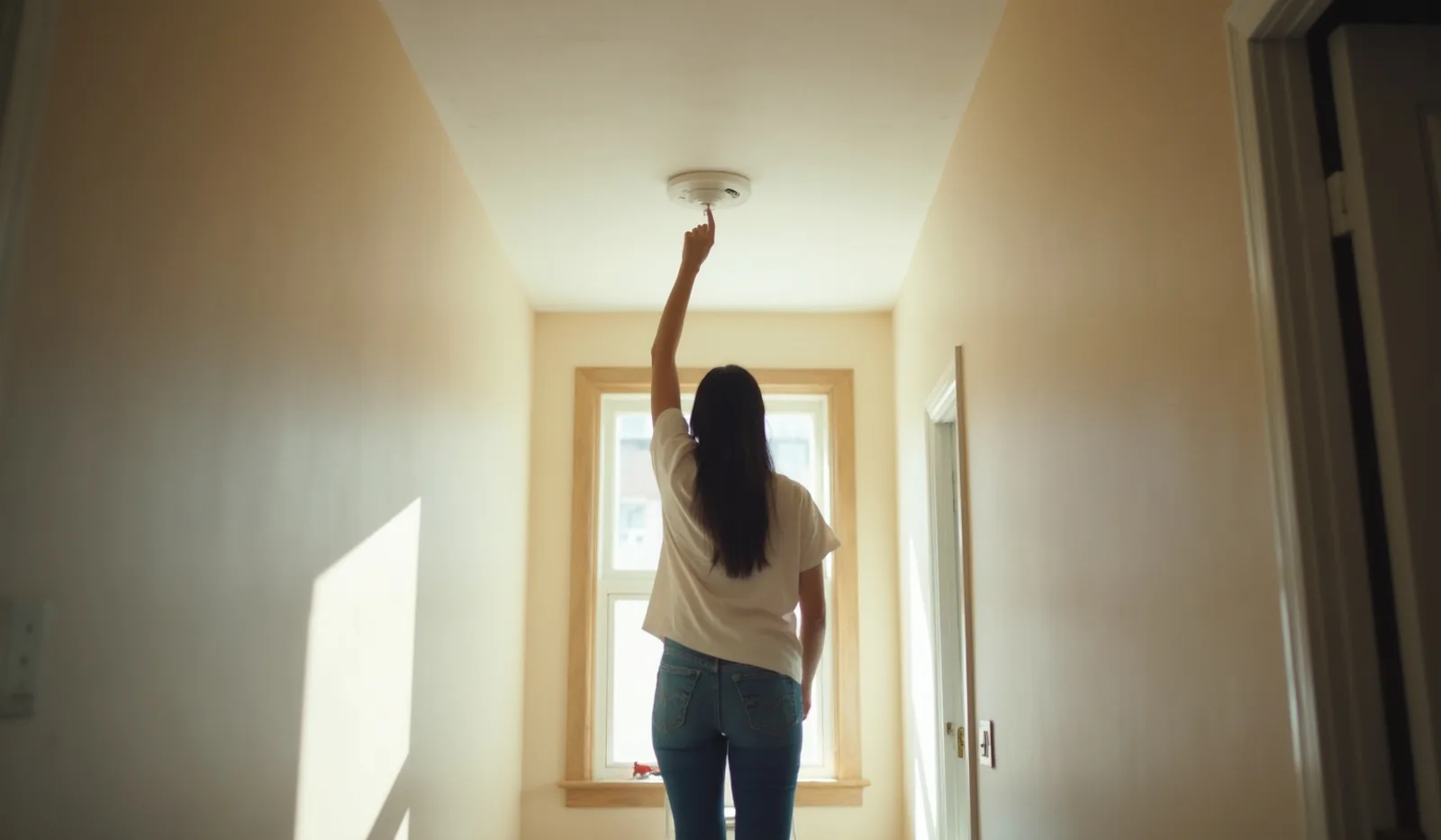
- Press and hold the test button on every alarm until it sounds. It should be loud and immediate. A weak, delayed, or silent response means the battery or the unit itself needs attention right away, not on your next pass.
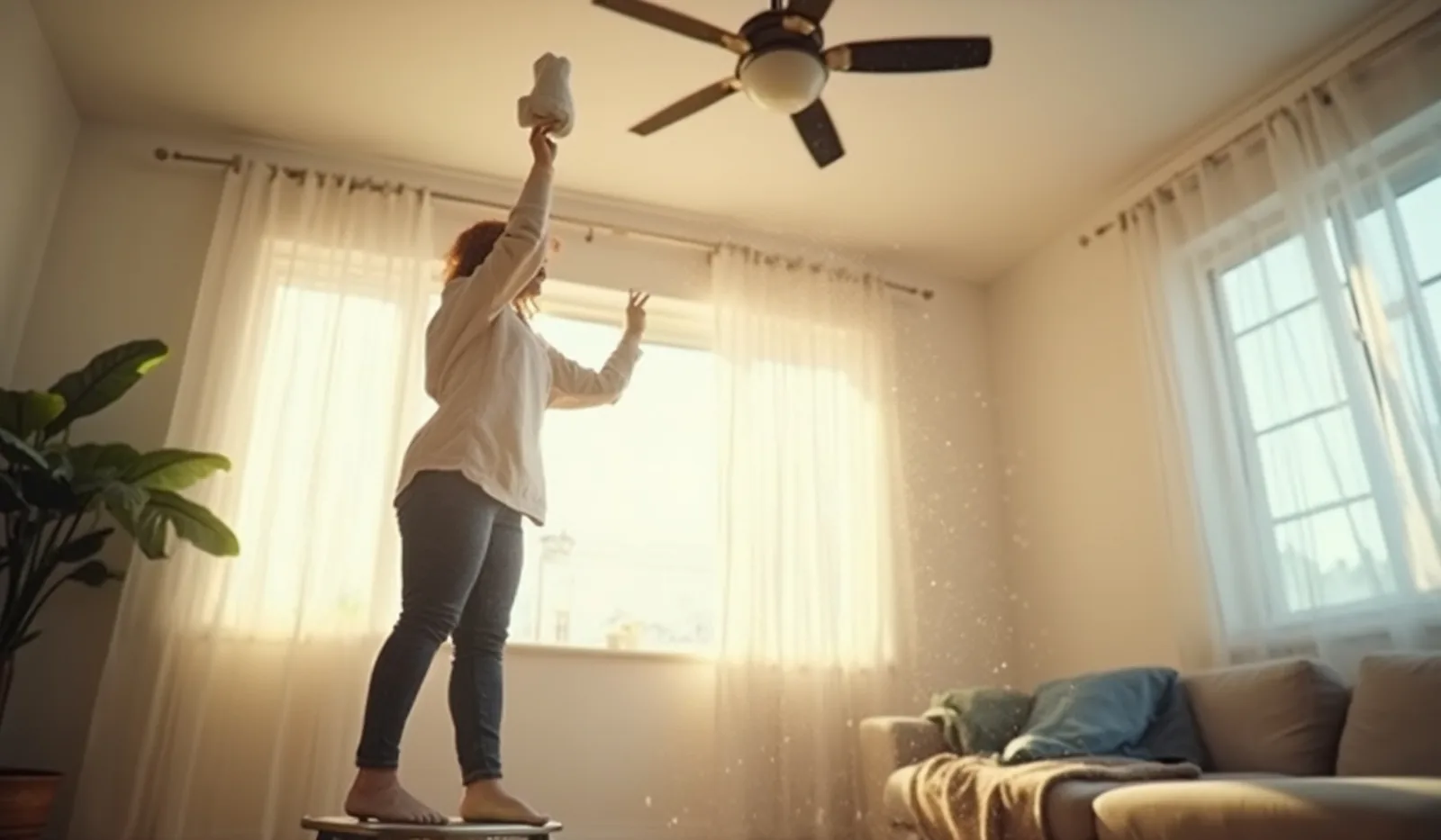
- Vacuum the cover with a soft brush attachment, then wipe it down with a dry cloth. Dust and cobwebs inside the vents muffle the sensor and can also trigger false alarms from cooking smoke or shower steam — which is often what leads people to disable a unit altogether out of frustration.
- Check the manufacture date printed on the back of the unit while it's down. If you can't find a date, or it's approaching the ten-year mark, that's a replacement, not a cleaning.
- Note anything chirping on its own between passes. A single intermittent chirp almost always means a low battery, not a malfunction, and it's worth fixing the moment you hear it rather than muting it and hoping it stops.
Twice a year is enough to catch nearly everything, and the habit sticks best when you attach it to something else already on a recurring calendar — a seasonal chore, a recurring reminder, whatever already gets you thinking about the whole house at once.
Picking the right battery — and the habit that actually sticks
Older alarms usually take a standard replaceable battery, and the safest habit is to swap it at every twice-yearly check whether the unit is chirping or not — a fresh battery is cheap insurance, and waiting for a warning chirp means you're already running on borrowed time. Newer alarms increasingly ship with a sealed, non-replaceable battery rated to last the alarm's full lifespan, usually around ten years; there's nothing to swap, which removes the chore entirely until the whole unit gets replaced. Either way, avoid the temptation to "borrow" a battery from a smoke alarm for a remote or a toy when you're in a pinch — it's a common, entirely avoidable way for an alarm to go dead without anyone noticing for months.
Where alarms need to live
Coverage matters as much as maintenance. A well-protected home has one alarm inside every bedroom, one in the hallway or common area just outside each sleeping area, and at least one on every level of the house, including a finished basement. Mount each one high — on the ceiling or near the top of a wall — since smoke rises and collects there first. Keep alarms a reasonable distance from stoves, ovens, and bathroom doors to cut down on false alarms from cooking and steam, without pushing them so far away that real smoke has to travel a long way to reach them. If your alarms are interconnected, either wired or wirelessly, one going off should trigger all of them at once, which matters most for anyone sleeping behind a closed door on the far side of the house.
Carbon monoxide alarms play by different rules
Carbon monoxide is colorless and odorless, and a standard smoke alarm does not detect it unless the unit is explicitly labeled as a combination smoke-and-CO alarm. If your home has any fuel-burning appliance — a furnace, a water heater, a gas stove, a fireplace — or an attached garage, it needs dedicated CO protection: at least one CO alarm per level, with extra weight given to the areas near those appliances and just outside sleeping areas. CO sensors typically wear out faster than smoke sensors, often in five to seven years rather than ten, so check the printed date on CO units separately even if you just replaced the smoke alarms. And treat the two alarms differently when they sound: a smoke alarm means investigate and evacuate if there's a real fire, while a CO alarm means get everyone to fresh air immediately and call for help from outside — carbon monoxide gives no visible warning, so there's nothing to investigate first.
When it's time to replace the whole unit
Some things are worth replacing on a schedule rather than waiting for a failure. Any smoke alarm at or past its ten-year mark should go, even if it still passes the test button — the sensor's sensitivity has already declined by then in ways a simple test won't reveal. Yellowing or brittle plastic on the housing, a fine crack, or an alarm that's started giving frequent false alarms despite a clean cover are all signs worth replacing now rather than at the next scheduled check. It helps to write the install date directly on the back of a new unit in marker the day it goes up, since manufacture dates are often printed in a format nobody remembers to decode months later.
None of this requires a dedicated afternoon or any special tools. A twice-a-year pass with a vacuum brush and a pack of batteries, alarms placed in the right rooms, and a firm ten-year replacement rule for every unit in the house is the entire routine — and it's the difference between an alarm that's technically installed and one that will actually wake you up.