Spices rarely spoil in a way that makes them unsafe — what actually happens is slower and easier to miss. Their flavor compounds fade over time, especially with the wrong storage, until a recipe that should taste vivid comes out flat and no one can quite say why the dish they’ve made a dozen times suddenly tastes like less of itself.
Fading, not spoiling
Ground spices lose potency faster than whole ones, since grinding exposes more surface area to air. As a rough guide, ground spices are at their best for about six months to a year, while whole spices — peppercorns, cinnamon sticks, whole cumin — can hold their flavor for two to three years or more.
- Ground spices fade fastest, generally within six months to a year of opening.
- Whole spices last much longer, since the flavor compounds stay sealed inside until you grind or toast them.
- “Expired” usually means weak, not unsafe — a stale spice won’t make you sick, it’ll just underwhelm the dish.
- Dried herbs fade faster than dried spices in general, since their flavor sits in more delicate volatile oils that break down sooner.
The sniff-and-look test
There’s no need to guess based on a purchase date alone — a quick sensory check tells you what a spice still has to offer.
- Smell it first. Rub a small amount between your fingers and smell it — a fresh spice smells vivid and specific; a faded one smells faint, dusty, or like almost nothing.
- Look at the color. Faded spices often look dull or grey compared to their original vibrant color, especially paprika, chili powder, and dried herbs.
- Taste a pinch if smell alone doesn’t settle it — flavor should be distinct, not just “dusty.”
- Test one at a time, rather than judging the whole cabinet at once — freshness varies jar to jar even among spices bought around the same time.
This check takes seconds per jar, and it’s worth doing before cooking with anything that’s been sitting untouched for a long stretch, especially right before a dish where that spice is meant to carry the flavor.
Why the spot above the stove is the worst spot
A cabinet or rack right above the stove is one of the most common places to store spices, and also one of the worst, because heat, light, and moisture from cooking all accelerate flavor loss.
- Heat breaks down flavor compounds faster, and the space above a stove runs warmer every time it’s used.
- Light fades color and flavor, particularly through clear glass jars on an open shelf.
- Steam introduces moisture, which can clump spices and encourage them to degrade faster.
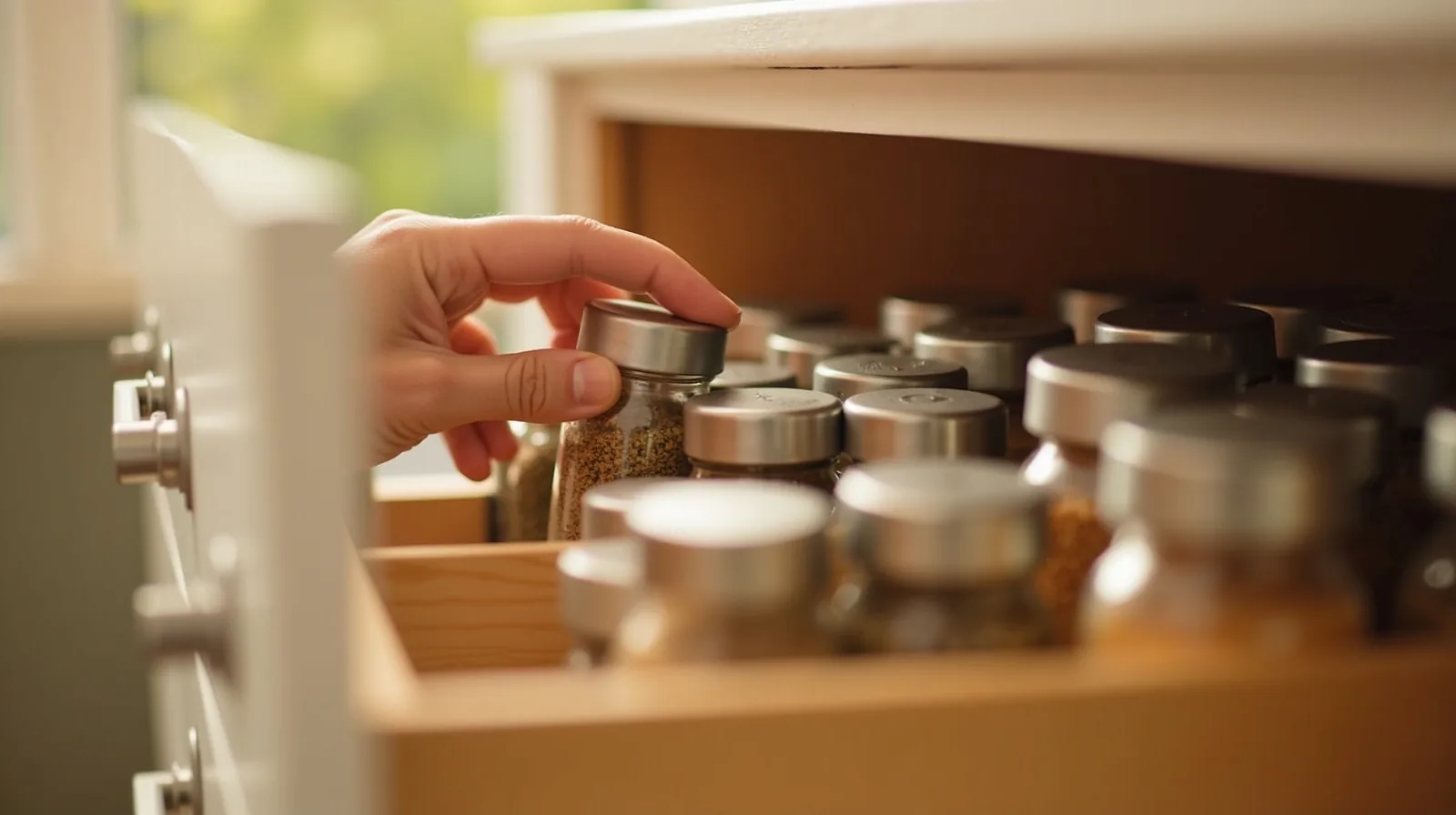
- Move spices to a cool, dark cabinet away from the stove and out of direct light — a drawer or a cupboard door works better than an open shelf.
- A pantry or an interior cabinet away from any appliance is usually the most stable spot in the kitchen, even if it’s a slightly longer reach while cooking.
The inconvenience of walking a few extra steps to a proper cabinet is minor compared to the flavor lost by keeping everything within arm’s reach of the stove’s heat.
Storage and buying habits that keep spices potent
A few habits keep the whole cabinet performing better without much extra effort.
- Store in airtight containers, since air exposure is the main driver of flavor loss over time.
- Label with a purchase or opened date so freshness is a quick glance instead of a guess.
- Organize for visibility, upright in a drawer or shallow bins, so nothing gets pushed to the back and forgotten for years.
- Buy small amounts of spices you use rarely, rather than a large jar that will fade long before it’s used up — a bulk bin or small package keeps rarely-used spices fresher for their whole life.
- Toast whole spices before grinding when a recipe allows it — a quick dry toast wakes up flavor that’s started to fade, getting more out of an aging jar before it’s replaced.
An audit like this doesn’t need to happen often. Once a cabinet is sorted, moved out of the heat, and labeled, it mostly maintains itself — the sniff test becomes a quick habit rather than a project.