Most people blame their slow, frustrating cooking on the recipe, or on not being “a natural.” Usually it's neither. It's that the knife is dull and the hands don't know what to do. Fix those two things and prep stops being the annoying part of dinner. You don't need culinary school — you need a sharp blade, a proper grip, and three cuts. That's a five-minute lesson that pays off every single night.
First, a sharp knife (this is most of it)
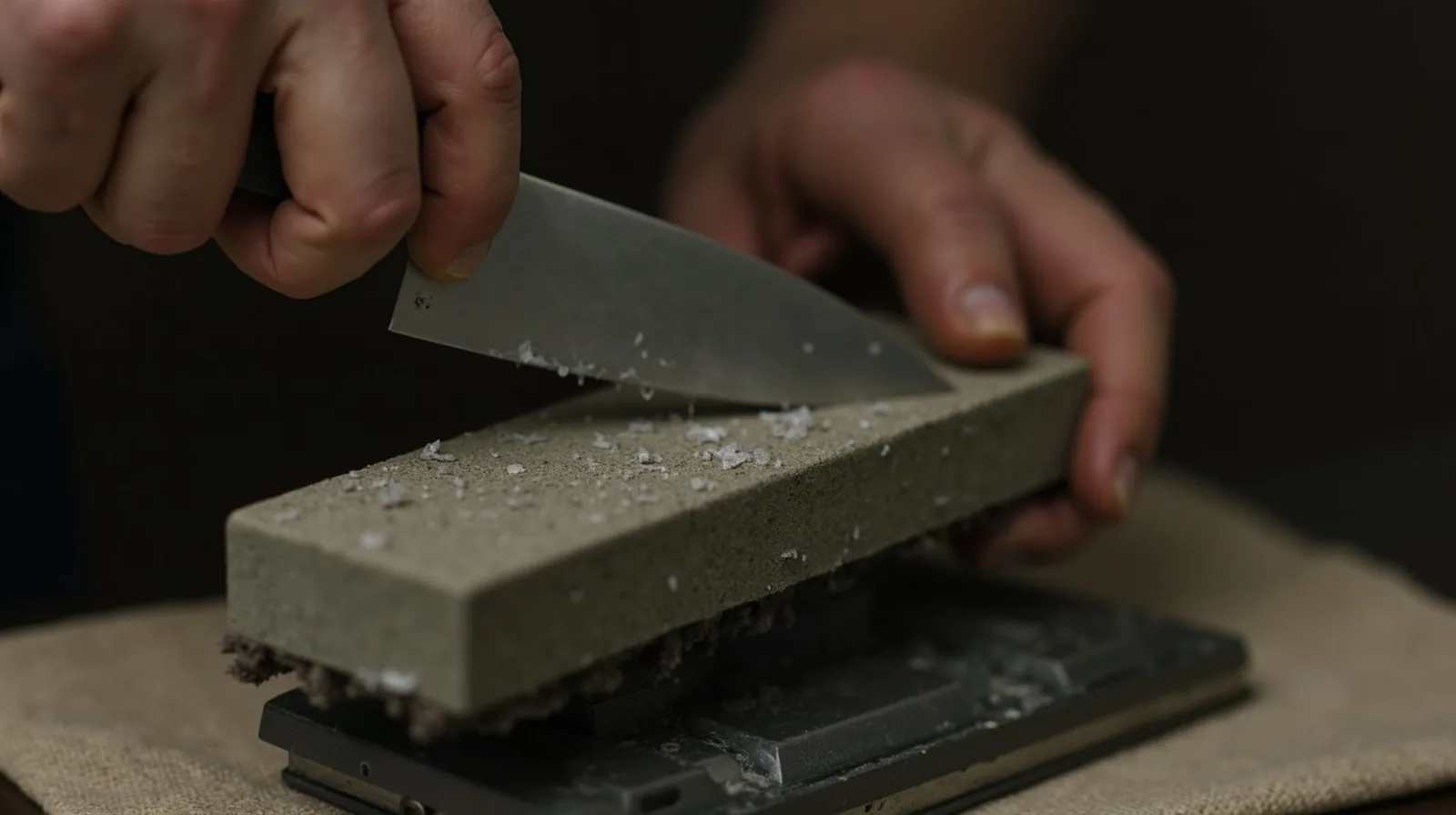
A dull knife is slower, worse, and genuinely more dangerous than a sharp one — it slips instead of biting, and slips are how fingers get cut. If your knife crushes a tomato instead of slicing it, that's your real problem. Run it across a honing steel a few strokes before each session to keep the edge true, and have it properly sharpened a couple of times a year. One well-kept mid-size chef's knife handles ninety percent of what a home cook does; you don't need a block full of them.
Hold it like you mean it
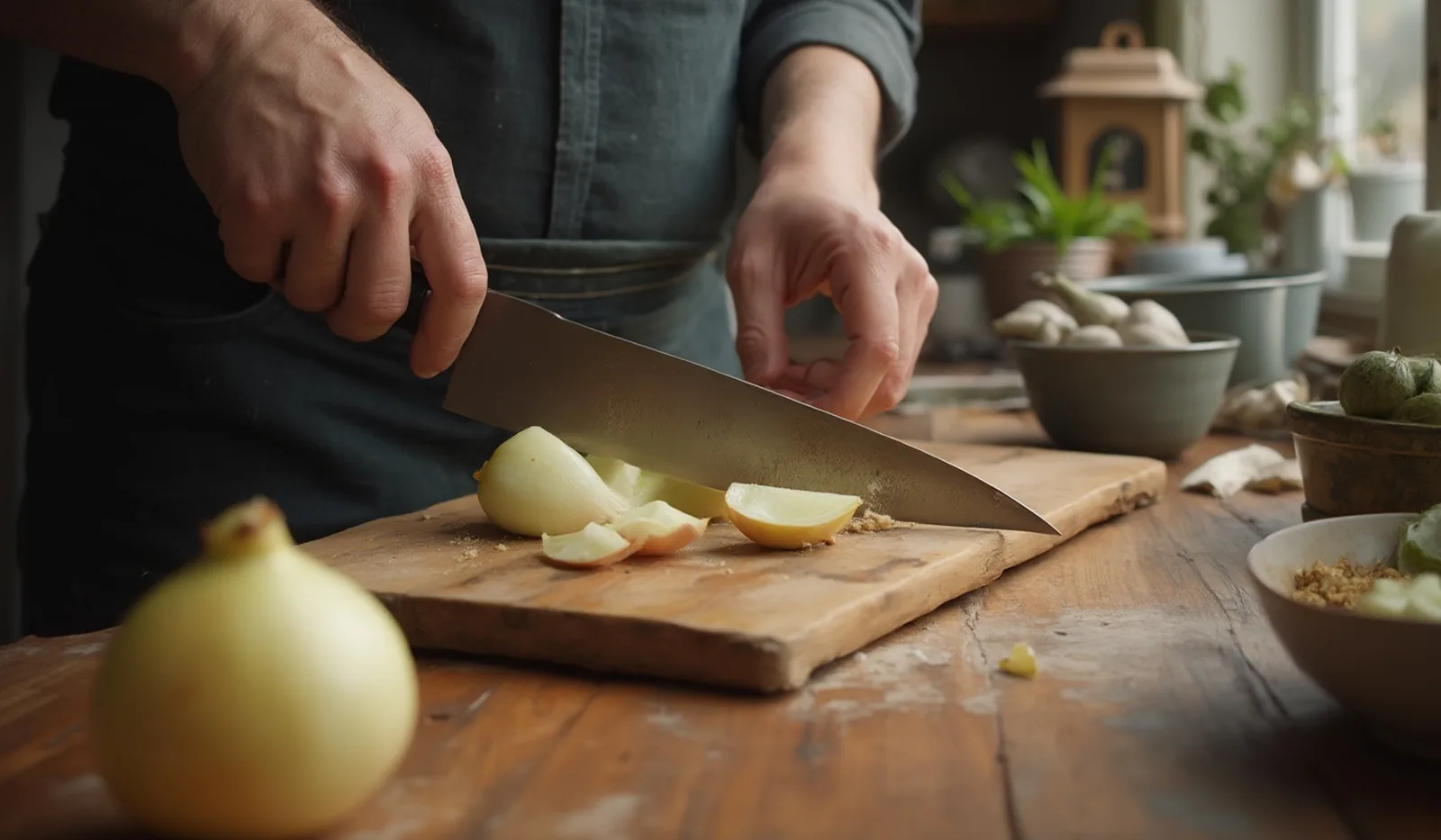
Most people hold a knife with the handle alone, index finger pointed down the spine. Instead, pinch the blade: thumb on one side, curled index finger on the other, right where the blade meets the handle. It feels odd for about a day and then feels obviously right. The pinch grip gives you control from the blade itself instead of wrestling it from the far end of the handle, and control is what makes cutting fast and safe.
The claw (keep your fingertips)
Your other hand isn't just holding the food still — it's guiding the knife and protecting itself. Curl your fingertips under so your knuckles face the blade, and rest the flat side of the knife against those knuckles as you cut. The blade literally can't reach your fingertips because they're tucked behind your knuckles. Once the claw is a habit, you can go faster precisely because you're not afraid of the knife.
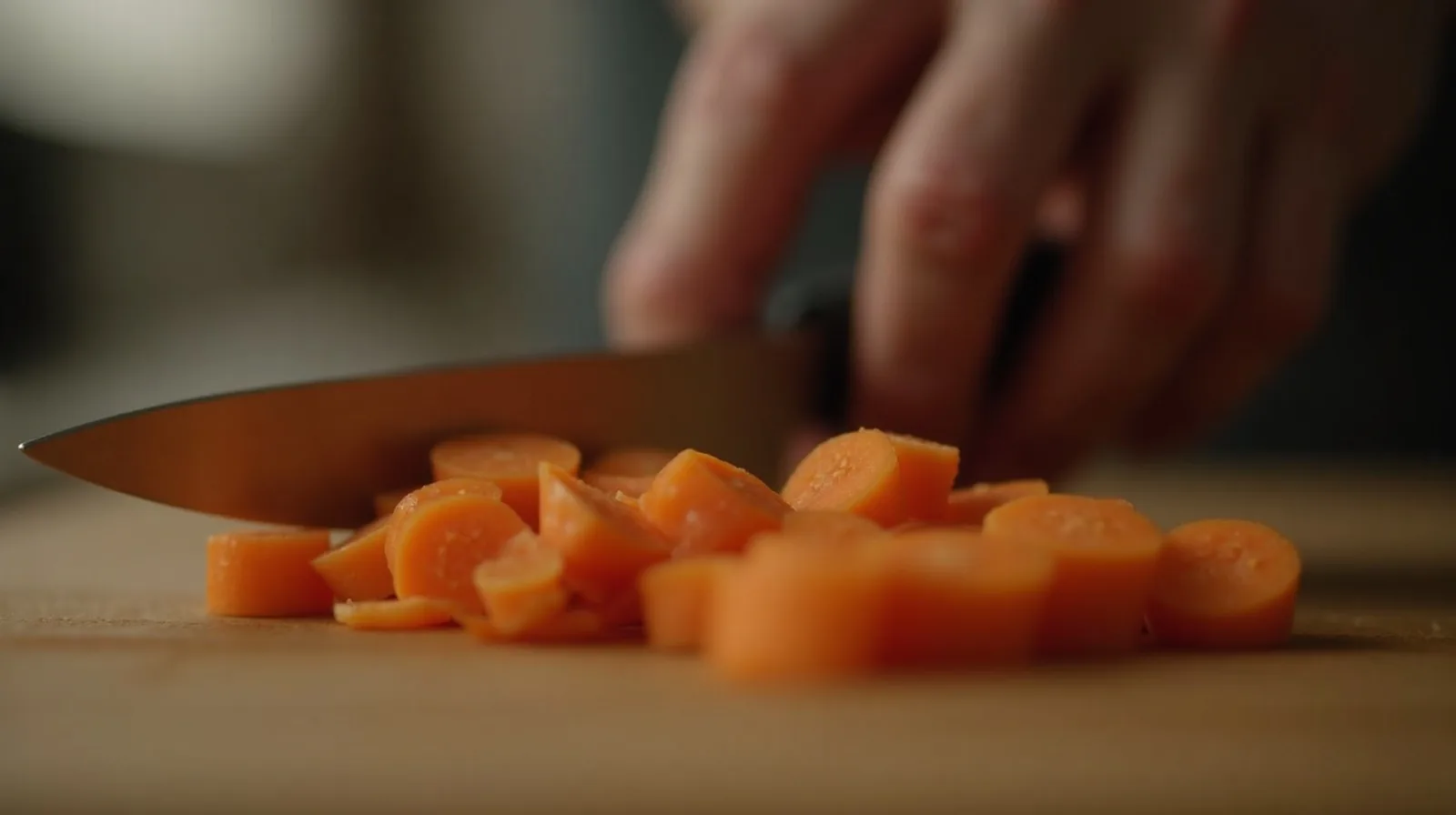
The three cuts that cover everything
Nearly every recipe asks for some version of these:
- The rock chop. Keep the tip of the knife on the board and rock the blade down and forward through the food, feeding it under with your claw hand. This is your default for herbs, garlic, and general chopping — it's fast because the knife never fully leaves the board.
- The slice. A long, smooth draw of the blade for tomatoes, mushrooms, and anything you want in clean pieces. Let the sharp edge do the work; don't press down and crush.
- The dice. Slice into planks, stack and cut into sticks, then cut across the sticks into cubes. Even-sized pieces cook evenly, which is half of why restaurant food tastes “done right.”
A board that doesn't fight you
Last piece: a cutting board that stays put. Lay a damp paper towel or thin cloth underneath it so it can't skate across the counter while you work. A sliding board is both slower and more dangerous, and the fix costs nothing.
Spend five minutes practicing the pinch, the claw, and the rock chop on a cheap onion, and weeknight cooking changes. Prep gets quick, your pieces get even, and the knife stops being the thing you dread and starts being the tool that makes cooking feel easy.