Nobody plans to run out of batteries during a power flicker, or discover the last lightbulb in the hall is the one that just burned out. These aren’t big problems, but they’re badly timed ones, and each ends the same way: a hurried trip to the store for something that cost almost nothing, plus whatever else looked good in the aisle. A small shelf of spares breaks that cycle for good.
The idea isn’t to stockpile. It’s to keep one backup of the cheap, boring things your home quietly depends on, in one place, with a simple rule for replacing them.
Why a Single Spot Beats Scattered Extras
Most homes already own spares. They’re just spread across a junk drawer, a garage shelf, and a bag under the sink, so nobody knows what’s actually on hand. The result is both problems at once: you run out of one thing and buy duplicates of another.
One dedicated shelf or bin fixes that. When every spare lives together, a single glance tells you what’s low, anyone in the household can find what they need, and nothing gets bought twice. It also puts a natural cap on the pile, because the shelf is only so big.
Pick the Spot
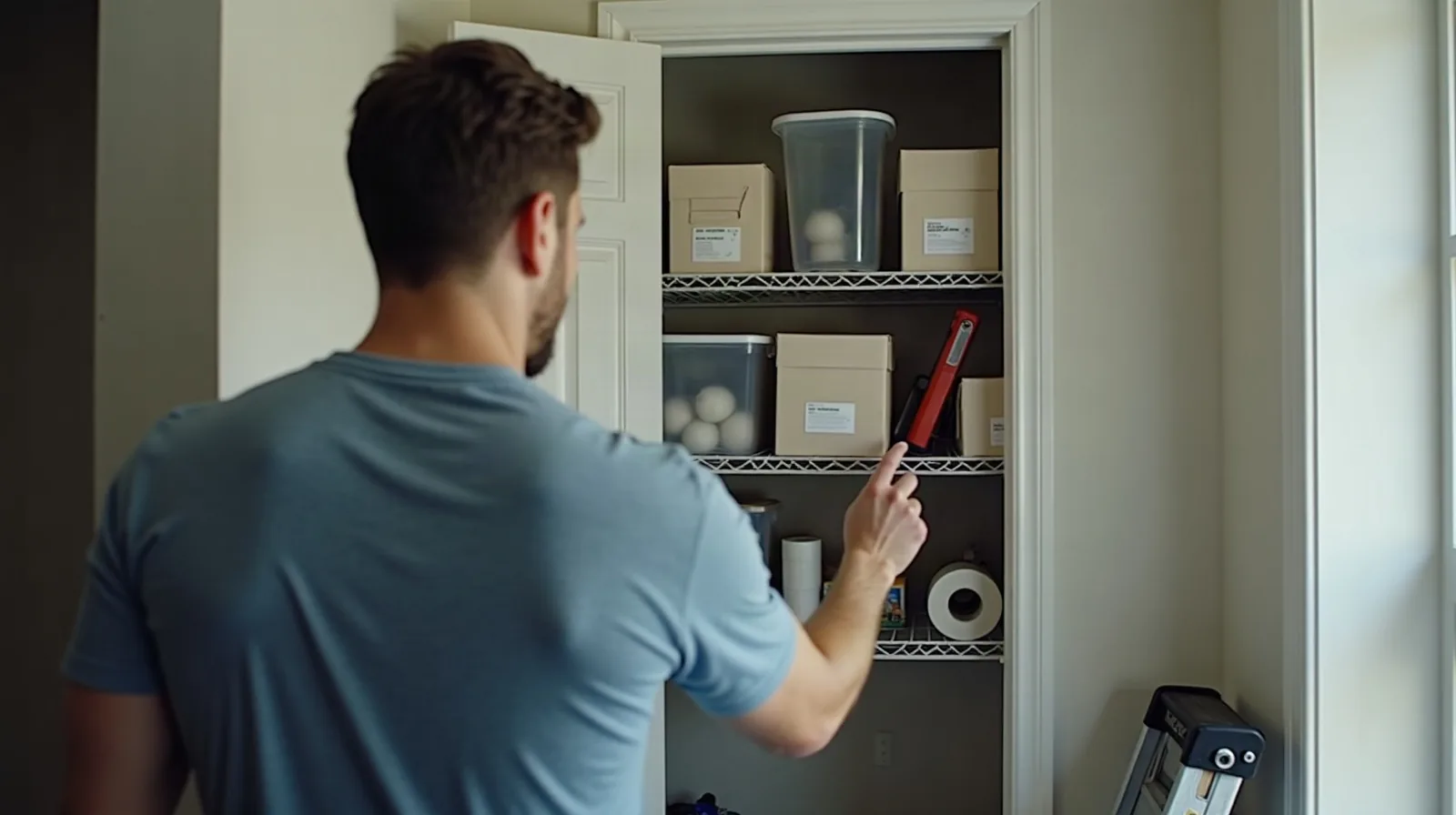
The best location is close to where the things get used and out of the way of daily traffic. A hallway closet, the top shelf of a pantry, a utility closet, or one section of a garage shelving unit all work. Two quick tests help:
- Can you reach it without a ladder? If a spare is hard to get, you’ll skip it and make the store run anyway.
- Is it dry and moderate in temperature? Batteries, tape, and adhesives all age faster in a hot attic or a damp basement.
A shallow wire shelf or a pair of stackable clear bins is plenty. Clear matters, since seeing the contents is half of the system.
Sort It Into Four Zones
Instead of one jumble, divide the shelf into four zones. They match the four ways small things tend to fail.
- Light. Spare bulbs in the sizes your fixtures actually use, plus a flashlight or two and a small lantern for outages.
- Power. Batteries in the two or three sizes your household uses most, kept together in a clear container, plus a spare charging cable or two.
- Fixes. Tape, a small pack of picture-hanging hooks, zip ties, a few common screws and anchors, and a lighter or box of matches. This is the zone that saves the most improvised repairs.
- Cleaning and care. A spare of whatever you use up fastest: trash bags, paper towels, dish soap, a sponge, and a fresh roll of toilet paper or two.
Before buying anything, take a quick lap of the house and note what you actually use: the bulb type in the lamps, the battery size in the remotes and smoke alarms, the filter size for the vacuum. Matching real needs is what keeps the shelf small.
What to Skip
A spare shelf only works if it stays modest. Leave out anything that expires quickly, takes up lots of room, or you can easily borrow or buy nearby. Skip medications (they have their own place and their own dates), large bulk packs of anything you don’t finish, and “just in case” gadgets nobody has used. The question for each item is simple: if this ran out tonight, would it be a genuine nuisance? If not, it doesn’t earn a spot.
Make Restocking Automatic
A shelf that nobody refills goes back to being a pile of empties. The simplest rule is the “last one” rule: whoever takes the final spare of anything adds it to the shopping list right then. That means the replacement is on the next ordinary trip, not a special one.
- Keep the list where it can be reached. A note on your phone or a shared household list works well, as long as it takes ten seconds to update.
- Buy one at a time. Replace what you used rather than topping up everything. The shelf stays the same size and nothing sits for years.
- Do a quarterly glance. Once a season, open the shelf, check that the batteries still work and nothing has leaked or dried out, and note anything low.
Make It Work for the Whole Household
A system only helps if everyone knows it exists. Tell the household where the shelf is and what’s on it, and put the flashlights and lantern where they’re found easily in the dark, since that’s precisely when you’ll need them. If kids or guests live with you, a quick tour takes thirty seconds and prevents the classic mystery of someone buying batteries because they couldn’t find the ones you already had.
Over a few months, the shelf quietly pays for itself. Fewer last-minute purchases, fewer duplicate packs, and an outage or a burnt-out bulb becomes a two-minute fix instead of an errand.