A drain rarely clogs all at once. It starts as a gurgle and a slightly slower swirl, and over weeks becomes a sink that takes forever to empty or a shower you’re ankle-deep in. The reflex is to pour in a bottle of caustic drain cleaner — but those harsh chemicals are hard on your pipes (especially older ones), dangerous to handle, bad for the environment, and often don’t even fully clear the blockage. The better approach is mechanical: physically break up and remove the clog, then keep it from reforming. It’s cheaper, safer, and works.
What’s actually clogging it
Most slow drains are a soft mass, not a solid plug. In bathrooms it’s hair bound up with soap scum; in kitchens it’s grease, oil, and food bits that cool and congeal on the pipe walls, narrowing the passage until water backs up. Knowing this tells you how to attack it — you want to dissolve grease, break up the mass, and physically pull out the hair, none of which requires a corrosive chemical.
The fixes, from gentlest up
- Boiling water. For a grease-based kitchen slowdown, a kettle of boiling water poured down in stages can melt and flush the buildup. (Use hot — not boiling — water with certain pipe types; check yours.)
- Baking soda and vinegar. Pour in about half a cup of baking soda, then a cup of vinegar; the fizzing helps break down gunk. Let it work for 15–30 minutes, then flush with hot water. Gentle, and often enough for a mild clog.
- Physically remove the hair. For bathroom drains, this is the real fix: pull out the stopper and use a cheap plastic drain-cleaning tool (the barbed strip) to hook and pull out the hair clog. It’s grim and remarkably effective.
- Plunge it. A good plunger creates pressure that dislodges many clogs — cover any overflow opening first so you get proper suction.
- Snake it. For a stubborn, deeper clog, a hand drain snake (auger) reaches in to break up or retrieve the blockage. And under the sink, the P-trap — that curved pipe — is often where things lodge; with a bucket underneath, you can unscrew and clean it out directly.
Prevent the next one
Clogs are far easier to prevent than to clear. A few habits do almost all the work:
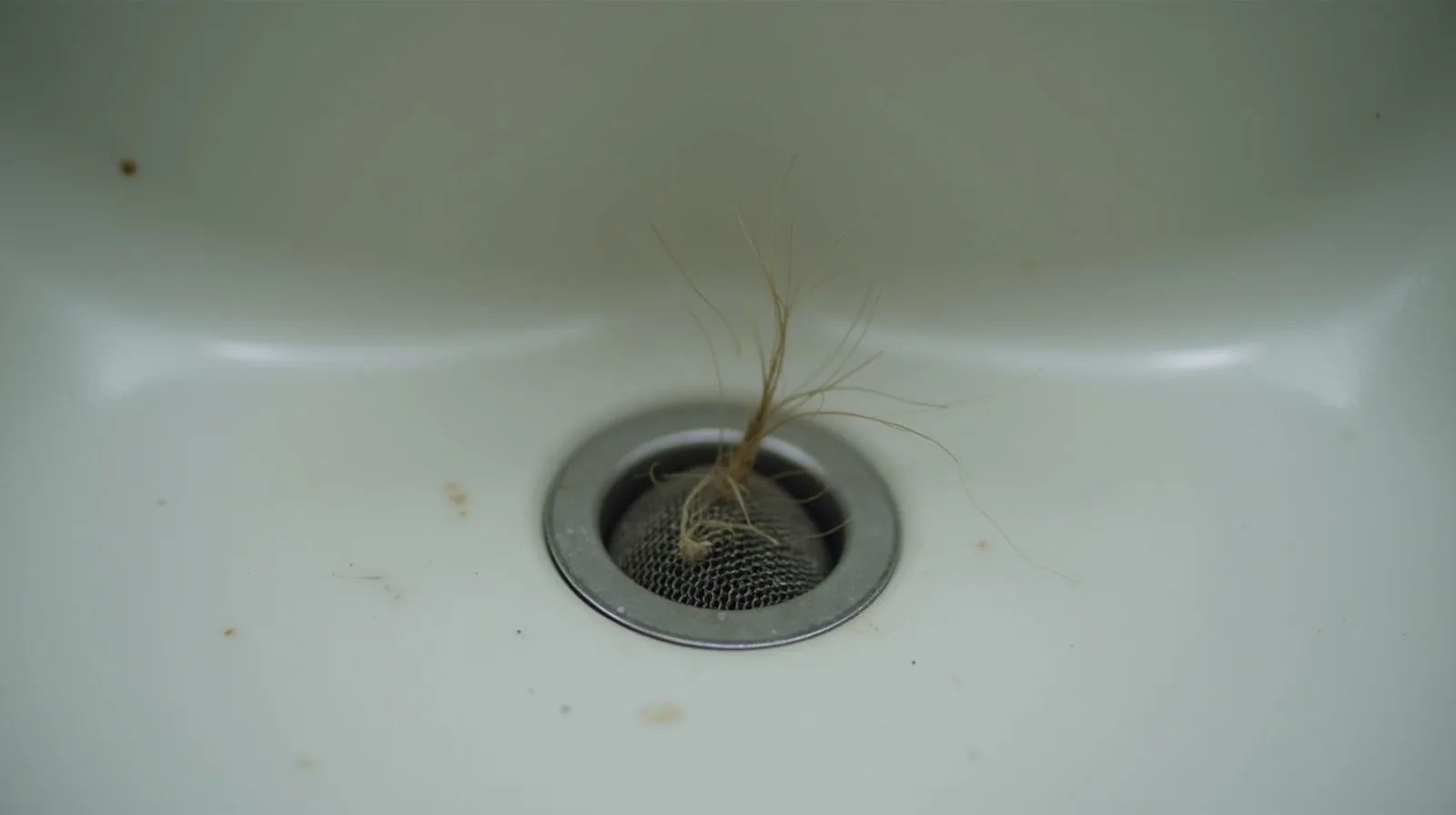
- Use drain screens in showers and sinks to catch hair and food before they go down — empty them into the bin. This single cheap step prevents most clogs.
- Never pour grease down the drain. Let cooking fat cool and solidify, then bin it; grease is the number-one kitchen-drain killer.
- Flush drains periodically with hot water, and give them the occasional baking-soda-and-vinegar treatment as maintenance rather than waiting for a backup.
A slow drain is asking for a mechanical fix, not a chemical one. Start with hot water and baking-soda-and-vinegar, pull the hair out physically, and reach for a plunger or snake if needed — then screen your drains and keep grease out so it doesn’t happen again. Your pipes, and your lungs, will thank you.