Walk down the cleaning aisle and you'd think every surface in your bathroom needs its own bottle: one for glass, one for tile, one for the toilet, one that promises to dissolve soap scum on contact. Most of it is the same handful of ingredients in different colors, marked up and scented. You can clean an entire bathroom — sink, shower, toilet, mirror, floor — with three things that are probably already under your kitchen sink.
The trick isn't a secret product. It's using the right basic for each job and working in an order that keeps you from cleaning the same spot twice.
The three things (and what each is for)
Keep it this simple:
- Dish soap cuts grease and body oil. A few drops in warm water is your everyday all-purpose cleaner for the sink, tub, and counters.
- White vinegar dissolves the hard-water minerals and soap scum that build up on glass, faucets, and shower doors. Diluted about half-and-half with water in a spray bottle, it's your limescale and shine solution.
- Baking soda is a gentle abrasive. Sprinkled on a damp surface, it scrubs away grime and stuck-on residue without scratching, and it deodorizes as it goes.
Add a microfiber cloth and an old toothbrush for corners, and you have a complete kit. That's it.
Work top to bottom, dry to wet
The single biggest time-saver is sequence. Dust and debris fall downward, and water spreads, so you always work from the highest, driest surfaces to the lowest, wettest ones. Clean the mirror before the sink, the sink before the toilet, and the floor dead last. Do it in the other order and you'll be re-wiping drips all morning.
One more habit that changes everything: spray first, then walk away. Give the vinegar or soapy water a couple of minutes to actually break down the grime before you wipe. That pause does the scrubbing for you.
The sink, counters, and mirror
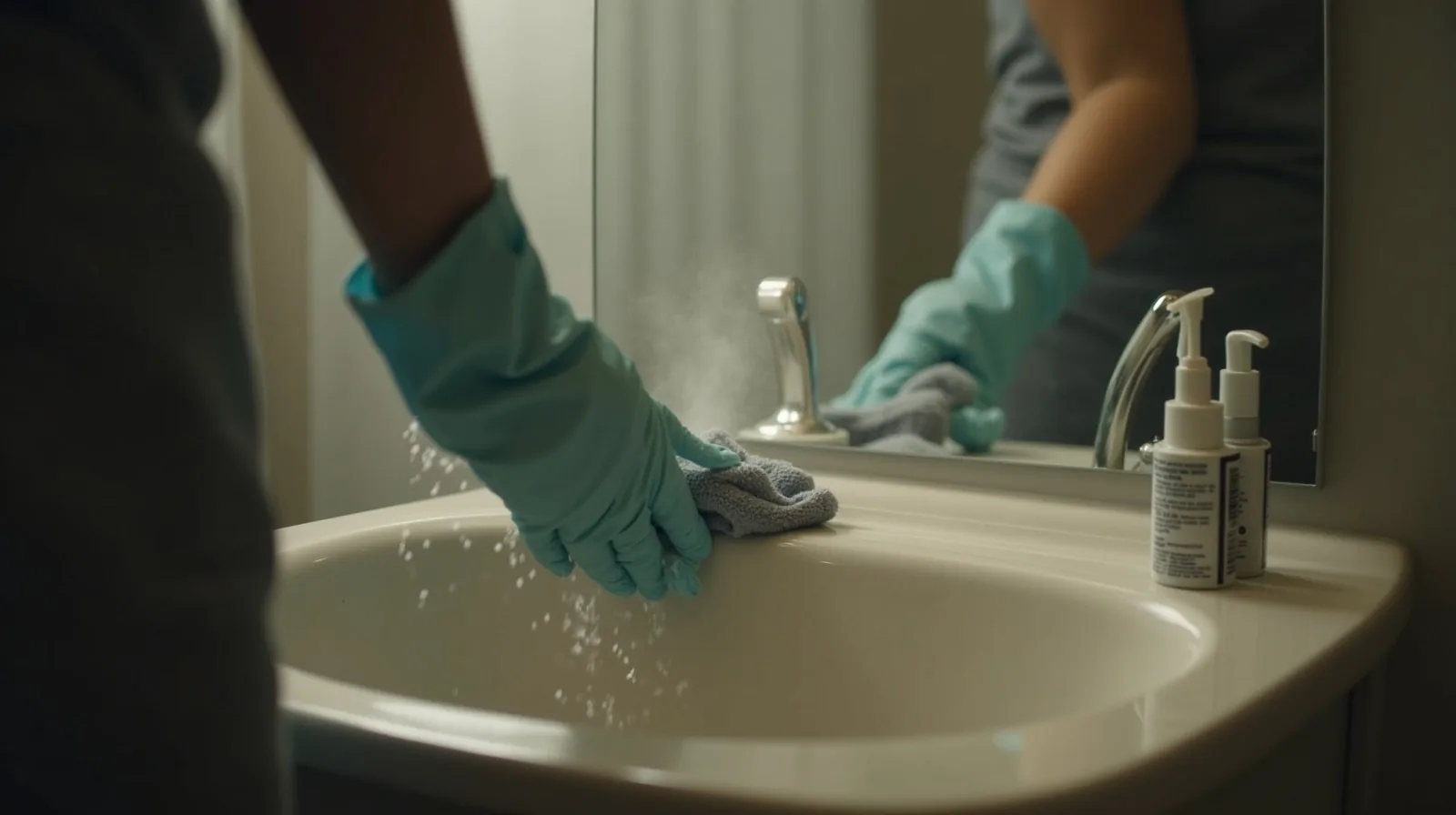
Start with the mirror while the room is still dry. A light mist of the vinegar solution and a dry microfiber cloth leaves it streak-free — no paper towels, no lint. Then move to the counters and sink with warm soapy water, using the toothbrush around the faucet base and drain where gunk collects. For crusty mineral buildup on the tap, lay a vinegar-soaked cloth over it for five minutes and it wipes right off.
The shower and tub
This is where soap scum lives, and where people reach for the harshest sprays. You don't need them. Make a loose paste of baking soda and a little water, spread it on the tub and tile, and let it sit while you do the toilet. Come back, scrub with a damp cloth or sponge, and rinse. For glass doors and stubborn scum, follow with the vinegar spray and a squeegee. The two-step — abrasive first, acid second — handles almost anything a specialty product would.
The toilet
Sprinkle baking soda into the bowl, add a splash of vinegar (it will fizz — that's fine and harmless), and let it sit while you scrub the seat, lid, and base with soapy water. Then brush the bowl and flush. The exterior is where germs actually accumulate, so don't skip the handle, the hinges, and the floor right around the base.
The floor, last
Finish with the floor using the same warm soapy water and a cloth or mop, working from the far corner back toward the door so you're not stepping on what you've cleaned. By now everything above it has already dripped its last, so one pass does it.
Done in this order, a full bathroom takes about fifteen to twenty minutes and three ingredients that cost a few dollars combined. The specialty sprays aren't buying you a cleaner bathroom — they're buying you more bottles to store.