Grease is sneaky. Every time you cook, a fine mist of oil rises and settles on everything near the stove — the oven walls, the stovetop, the backsplash, the range hood, even the cabinet fronts. At first it’s invisible, but it accumulates and bakes into a sticky, brown, stubborn film that ordinary wiping just smears around. Degreasing feels like a miserable job because people attack the hardened grease directly with a sponge and elbow grease. The real trick is to let a cleaner soften it first, then let a few forgotten spots — especially that hood filter — soak their way clean.
The principle: soften, then wipe
Baked-on grease responds to two things: the right cleaner and dwell time. Whether you use a dedicated degreaser, dish soap in hot water, or a baking-soda paste, the move is the same — apply it, then walk away and let it break down the grease for several minutes (or longer for heavy buildup) before you wipe. Hot water helps everywhere, because heat loosens grease. Trying to scrub cold, hardened grease off in one pass is the mistake; softening it first turns scrubbing into wiping.
The stovetop and grates
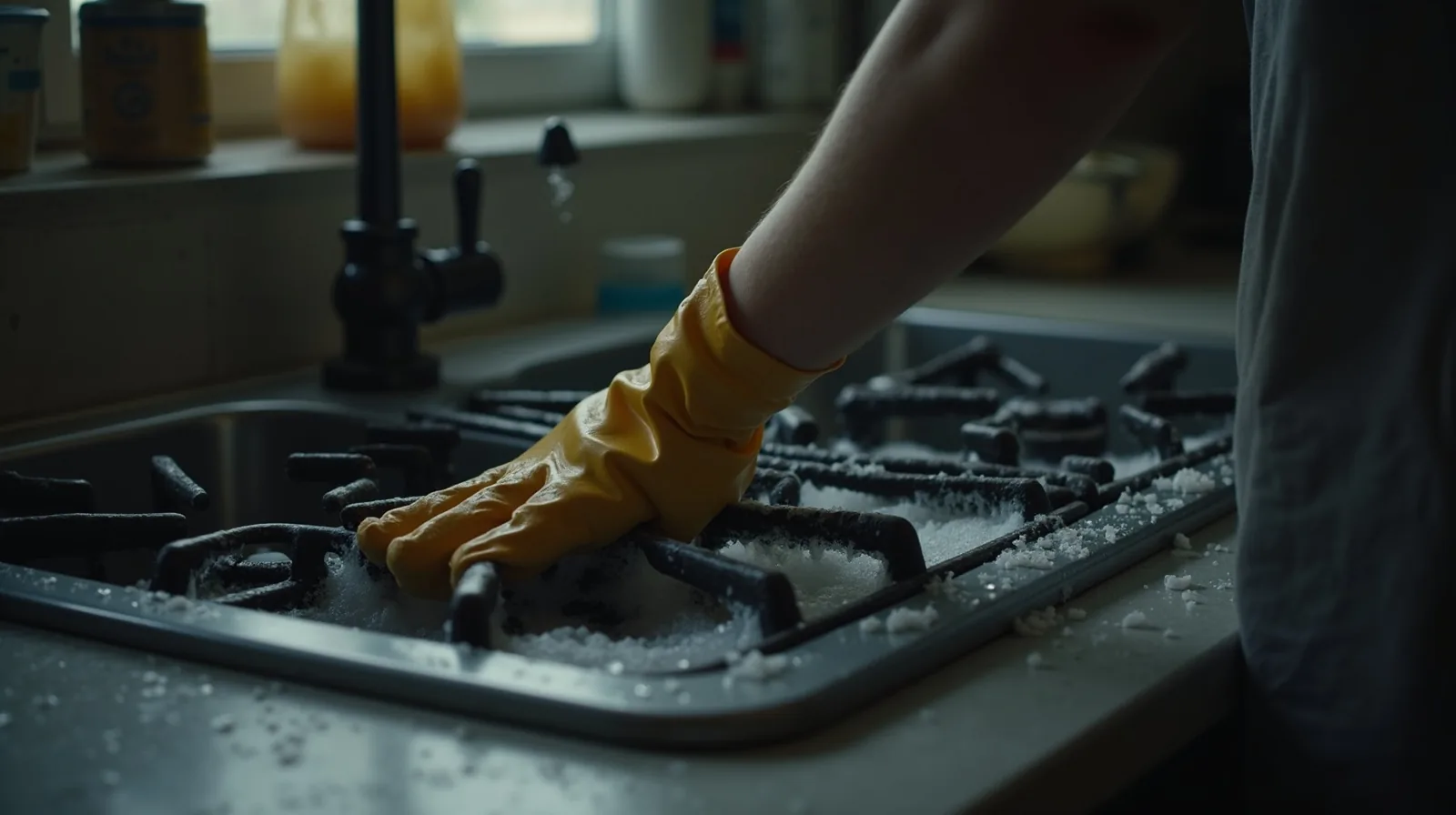
For the cooktop, wipe up loose crumbs, then apply hot soapy water or a baking-soda paste to the greasy areas and let it sit. Burner grates and drip pans come cleanest by soaking: submerge them in hot soapy water (or a baking-soda solution) for 15–30 minutes and the grease lifts with far less scrubbing. A soft brush gets into the textured bits. For glass cooktops, a paste and a plastic scraper handle burnt-on spots without scratching.
The oven
The oven is the grease heavyweight. You don’t need harsh fumes:
- Coat the greasy interior with a thick baking-soda-and-water paste, avoiding the heating elements, and leave it several hours or overnight.
- Wipe it away with a damp cloth — the softened grime comes with it — and spritz any stubborn spots with a little vinegar to help lift the residue.
- Soak the oven racks separately in hot soapy water (a bathtub works for big ones) so you’re not scrubbing them in place.
If your oven has a self-clean cycle, that’s an option too — just ventilate well.
The hood filter nobody remembers
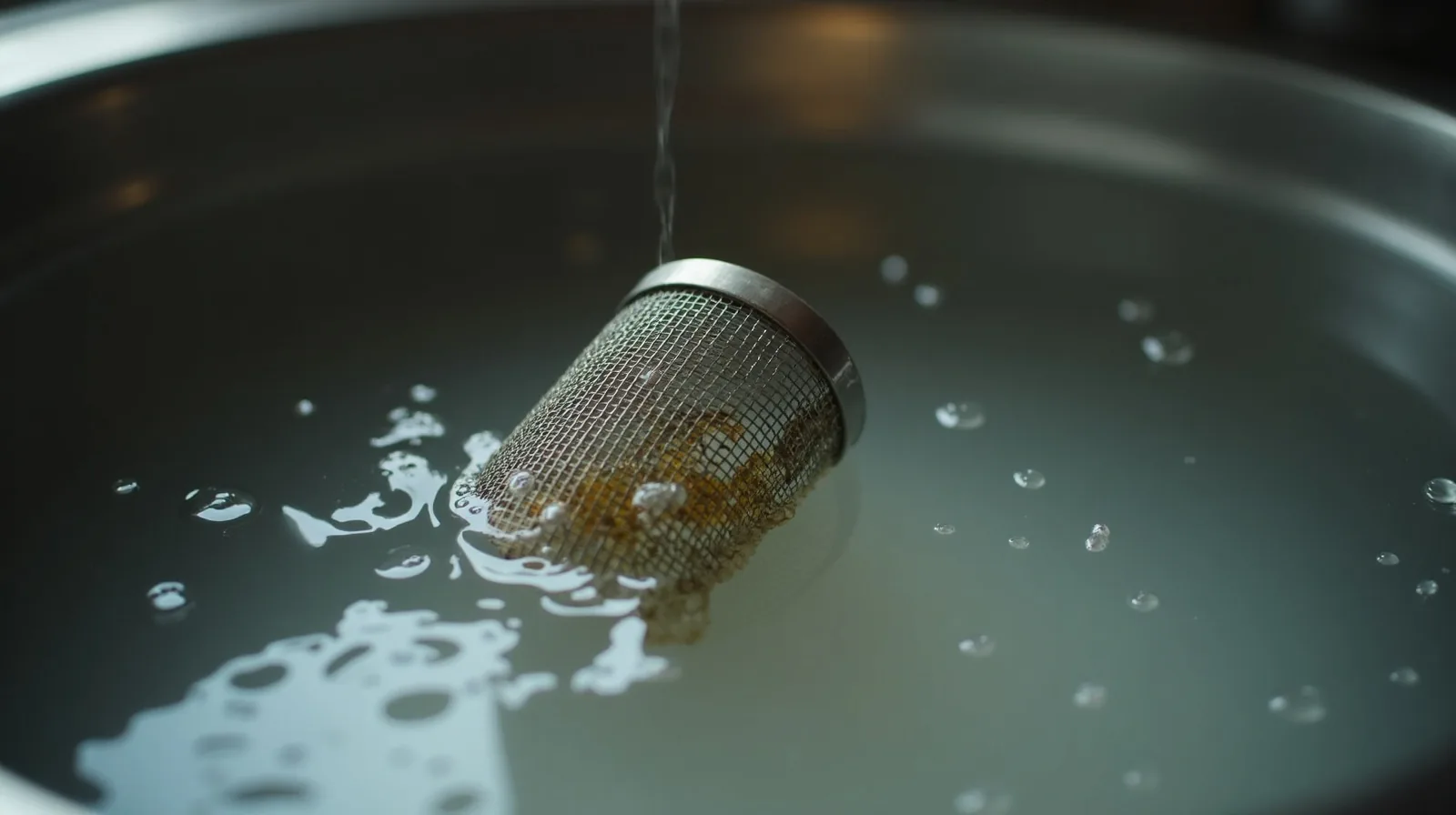
Here’s the one everyone forgets: the range-hood filter, the metal mesh panel under your extractor, is designed to trap airborne grease — which means it’s often the greasiest thing in the kitchen, quietly clogged and working at half capacity. It also lifts right out. Pop it free, submerge it in hot water with dish soap (a spoon of baking soda boosts it), let it soak, give it a light brush, and rinse. It comes out shockingly clean, your hood actually vents again, and the whole kitchen smells fresher. Do it every month or two.
Degreasing stops being dreadful once you stop scrubbing cold, hardened grease. Apply a cleaner, let hot water and time soften everything, soak the removable parts, and finally give that hood filter the bath it’s been begging for. The grease that seemed permanent wipes away.