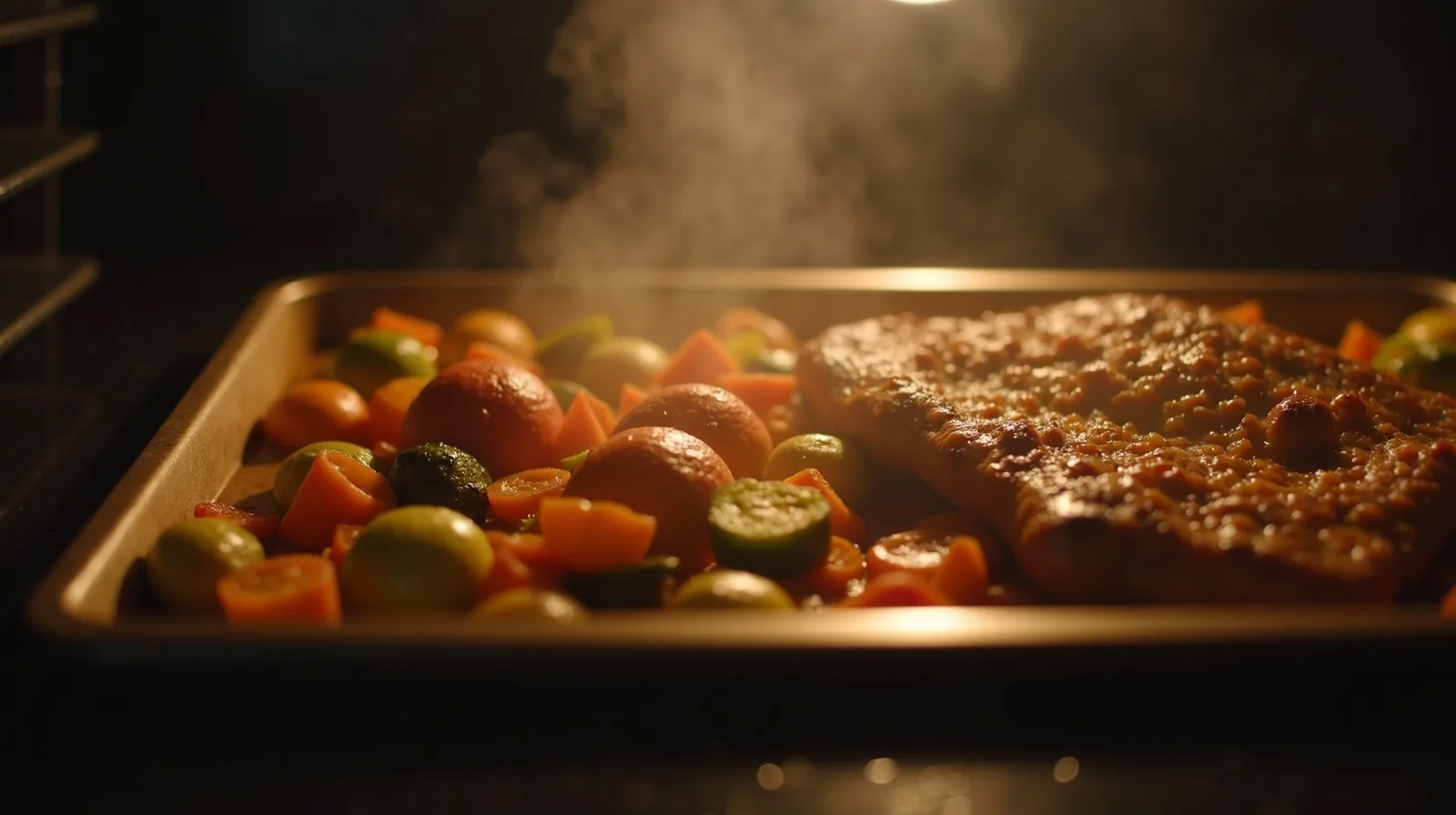
If you learn exactly one cooking format to get you through busy weeknights, make it the sheet-pan dinner. It’s not really a recipe — it’s a formula flexible enough to absorb whatever you have and reliable enough to run on autopilot: put a protein and some vegetables on one pan, roast them in a hot oven, and dinner more or less makes itself while you do something else. The oven does the work, everything cooks together, and you’re left washing a single pan. Once you internalise the formula, you stop needing recipes at all.
The formula
Every sheet-pan dinner is the same four parts:
- A protein — chicken pieces, sausage, fish, tofu, chickpeas, whatever you have.
- Vegetables — anything that roasts well: potatoes, broccoli, peppers, onions, carrots, Brussels sprouts, squash.
- Fat — a good drizzle of oil so everything browns instead of steaming.
- Seasoning — salt, pepper, and whatever spices or herbs set the theme (smoky, Mediterranean, curry-spiced, lemony).
Toss it all together, spread it out, roast. That’s the whole thing — the variations are infinite because the structure never changes.
The two rules that make it work
Two details separate a great sheet-pan dinner from a soggy one:
- Don’t crowd the pan. Everything needs space in a single layer. Pile it up and the food steams in its own moisture and turns limp instead of browning. If it’s crowded, use two pans. This is the number-one rule.
- Cook at high heat. A hot oven (around 200°C / 400°F or above) is what gives you caramelised, crisp-edged vegetables and properly browned protein. Low and slow just dries things out.
Timing: the one thing to think about
The only real skill is getting everything done at once, since ingredients cook at different speeds. Two easy ways to handle it:
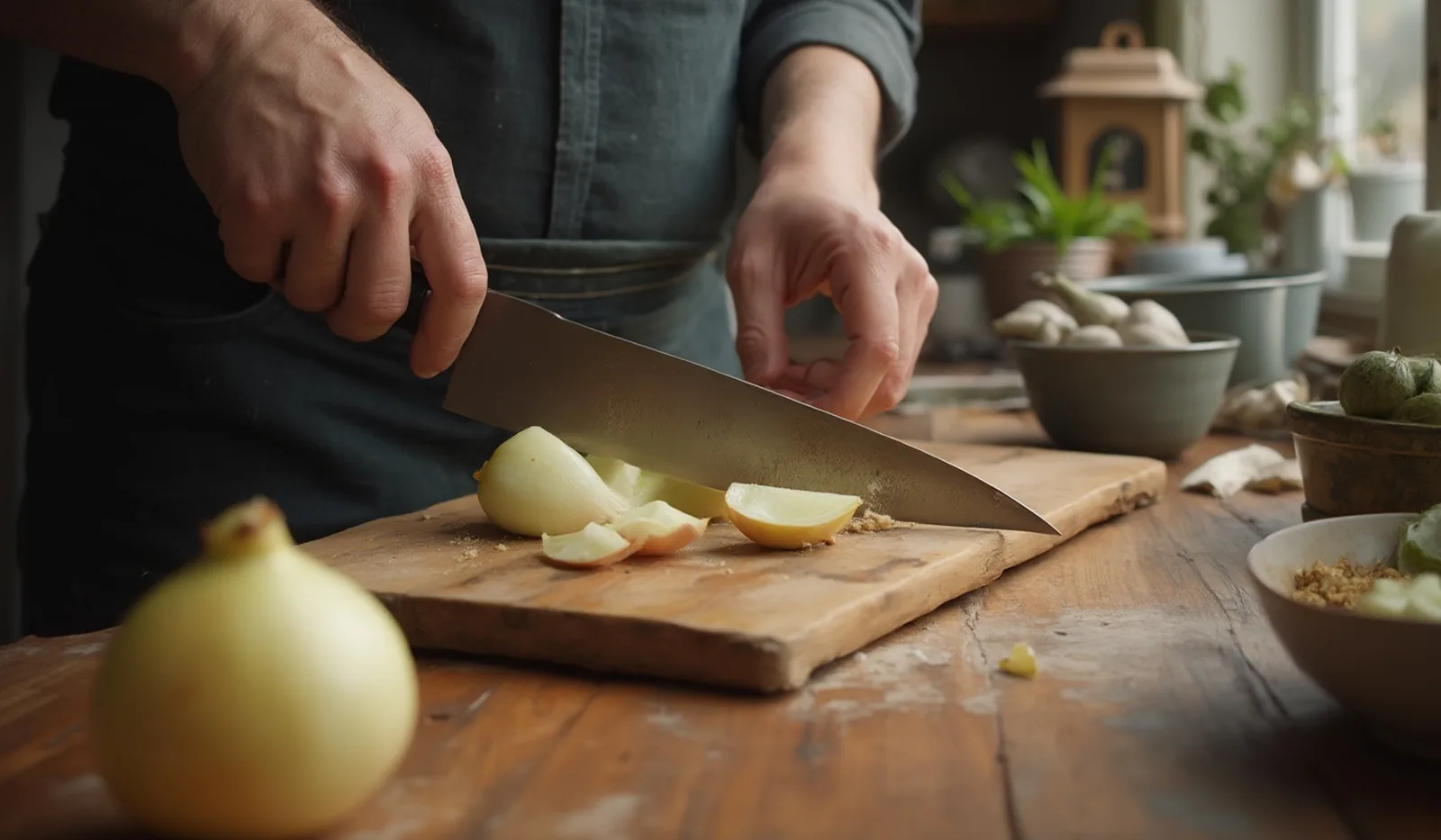
- Cut for the clock. Chop slow-cooking vegetables (potatoes, carrots) smaller and quick ones (peppers, zucchini) larger so they finish together.
- Stagger the pan. Start the slow items (and proteins that need longer) first, then add the quick-cooking vegetables partway through. A dense potato and a delicate cherry tomato simply don’t belong on the pan at the same moment.
Give everything a stir or flip partway for even browning, and if your protein and veg really don’t match timings, roast them on separate pans and combine at the end.
Finish and vary it
Out of the oven, a finishing touch lifts the whole pan — a squeeze of lemon, fresh herbs, a drizzle of sauce, a crumble of cheese. To keep it interesting week to week, just change the seasoning theme and the sauce: the same chicken and vegetables become a different dinner with smoked paprika one night and a lemon-herb finish the next. Serve as-is, or over rice or in a wrap to stretch it.
One pan, four parts, a hot oven, and room to breathe — that’s a dinner you can improvise any night of the week with whatever’s in the fridge, and barely any cleanup to show for it.