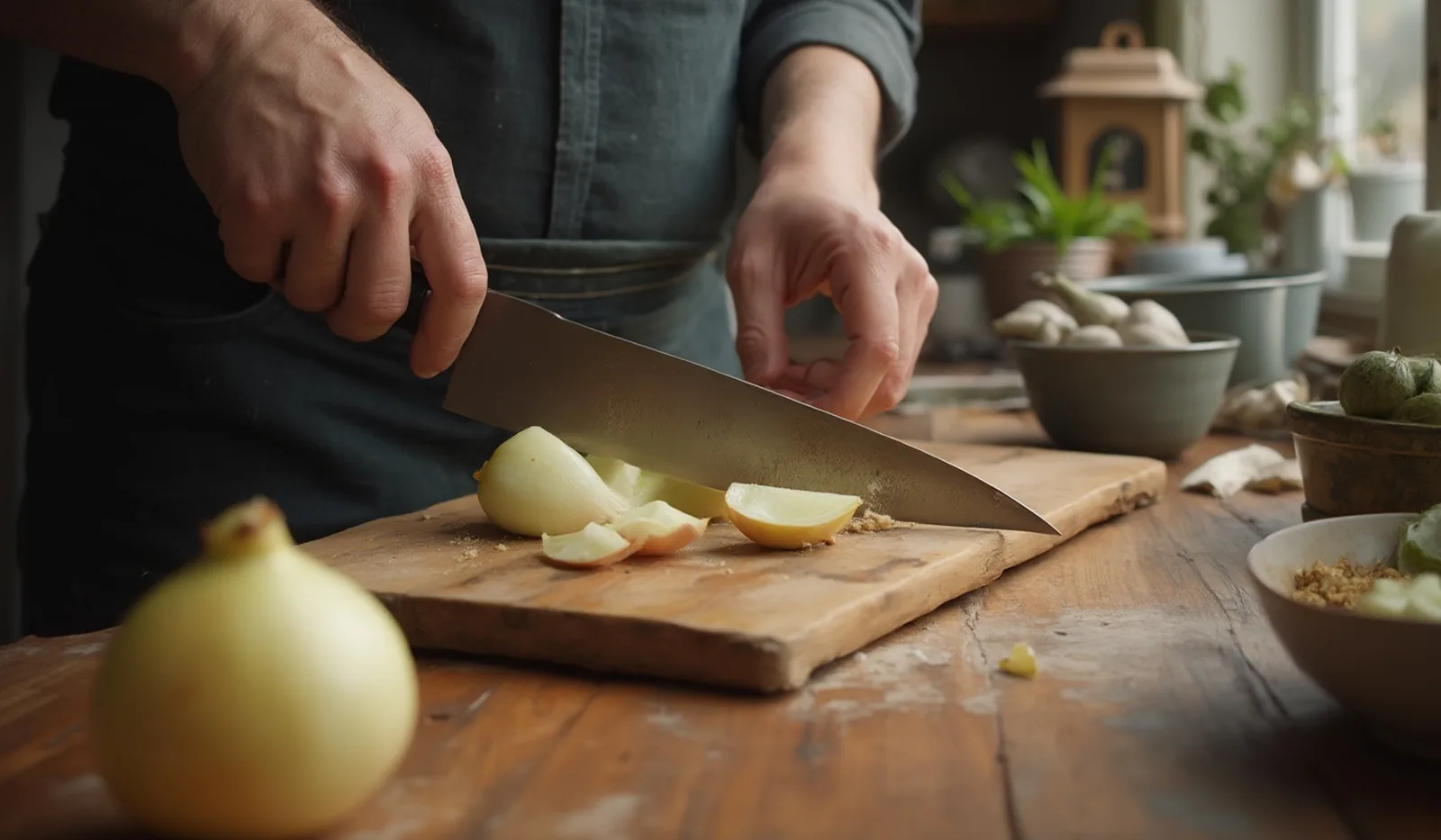

A dish that’s gone too salty, too spicy, too sweet, or scorched on the bottom feels like a dead end, but most of the time it isn’t. These are balance problems, and balance can usually be nudged back into place with what’s already in the kitchen — no need to start from scratch or order dinner instead.
Too salty
Oversalting is the most common kitchen accident, and the most fixable. The core strategy is dilution: add more of everything else so the salt is spread across a bigger volume, or add bulk that carries no salt of its own.
- Add unsalted liquid or bulk — more broth, water, canned tomatoes, or a handful of extra vegetables or grains — to dilute the ratio of salt to everything else.
- Add a splash of acid, like lemon juice or vinegar, which won’t remove salt but can make it read as less dominant.
- Add a touch of sweetness, a pinch of sugar or a splash of something naturally sweet, which can round off the sharp edge of too much salt the same way it balances too much acid.
- Skip the raw-potato myth. A potato simmered in an oversalted soup doesn’t meaningfully pull out salt — it just adds volume, which you could do with anything else.
- Stretch the portion, if dilution alone doesn’t fully fix it — a soup or stew that serves four can often absorb enough added liquid and bulk to serve six without tasting watered down.
Too spicy or too sweet
Spicy and sweet both respond to the same principle: introduce something that balances or masks the intensity rather than trying to remove it.
- For too spicy: dairy (yogurt, sour cream, a splash of milk), fat (a swirl of oil or butter), a little sweetness, and an acid all help cut heat — dairy works because it binds directly to the compound that causes the burn.
- For too sweet: a hit of acid or a pinch of salt cuts the sweetness far more effectively than trying to dilute it with more of everything else.
- For too acidic: the reverse works — a little sugar or a pinch of baking soda in a tomato-based sauce softens sharp acidity.
- Add bulk if nothing else fits, the same dilution principle that rescues an oversalted dish works here too.
- Serve alongside something cooling — rice, bread, or a plain side — when a dish is spicier than intended and there’s no more time to adjust the pot itself.
None of these fixes work instantly. Stir in a small amount, wait a minute or two for it to actually blend through the dish, and taste again before adding more — overcorrecting a fix is its own kind of new problem.
Burnt on the bottom
A scorched bottom doesn’t have to mean a scorched dinner, as long as you separate the two before the burnt flavor spreads any further.
- Transfer immediately, pouring or spooning the unburnt portion into a clean pot without scraping the blackened bottom — scraping is what actually mixes the burnt flavor into everything else.
- Don’t stir the burnt layer even by accident while transferring; lift gently from the top.
- Mask any lingering trace with a new flavor element — fresh herbs, a squeeze of citrus, or an added spice can cover a faint burnt undertone that survived the transfer.
Too thin or too thick
Texture problems are usually the easiest fix of all.
- Too thin: simmer uncovered to reduce and concentrate, or stir in a small slurry of starch and cold water.
- Too thick: thin gradually with hot broth or water, a little at a time, tasting as you go.
- Know when it’s unsalvageable: if a dish is scorched all the way through, or so oversalted that dilution would double the portion size past what’s useful, it’s reasonable to call it and start again.
The common thread across all of these fixes is the same: taste as you go, adjust in small amounts, and give each addition a minute to actually incorporate before deciding it hasn’t worked. Most rescues fail not because the fix was wrong, but because someone judged it before it had time to even out.