Rice fails for the same handful of reasons every time: the wrong amount of water, a lid that keeps getting lifted, or heat that’s too high or too low for too long. None of it is bad luck, and none of it requires a rice cooker to fix. Once you know the ratio for the rice in your pantry and the basic stovetop method, rice becomes one of the most reliable things you cook — not one of the most unpredictable.
Do you need to rinse it?
Rinsing rice under cool water until it runs mostly clear washes away surface starch, and for most long-grain rice that’s a good thing — it keeps the grains separate instead of gummy. For short-grain or sushi-style rice, a light rinse still helps remove dust and debris, but you actually want to keep some starch for that stickier texture. Skip rinsing only for pre-rinsed or enriched rice where the package says not to — you’d wash off the added nutrients along with the starch.
- Rinse long-grain and basmati. Swish in a bowl or fine strainer until the water runs clear, then drain well.
- Rinse short-grain lightly. A quick rinse is enough; over-rinsing removes the starch that gives it its texture.
- Drain thoroughly. Extra clinging water throws off your measured ratio, especially in smaller batches where a tablespoon or two makes a real difference.
- Let it sit in the strainer a minute after rinsing so excess water actually drips off instead of going straight into the pot.
The ratios, by type
Every rice variety absorbs water differently, and the ratio is the one number worth memorizing for whatever you actually keep in the pantry. These are standard stovetop ratios, measured by volume — rice to water, using a pot with a genuinely tight lid.
- White long-grain: about 1 cup rice to 1½ cups water.
- Basmati and jasmine: about 1 cup rice to 1½ cups water, sometimes a touch less once rinsed — these grains are drier and cook up fluffier with slightly less liquid.
- Brown rice: about 1 cup rice to 2 cups water, plus more time — the bran layer slows water absorption.
- Short-grain (sushi-style): closer to 1 cup rice to 1¼ cups water, since the goal is a stickier, more cohesive grain.
- Wild rice: closer to 1 cup rice to 3 cups water and a longer simmer, since it’s technically a grass seed with a tougher outer layer.
These numbers assume a standard pot on a standard stovetop. A wider, shallower pot loses more water to evaporation than a narrow, deep one, so if your rice consistently comes out a little dry, it’s worth adding an extra tablespoon or two of water rather than assuming the ratio itself is wrong for your kitchen.
The method that works every time
Once the ratio is right, the technique is almost identical across types. Bring the rice and water to a boil, uncovered, in a heavy pot with a tight-fitting lid. The moment it hits a rolling boil, stir once, drop the heat to the lowest simmer your stove allows, and cover.
- Don’t lift the lid. Every peek releases trapped steam the rice needs to finish cooking evenly.
- Simmer, don’t boil. White rice needs about 15–18 minutes covered; brown rice closer to 40–45.
- Rest off heat. Pull the pot off the burner and let it sit, still covered, for 5–10 minutes — this lets the last bit of steam finish the job without scorching the bottom.
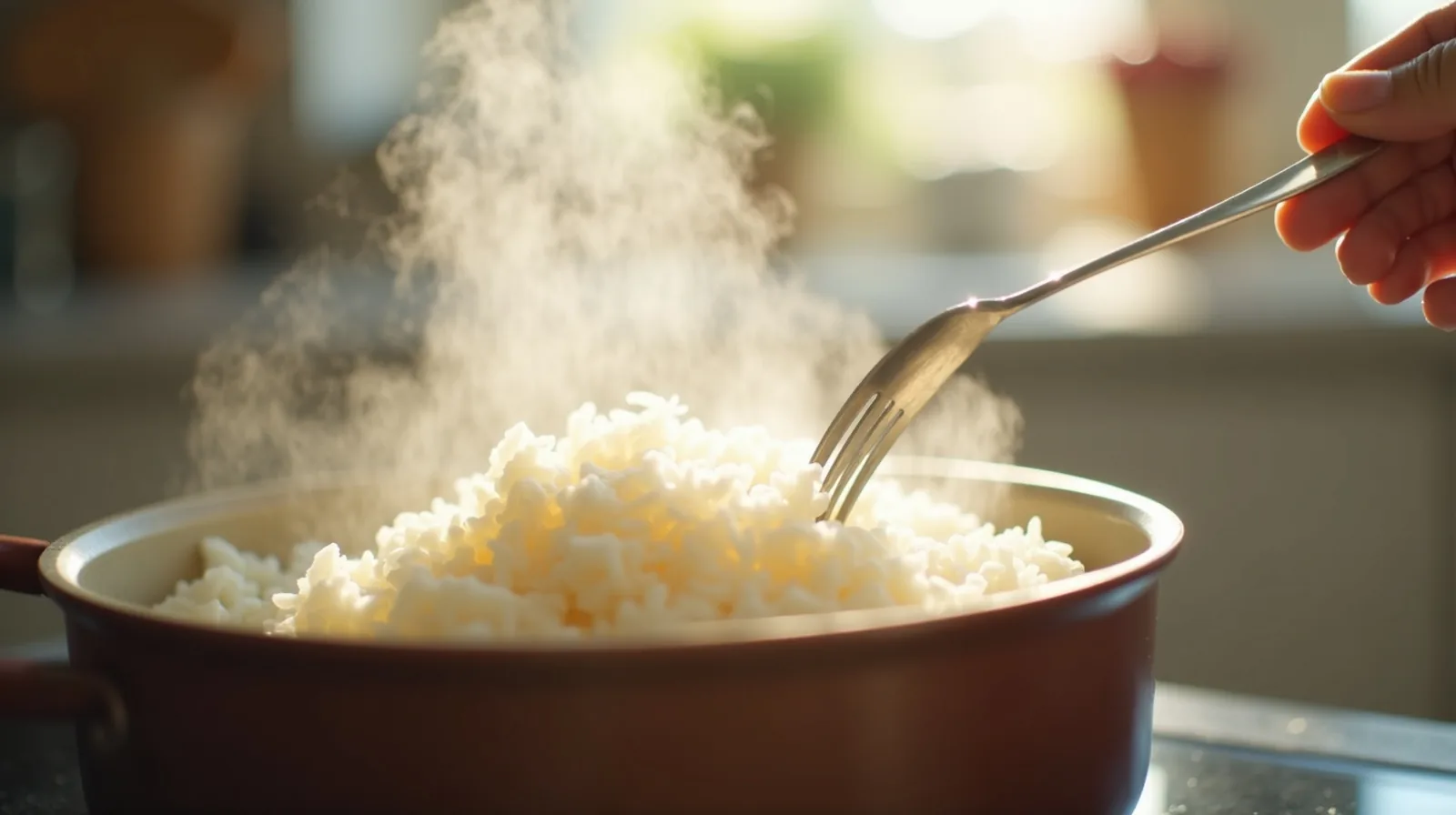
- Fluff, don’t stir. Run a fork through the rice to separate the grains instead of mashing them with a spoon.
Troubleshooting the common failures
If something still goes wrong, the fix is almost always about water or heat, not the rice itself.
- Mushy or gummy rice usually means too much water or a lid removed too early, letting extra steam re-condense back in. Next time, cut the water slightly and resist stirring while it cooks.
- Crunchy or undercooked rice means it needed more time or liquid. Add a few tablespoons of hot water, re-cover, and let it steam for a few more minutes off the heat.
- Rice sticking or scorching on the bottom points to heat that’s too high during the simmer. Lower it further, and consider a heat diffuser if your stove doesn’t hold a gentle simmer well.
- Uneven texture, some grains mushy and some still firm, usually means the heat wasn’t low or even enough during the simmer — a heavier pot distributes heat more gently than a thin one.
- Rice that tastes bland even when it’s cooked correctly is often just under-salted — a pinch of salt in the cooking water goes a long way and is easy to forget.
Once you’ve made a batch or two with the right ratio for your stove and pot, the process stops needing much thought at all — it becomes as automatic as boiling pasta.