A cake that domes and cracks before the middle sets, cookies that spread thin and pale no matter how carefully you follow the recipe, bread that never quite browns before it dries out — these read like recipe problems or skill problems, and home bakers usually blame themselves first. Very often the real culprit is simpler and less obvious: the oven's dial is telling you a temperature it isn't actually holding. Most home ovens run somewhere between 25°F and 50°F off from what the display says, and some run further off than that. A five-dollar test tells you exactly how far off yours is — and once you know the number, fixing it, or just working around it, takes a few minutes.
Why Oven Thermostats Drift
The number on an oven's dial or display isn't a direct read of the air temperature around your food — it's a target the thermostat is aiming for, based on a sensor mounted somewhere in the cavity, usually near the back wall. That sensor can be miscalibrated from the factory by a few degrees, and it drifts further over years of heating and cooling cycles, especially in an oven that gets heavy use. A worn door seal that lets heat leak out makes the thermostat compensate by running the heating element longer and hotter than it should to hit the same number. And even a well-calibrated oven doesn't hold a perfectly flat temperature — the element cycles on and off to maintain the average, so the real temperature swings up and down by roughly 10°F to 25°F around the set point throughout a bake, rather than sitting still at exactly 350.
The Oven Thermometer Test
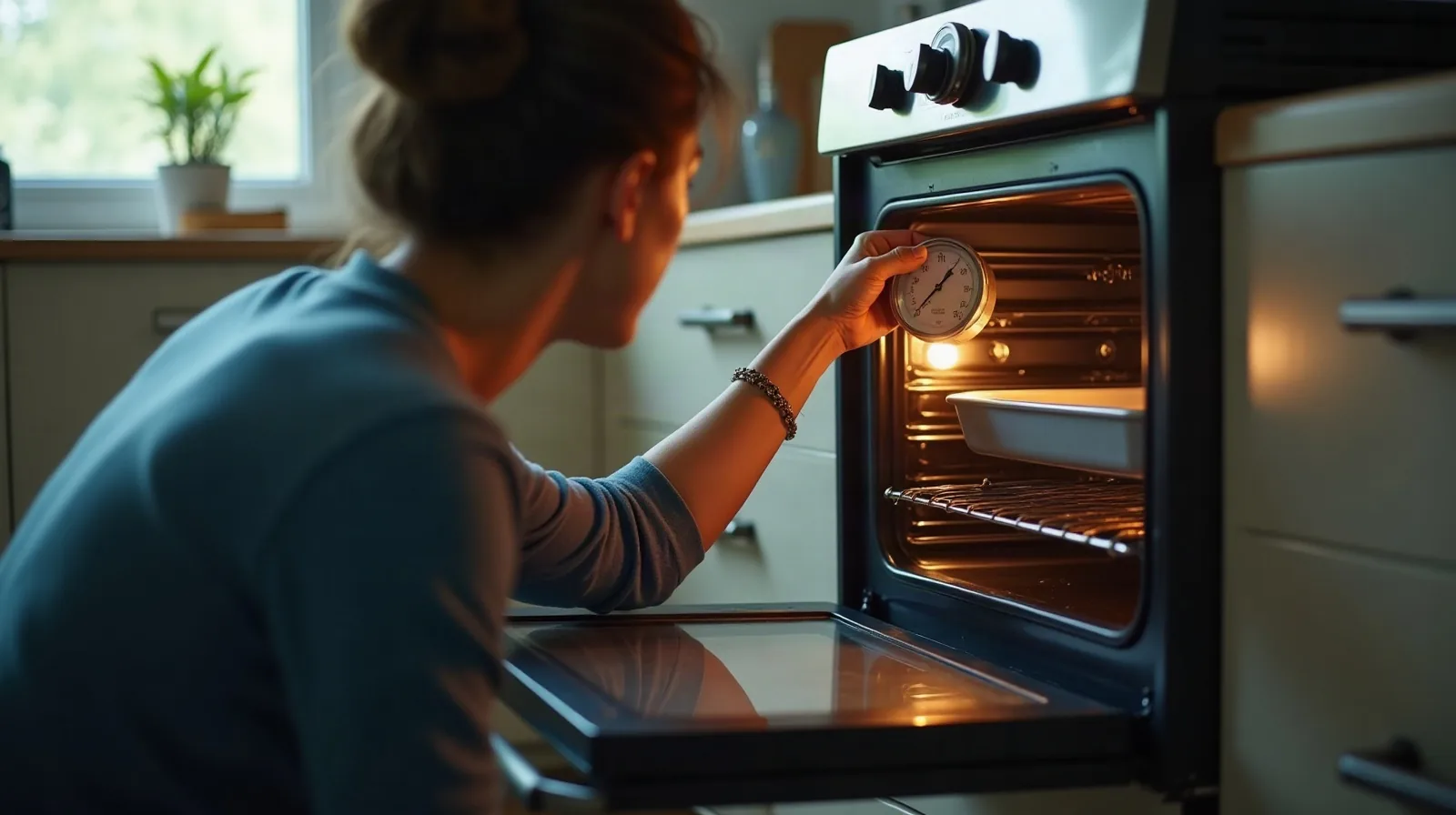
An inexpensive oven-safe thermometer — a simple dial or bimetal gauge made to sit inside a hot oven, sold at any hardware or kitchen store — is the only reliable way to find out what your oven is actually doing. Hang or stand it in the center of the middle rack, away from the walls, the door, and any heating element, which is roughly where a dish would sit anyway. Set the oven to a plain round number like 350°F and let it preheat fully, then keep waiting another fifteen to twenty minutes past the point where it beeps or the indicator light goes off — most ovens signal “ready” well before the interior has actually stabilized. Check the thermometer's reading against the number on the dial. Then check again a few minutes later; watching it over a full cycle shows both the average temperature and how far it swings above and below that average as the element switches on and off.
Checking for Hot Spots, Not Just the Average
A single reading in the center only tells half the story. Move the thermometer to the back of the rack, then the front, then side to side over a couple of test runs, and real variation usually turns up — many ovens run several degrees hotter near the back wall or on whichever side sits closer to the heating element, especially in smaller cavities. This is the actual explanation behind a tray of cookies that comes out browned on one end and pale on the other, or a cake layer that rises unevenly. Once the hot side is known, rotating pans a half-turn partway through baking, and centering anything that needs the most even heat, corrects for it without touching a single setting.
How Far Off Is Too Far Off
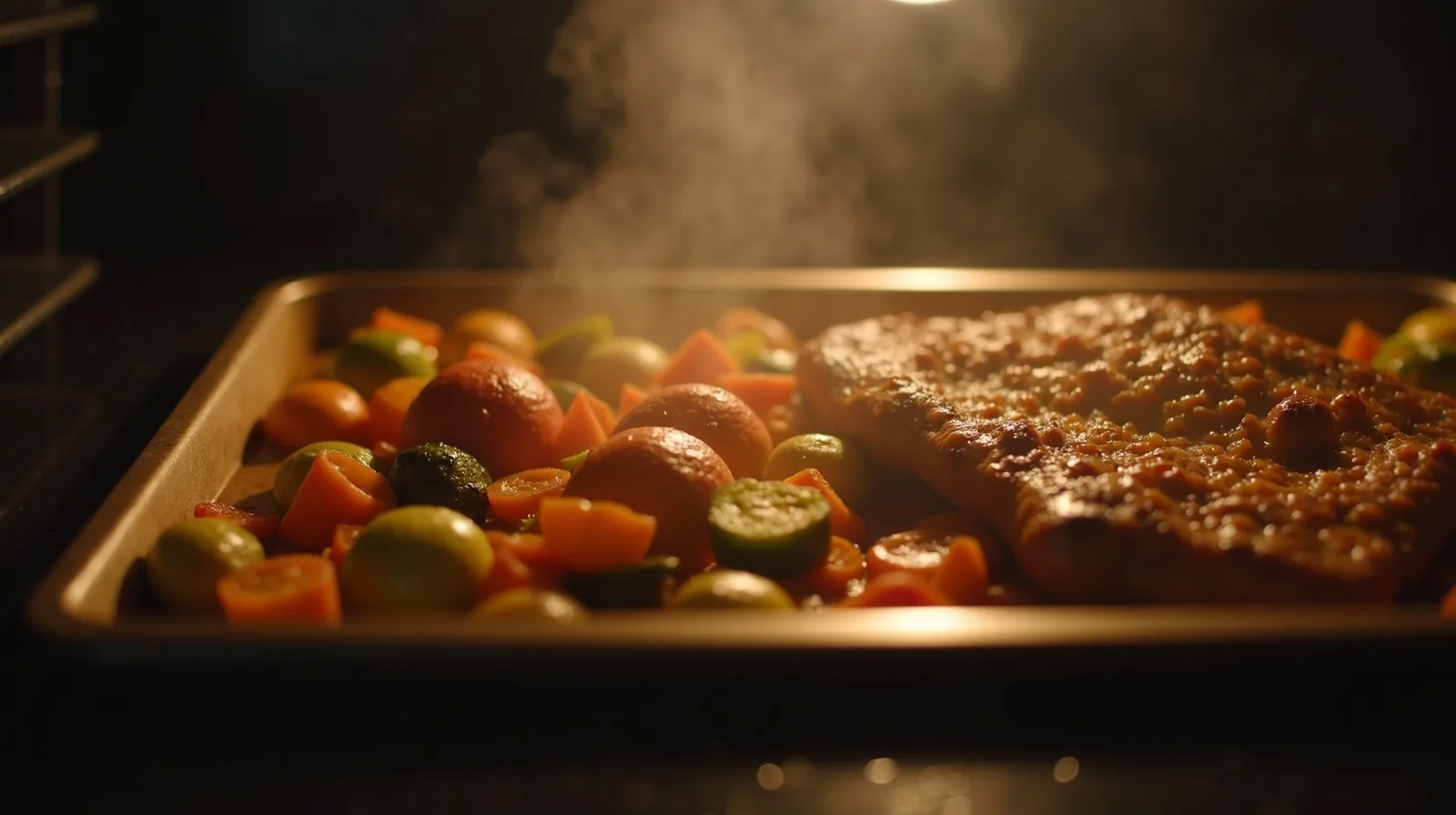
A swing of about 15°F to 20°F around the set point is normal for most home ovens and rarely changes a result enough to notice. A consistent offset of 25°F to 50°F or more is where it starts showing up in the food: cakes that dome, crack, or set on the outside before the center finishes; cookies that spread too thin because they melt before the structure can set; bread that never develops real color because the oven is running cooler than the recipe assumed, or that over-browns on the outside while the inside lags behind because it's running hotter than assumed. If a thermometer test turns up a gap in that range, it's worth correcting rather than remembering to compensate every single time.
Fixing It: The Calibration Offset
Many ovens, especially newer ones with a digital control panel, have a hidden calibration or temperature-offset setting buried in a menu. It lets you nudge the displayed temperature up or down, typically within a range of about 35°F in either direction, so the number on the dial matches what the thermometer actually reads. The exact steps to reach that menu vary by model — usually a specific button combination or a long-press on the control panel — so it's worth a quick search for the oven's model number plus “temperature calibration,” or checking the printed manual if it's still around. After adjusting the offset, redo the thermometer test to confirm the new number actually matches before trusting it.
No Calibration Setting? Just Compensate
An older analog-dial oven, or one without a calibration menu, still has an easy fix — the math just happens by hand instead of inside the oven. If a test shows the oven running 30°F hot, set the dial 30°F below whatever the recipe calls for; if it tests cool, set it that many degrees higher. The more reliable long-term move is leaving the standalone thermometer clipped inside permanently and treating it, not the dial, as the real number: glance at it partway through a bake and nudge the dial if it's drifted off target, the same way you'd adjust a stovetop burner that runs hotter than its label suggests.
When It's Worth Calling a Technician
A small, consistent offset is a calibration problem, fixable in a few minutes. A large swing — 50°F or more, an oven that never quite reaches its set temperature, or one that reads a completely different number every time it's tested — usually means the temperature sensor itself has failed and needs replacing, which is a genuinely cheap, common repair part on most ovens. It's still worth having a technician handle it, particularly on a gas oven where the igniter and safety valve sit close to the same wiring; on an electric oven, some manufacturers document a safe do-it-yourself sensor swap, worth checking before opening anything up. Either way, it's a fix worth trying before assuming an oven that “just doesn't bake right anymore” needs replacing altogether.
None of this requires new equipment beyond a five-dollar thermometer and about twenty minutes of patience — but it turns the guesswork out of baking and cooking with a number that's actually true.