A good non-stick pan feels like a small miracle — eggs slide right off, cleanup takes thirty seconds, nothing ever really burns on. Then, somewhere between month eight and month eighteen, food starts sticking anyway, the surface looks scuffed and cloudy, and the pan that used to need no oil at all suddenly needs a slick of butter just to keep an egg from welding itself down. That decline isn't inevitable. Most non-stick pans die young because of a small set of everyday habits, not because the coating was ever destined to fail on a schedule.
Why the Coating Wears Out in the First Place
Non-stick coatings work by being smooth and slightly slick at a molecular level, and that surface is genuinely delicate compared to bare metal. It doesn't corrode or rust the way cast iron does — it degrades from physical scratches that create tiny channels for food to grip, and from heat that's higher than the coating was designed to handle, which breaks down the material chemically even with zero visible damage. A pan can look perfectly smooth and still have lost most of its non-stick performance from heat alone. Once you know it's a combination of scratches and overheating, almost every care rule below explains itself.
The Heat Rule Nobody Follows
Most non-stick coatings are rated for a lower maximum temperature than people assume, and an empty pan left on a hot burner while you chop vegetables or answer the phone can blow past that ceiling in under a minute. High heat is also simply unnecessary for most of what a non-stick pan is good at — eggs, delicate fish, pancakes, and anything that would otherwise stick all cook better on medium or medium-low anyway, where the surface stays gentle and food doesn't just brown on the outside before it's cooked through. Reserve high heat, and a different pan, for hard searing.
Skip the Metal, Skip the Aerosol Spray
Metal spatulas and whisks are the most direct way to scratch a coating, and it doesn't take a dramatic gouge — the fine scuff marks from months of ordinary stirring add up to the same loss of performance. Wood and silicone utensils cost almost nothing and remove the risk entirely. Aerosol cooking sprays cause a quieter version of the same problem: the propellants in most of them leave a sticky residue that builds up in a thin film over time, and that film is what actually stops releasing food, not the coating underneath it. A spoonful of oil or a pat of butter, spread with a brush or a folded paper towel, does the same job without the buildup.
How to Clean It Without Wrecking It
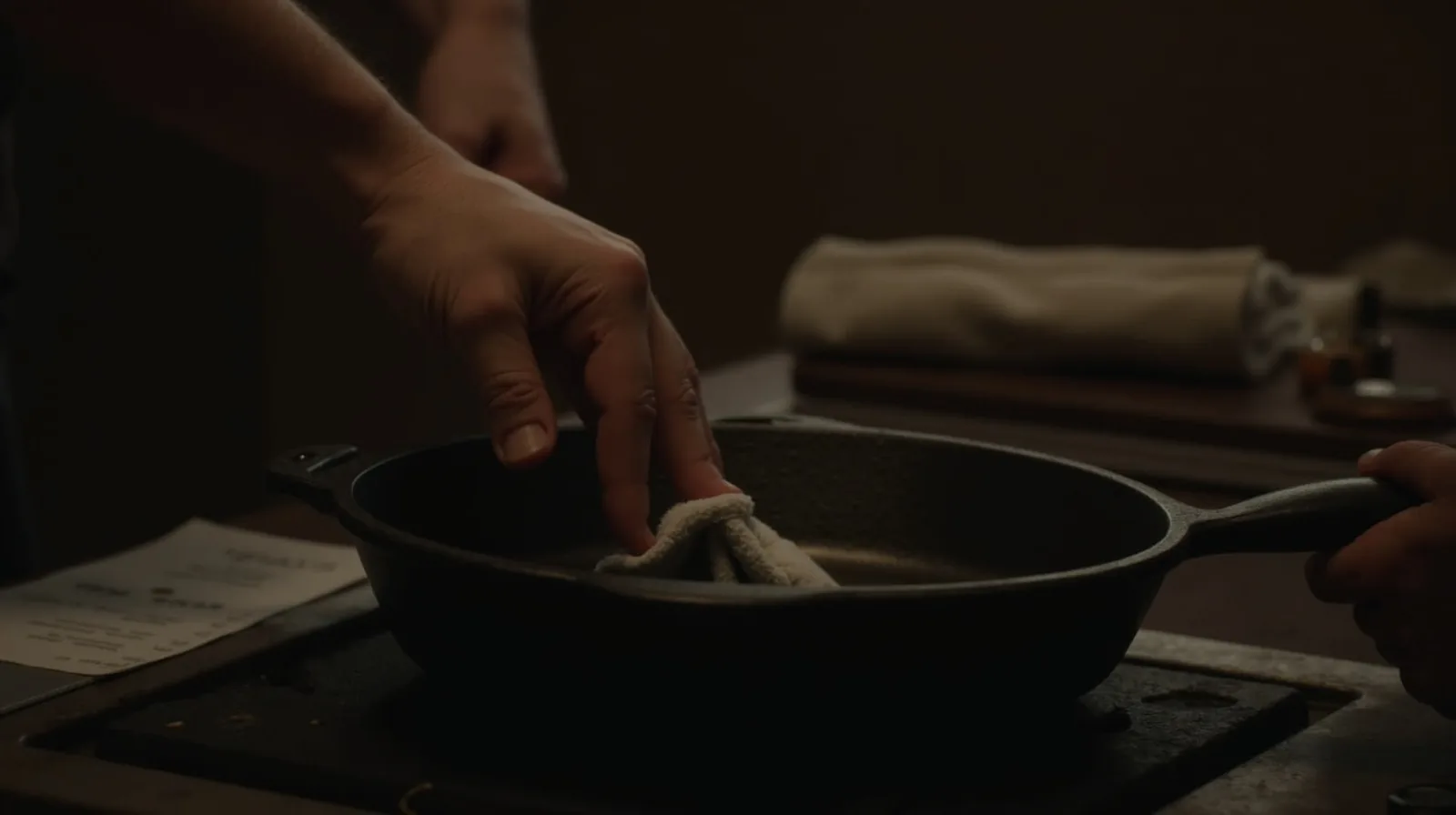
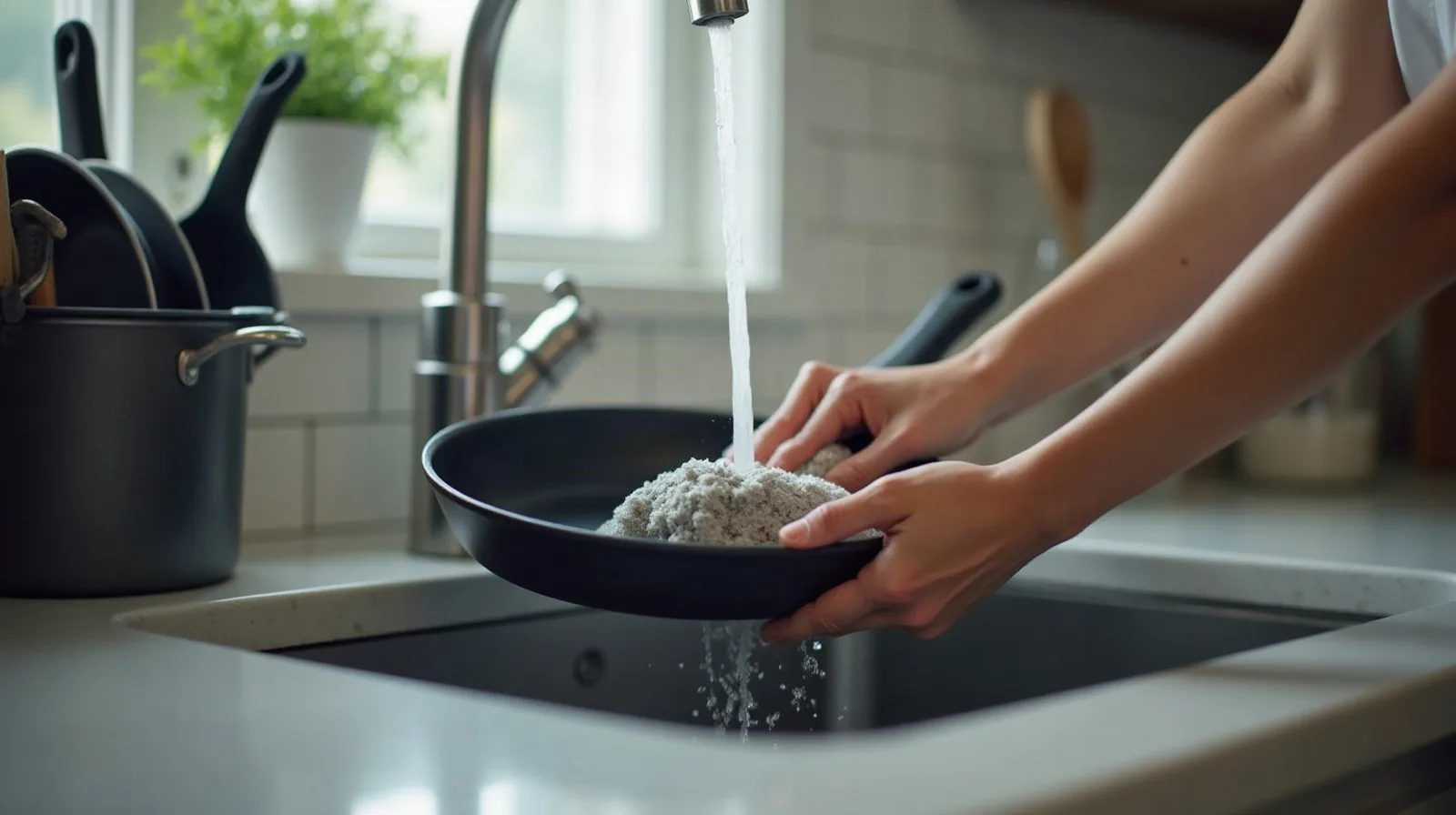
Non-stick cookware is almost always technically dishwasher-safe, which is different from dishwasher-friendly. The combination of scalding water, harsh detergent, and the pan knocking against racks and other dishes wears down the coating far faster than hand washing does, even though nothing looks wrong after any single cycle. The better routine: let the pan cool a little first (plunging a hot pan into cold water can warp thin metal), wash it with warm water, a mild dish soap, and a soft sponge or cloth, and skip steel wool or anything abrasive entirely. If something's stuck, a short soak in warm soapy water loosens it without any scrubbing at all. Dry it right away rather than leaving it in a rack, which prevents the faint water spotting that makes a pan look older than it is.
Storing It So It Doesn't Scratch Itself
A lot of non-stick damage happens in the cabinet, not the stove — pans stacked directly on top of each other grind against one another every time the stack gets disturbed, and that's enough repeated contact to dull a coating over a year or two even if it's never touched a metal utensil. A soft liner between stacked pans solves this completely: a folded kitchen towel, a paper towel, or a purpose-made pan protector all work, and none of them cost more than a few dollars for the whole set. Hanging pans on a rack or storing them on their own hook avoids the problem entirely if you have the space.
When It's Actually Time to Replace It
A non-stick pan that's cared for well can realistically last three to five years of regular use, sometimes longer, and knowing when it's genuinely done saves money in both directions — replacing a fine pan too early, and cooking on a compromised one too long. The real signs are visible flaking or peeling coating, deep scratches you can feel with a fingernail, discoloration that doesn't wipe away, and food sticking consistently even with fresh oil on medium heat despite otherwise careful use. Minor dulling that still releases food fine isn't a failure, just cosmetic wear. Once flaking starts, though, it's worth replacing rather than continuing to cook on a compromised surface.
None of this asks for much. Keep the heat moderate, keep metal and aerosol sprays away from the surface, hand-wash with something soft, and give stacked pans a thin buffer in the cabinet. Do those four things consistently and a non-stick pan stops being the cookware you replace every year and becomes the one you reach for constantly because it just keeps working.