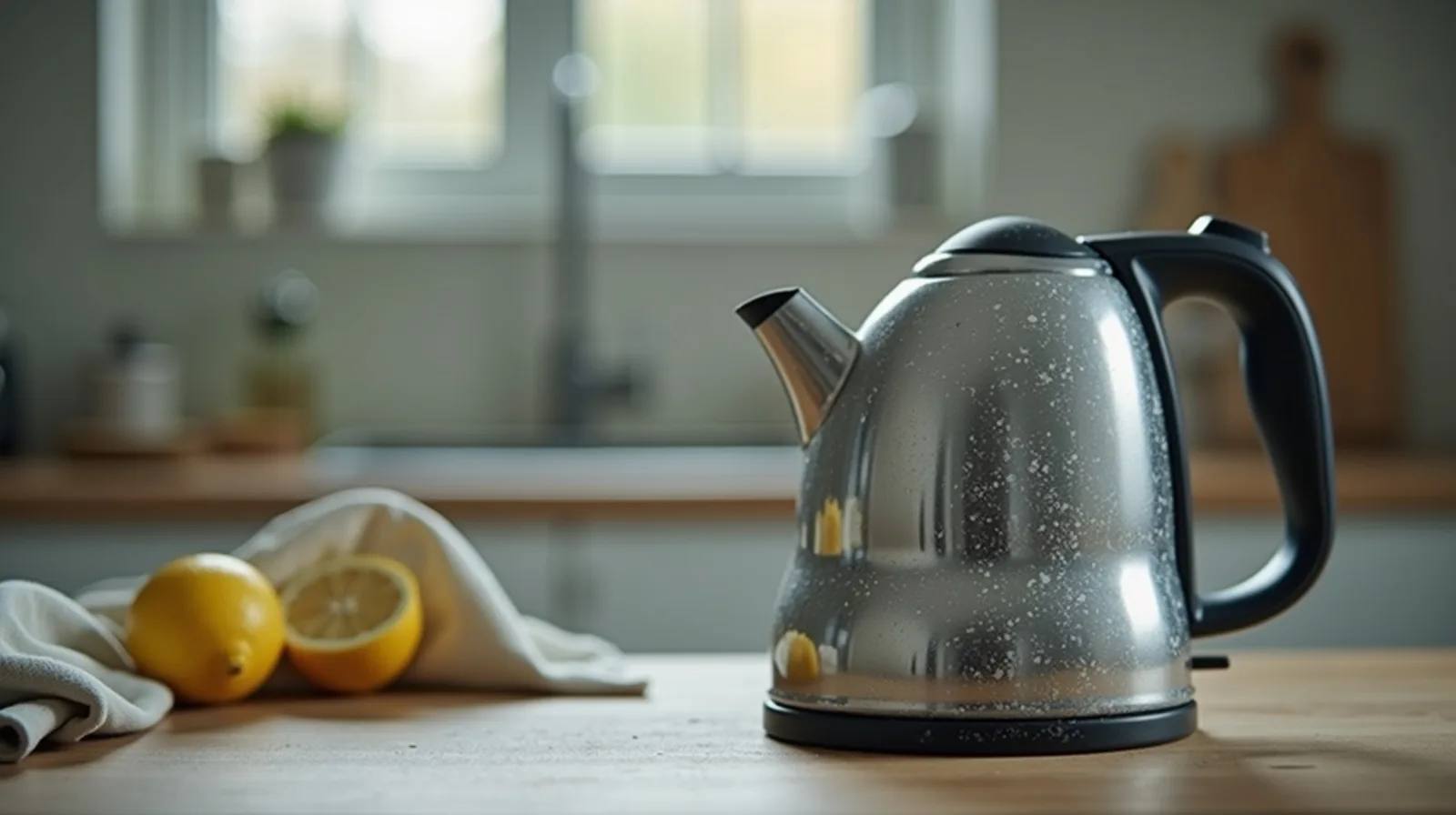
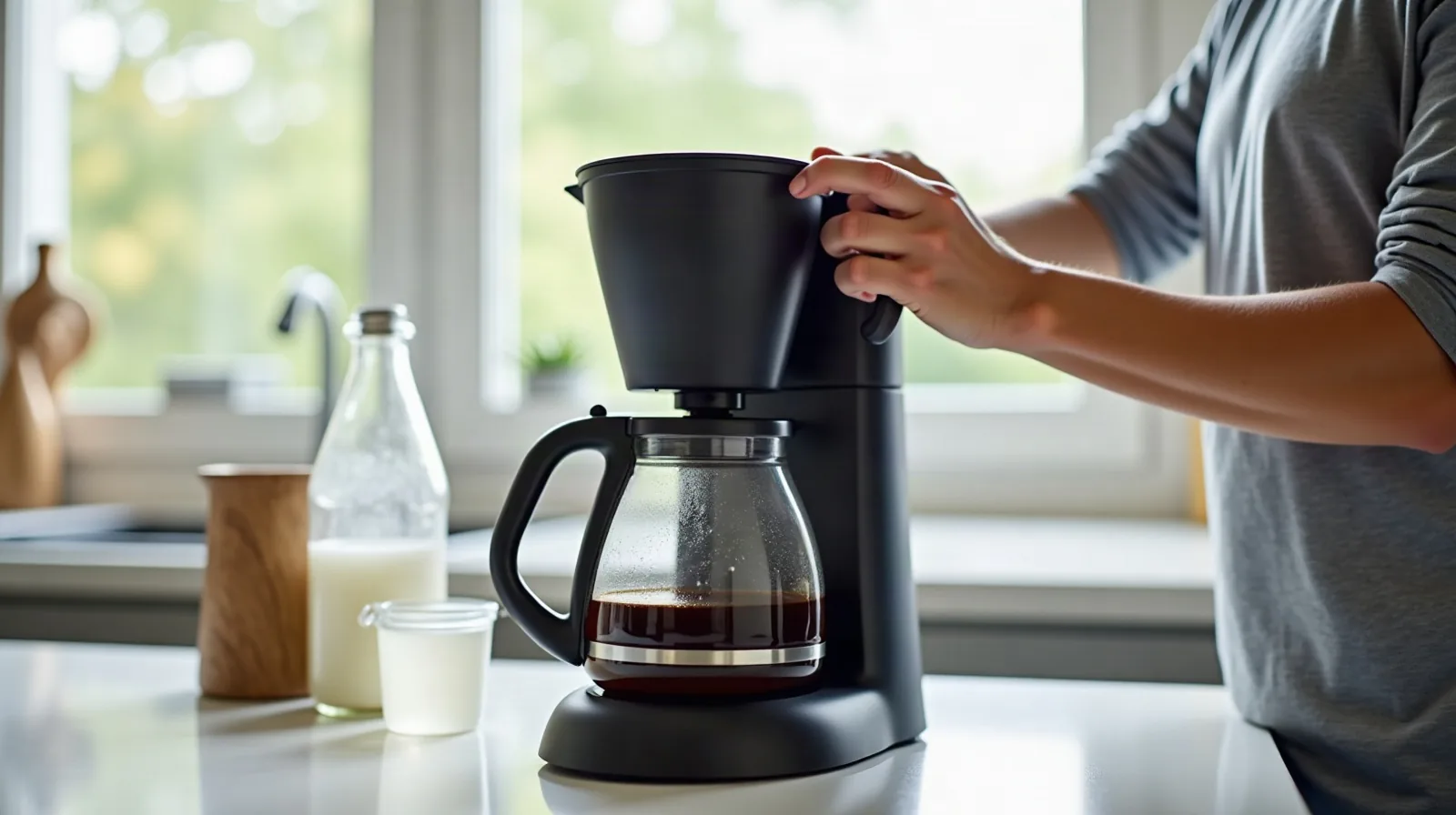
A coffee maker that’s begun taking longer to brew, sputtering partway through a pot, or turning out coffee that tastes flat and a little metallic almost never needs replacing. In the overwhelming majority of cases the machine isn’t failing — it’s clogged. Every cup of water that passes through it leaves behind a trace of dissolved mineral, and week after week that mineral hardens into a chalky scale coating the heating element, the internal tubing, and the reservoir. Descaling is the fix, and it’s one of the few pieces of kitchen maintenance that takes about fifteen minutes, costs next to nothing, and makes an immediate, obvious difference in both how the machine runs and how the coffee tastes.
Why a Coffee Maker Needs More Than a Rinse
Tap water carries dissolved calcium and magnesium, and the harder the water in a given area, the more of it there is. Every brew cycle heats that water and leaves a little of the mineral behind as it evaporates or gets left in the reservoir between uses, and over weeks it builds into a chalky, cement-like scale. That scale coats the heating element first, which is the part of the machine actually doing the work of heating the water — a scaled element has to work harder and longer to reach brewing temperature, which is the entire reason a neglected machine gradually slows down. The same scale narrows the thin internal tubing the water travels through on its way to the grounds, which is what causes the sputtering, gurgling, or mid-cycle stalling that eventually shows up. And because scale is mineral, not flavor, it also dulls the coffee itself — a heavily scaled machine can leave a faint metallic or chalky note behind even when the beans and the grind are exactly right.
The Signs Your Machine Needs Descaling
A few tells show up well before a machine stops working outright. A brew cycle that takes noticeably longer than it used to is usually the first one, followed by sputtering, gurgling, or steam escaping from somewhere other than the usual vents. White, chalky residue around the waterline inside the reservoir is scale you can actually see. A machine that shuts off before finishing a full pot, or that leaves a faint metallic or dull taste behind even with fresh beans, is telling you the same thing in a different way. None of these on their own mean the machine is dying — they mean it’s overdue for a descale.
How to Descale a Drip Coffee Maker
The classic method uses plain white vinegar, and it works as well as almost anything sold specifically for the job. Fill the reservoir with a mixture of equal parts water and white vinegar — a full pot’s worth is usually enough — with no filter or grounds in the basket. Start a normal brew cycle, and partway through, turn the machine off and let the solution sit in the reservoir and lines for 30 to 60 minutes; the dwell time is what actually dissolves the scale, not just the flow of liquid through the machine. Turn the machine back on to finish the cycle, then discard what’s in the carafe. A store-bought descaling solution or a packet of citric acid, used at the ratio on the label, works the same way and leaves less of a vinegar smell behind if that matters to you. Either way, the step people skip is the rinse: run two to three full cycles of plain water through the machine afterward, discarding each one, until there’s no vinegar smell or taste left before brewing coffee again.
Descaling a Single-Serve Machine
The principle is identical, but the mechanics differ slightly. Fill the reservoir with the same water-and-vinegar mixture (or descaling solution), and if the machine has a dedicated descaling or cleaning cycle in its settings, use it — it’s built to hold the solution in the lines longer than a normal brew would. If it doesn’t, run several cups’ worth through with no pod inserted, pausing between cups so the solution sits in the internal tubing rather than flushing straight through. The needle that pierces the pod is a separate problem worth checking on its own: it’s narrow enough that ground coffee and scale both catch on it, which shows up as weak or inconsistent brews. A straightened paperclip worked gently around the opening, or the small cleaning tool that came with the machine, clears it in seconds. Finish with the same plain-water rinse cycles as a drip machine before brewing coffee again.
The Parts Descaling Doesn’t Reach
A descaling cycle cleans the internal plumbing, not the parts you touch. The carafe develops a brown, oily film from coffee’s natural oils that soap and water alone can struggle with; a scrub with baking soda and a little water, or a rinse with the same vinegar solution, breaks it loose. The removable brew basket and filter holder should get a real wash in warm, soapy water on a weekly basis rather than a quick rinse, since old coffee grounds trapped in its ridges turn rancid and taste bitter in the next pot. The reservoir lid and any rubber gasket around it are worth wiping down too — both are prone to a musty smell if they stay damp and closed up between uses, which is really just mold getting a head start in a dark, humid space. And the exterior warming plate collects baked-on coffee rings from drips and overflows that, left long enough, scorch into a smell that transfers into every pot brewed afterward; a damp cloth after each use keeps it from ever getting there.
Habits That Slow the Buildup
A few small habits stretch the time between descalings considerably. Emptying the reservoir instead of leaving water sitting in it for days keeps mineral from concentrating as it evaporates. Filtered or bottled water, used even occasionally in place of straight tap water in a hard-water area, meaningfully slows how fast scale accumulates in the first place. Leaving the reservoir lid and brew basket open to air out after each use, rather than closing everything up while still damp, keeps mold and musty smells from getting a foothold. None of these replace descaling — they just buy more time between cycles.
How Often to Actually Do This
There’s no single right answer, because it depends entirely on water hardness and how often the machine runs. In a hard-water area with daily use, monthly is a reasonable default. With average water and daily use, every two to three months usually keeps a machine running well. Soft water or occasional use can stretch that to every four to six months. The better rule than any calendar, though, is to trust the signs: a slower brew, sputtering, visible white residue, or coffee that tastes slightly off is the machine asking for a descale regardless of how long it’s actually been. Setting a recurring reminder on a phone, tied to whichever interval fits the local water, is the easiest way to stop relying on memory for it.
None of this requires anything more specialized than white vinegar and a little time, and the payoff shows up immediately — a faster brew, a machine that runs quietly through a full cycle, and coffee that tastes like the beans again instead of the buildup around them. It’s the rare piece of kitchen maintenance that’s genuinely easy to keep up with once it’s part of the routine.