An oven collects a little more grime every time you roast something, until one day the glass is brown and the smell of old grease follows every preheat. Most people reach for a harsh spray, open every window, and still end up scrubbing.
There is a gentler route that works because it uses time instead of force. A thick paste does the loosening while you sleep, and the cleanup in the morning is mostly wiping.
Before You Start
A few minutes of prep makes the job faster and safer:
- Make sure the oven is off and fully cool. Never apply anything to warm surfaces.
- Take out the racks, trays, and any loose foil. They get their own treatment, covered below.
- Protect the floor. Lay old towels in front of the door, since the cleanup involves a bit of splash.
- Wear gloves. Baking soda is mild, but it dries out skin quickly when paired with vinegar and hot water.
- Keep the heating elements and fan openings dry. Wipe around them rather than soaking them, and check your manual for the spots to avoid.
The Overnight Paste Method
This is the core of the job, and it takes about fifteen minutes of actual work:
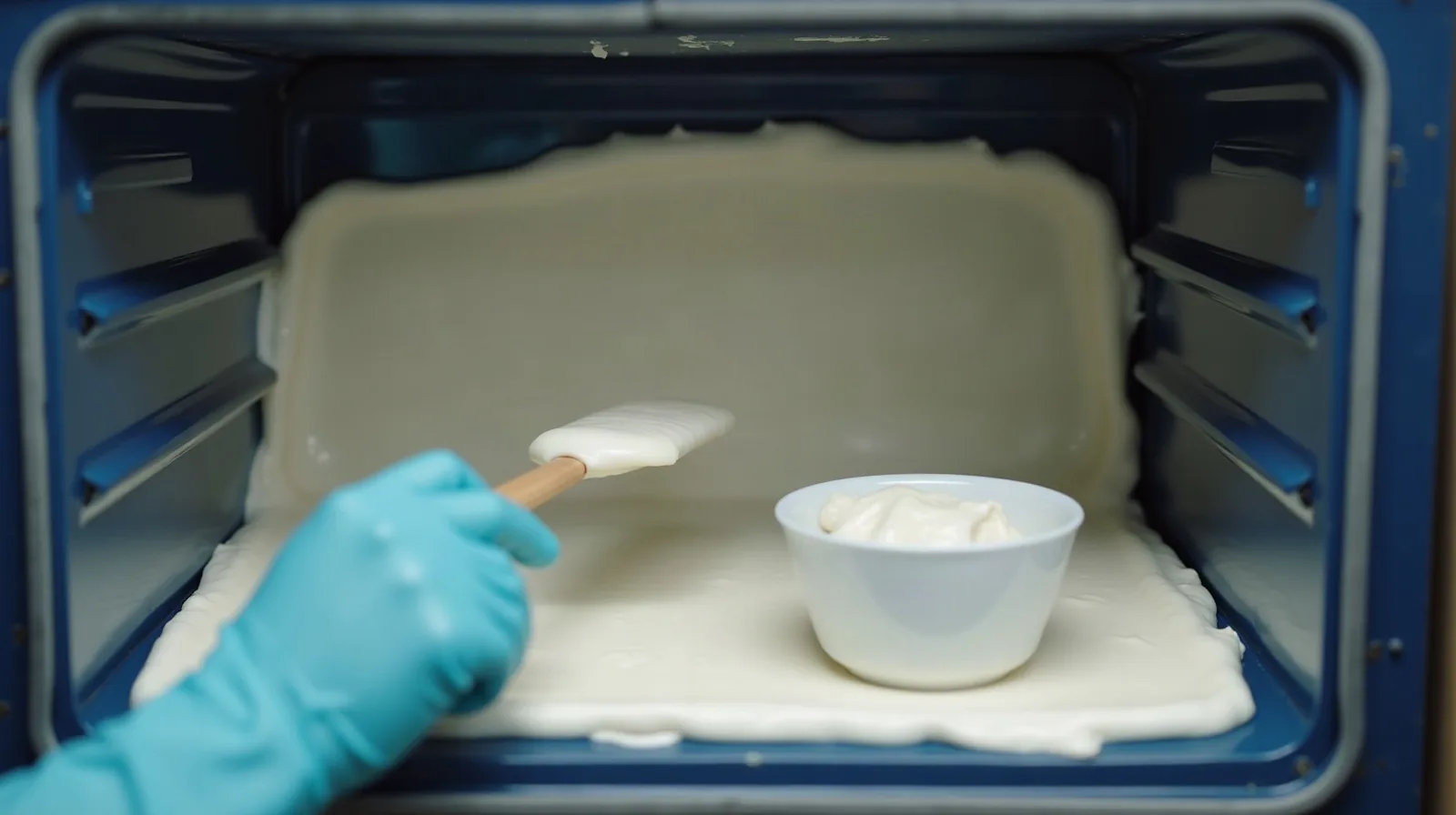
- Mix the paste. Stir about half a cup of baking soda with just enough water to make a spreadable paste, roughly the texture of thick frosting.
- Spread it thickly. Use a silicone spatula or gloved hands to coat the inside walls, floor, and door. Pile it on the worst spots. Skip the heating elements.
- Let it rest. Close the door and leave it for at least eight hours or overnight. The paste slowly softens carbonized grease.
- Wipe out the bulk. Use a damp cloth or sponge to lift the paste, rinsing the cloth often. A plastic scraper helps with stubborn patches.
- Finish with vinegar. Spray plain white vinegar over any leftover paste. It will fizz, which helps release the last of the residue. Wipe again with a clean damp cloth until no white film remains.
Racks, Glass, and Stubborn Spots
The parts that come out of the oven are easiest to handle in a different spot:
- Racks: Lay them in a bathtub on an old towel, cover with hot water, add a generous scoop of dish soap and a cup of baking soda, and soak for a few hours. Scrub gently, rinse, and dry fully before they go back in.
- Door glass: Use the same paste and a damp cloth, working in small circles. A plastic scraper can lift burnt-on spots without scratching. Avoid metal blades on glass.
- Sticky corners: A cotton swab or old toothbrush dipped in the paste reaches seams and hinges.
- A burnt-on patch that survives round one: Rewet the area, add a little more paste, and give it another few hours instead of scrubbing harder.
What to Do About the Self-Clean Cycle
Self-clean cycles heat the oven to extreme temperatures to turn residue to ash. They work, but they come with trade-offs worth knowing:
- Smoke and fumes. Heavy grease can smoke or smell strongly, so open a window and keep the kitchen ventilated.
- Pets, especially birds. Fumes from the cycle can be a problem for sensitive pets. Keep them in another part of the house.
- Remove the racks first. The heat can dull and discolor them and make them harder to slide.
- Wipe out loose crumbs first. A quick pre-wipe cuts down on smoke and flare-ups.
Used sparingly, with the paste method handling the routine upkeep, the self-clean cycle becomes a once-in-a-while reset rather than a habit.
Keep It From Coming Back
A cleaner oven stays cleaner with a few small habits:
- Wipe spills when the oven is cool. A damp cloth takes seconds and keeps spills from baking on permanently.
- Use a baking sheet under bubbly dishes. Pies, casseroles, and anything that might boil over are easier to catch than to clean.
- Cover roasts and rich dishes. Lids and foil tents reduce splatter.
- Schedule a light clean. A quick paste-and-wipe every few months is easier than one big rescue per year.