Dusting is the chore that undoes itself. A shelf looks spotless on Saturday and hazy again by Wednesday, which makes it easy to decide the whole job is pointless. Usually the problem isn’t how often you dust, but how: a dry swipe with the wrong tool launches most of the dust into the air, where it drifts to the next surface and settles all over again.
A few small changes fix that. Here’s the method, the tools worth owning, and the places that quietly hold the most dust.
What You’re Actually Dusting
Household dust is a mix of textile fibers, skin flakes, pet dander, outdoor soil, and pollen carried in on clothes and shoes. It’s light enough to hang in the air and slightly sticky, which is why it clings to vertical surfaces and electronics. It also means the goal isn’t to push it around — it’s to pick it up and remove it from the room.
- Dry feather and cloth dusters flick it away. It looks tidy for a moment, then it resettles.
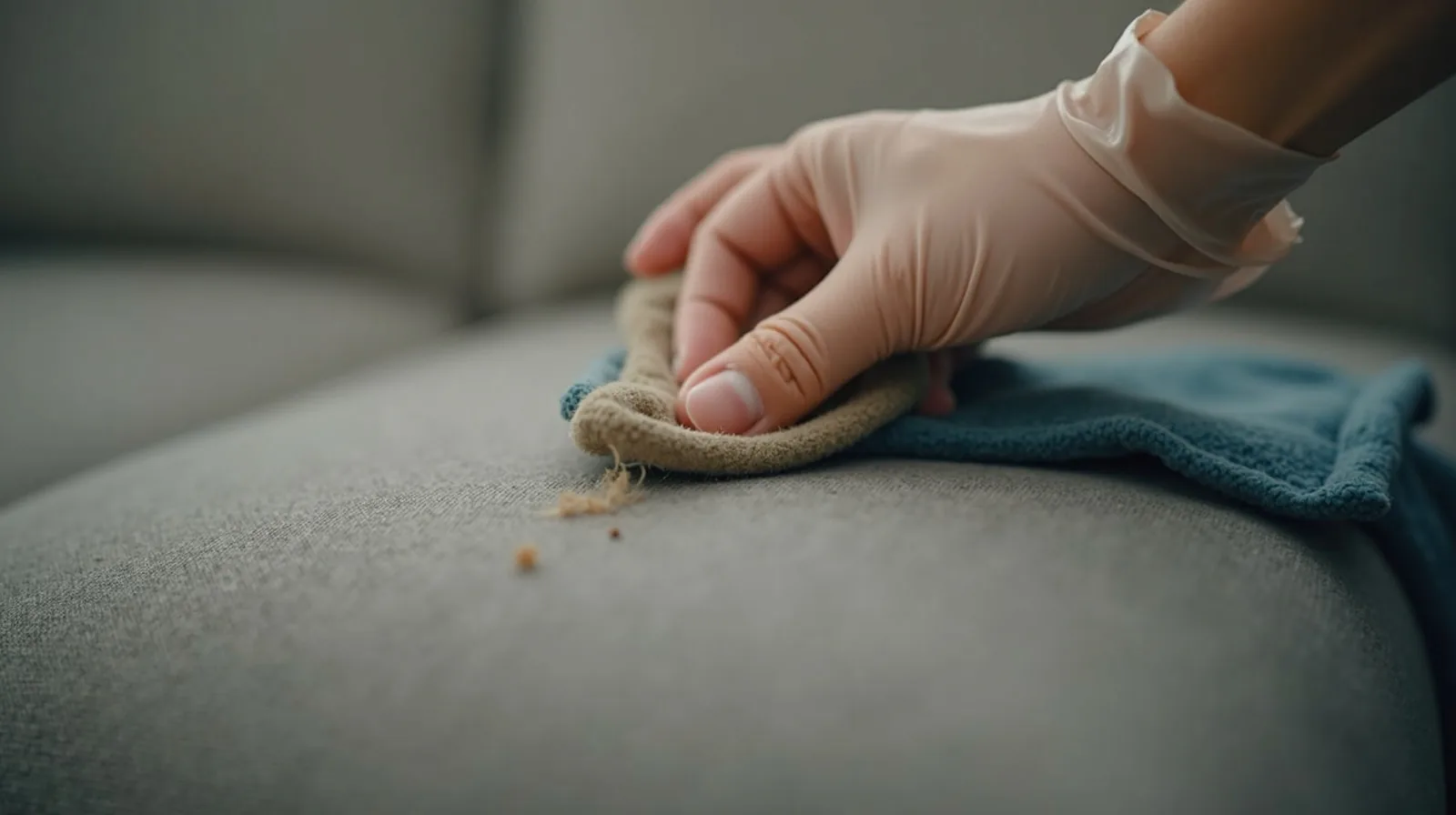
- A damp microfiber cloth traps it. The tiny fibers grab particles and hold them until you rinse the cloth.
- A vacuum with a brush attachment removes it. Best for textured and soft surfaces.
Work From the Top Down
Gravity does the sorting for you. Anything you knock loose from a high spot falls onto what’s below it, so start high and finish on the floor. Within a room, a simple order keeps you from backtracking:
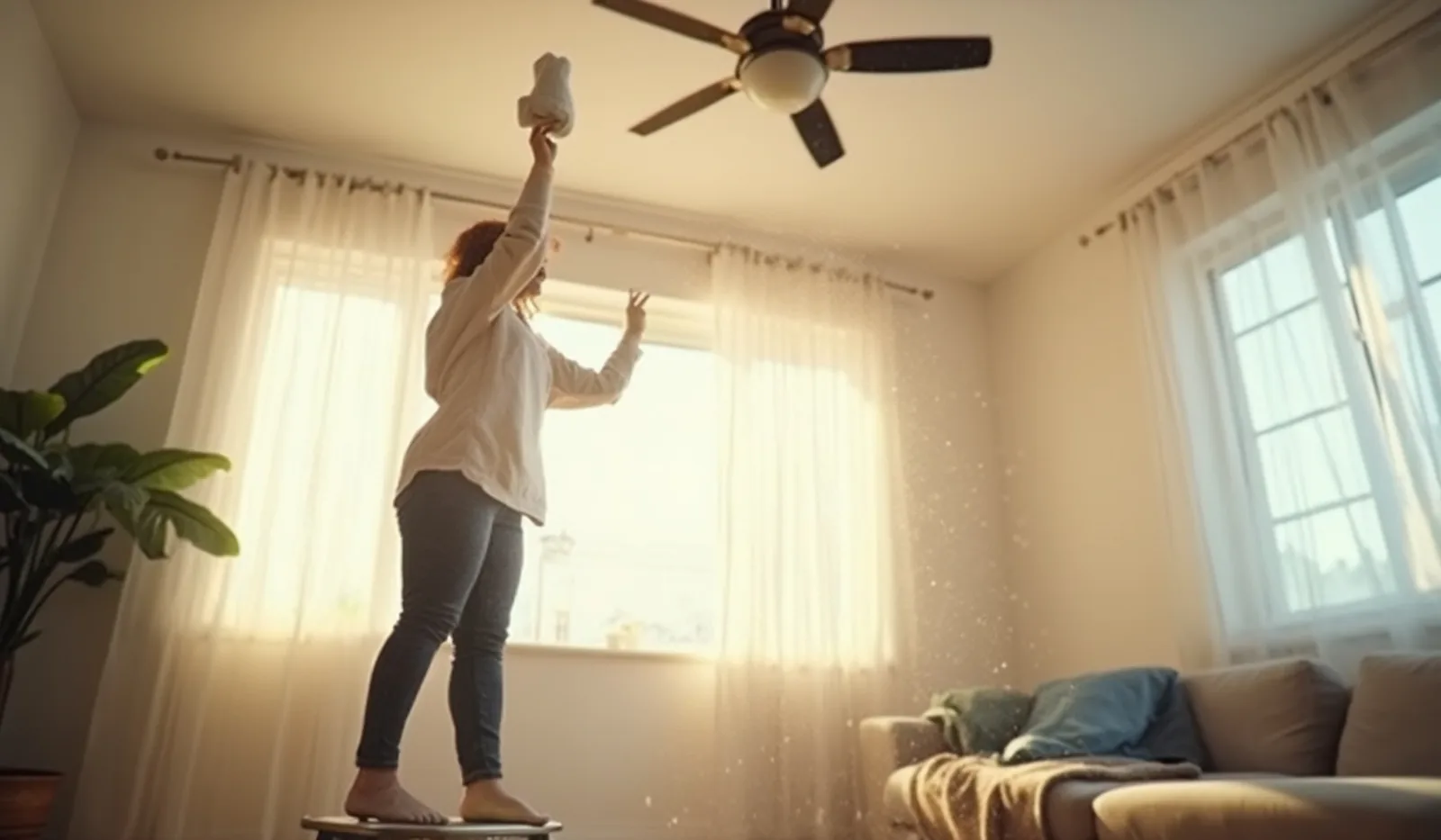
- Ceiling and corners. Cobwebs, vent covers, and the top of ceiling fan blades.
- High shelves and the tops of tall furniture. Wardrobes, bookcases, and picture frames collect a thick layer no one sees.
- Mid-level surfaces. Tables, dressers, windowsills, lamps, and decor.
- Low spots. Baseboards, table legs, and the undersides of chairs.
- The floor, last. Vacuum or mop once everything above it has dropped its share.
Moving around the room in one direction, say clockwise from the door, also keeps you from skipping spots or re-covering ground.
Damp, Not Wet
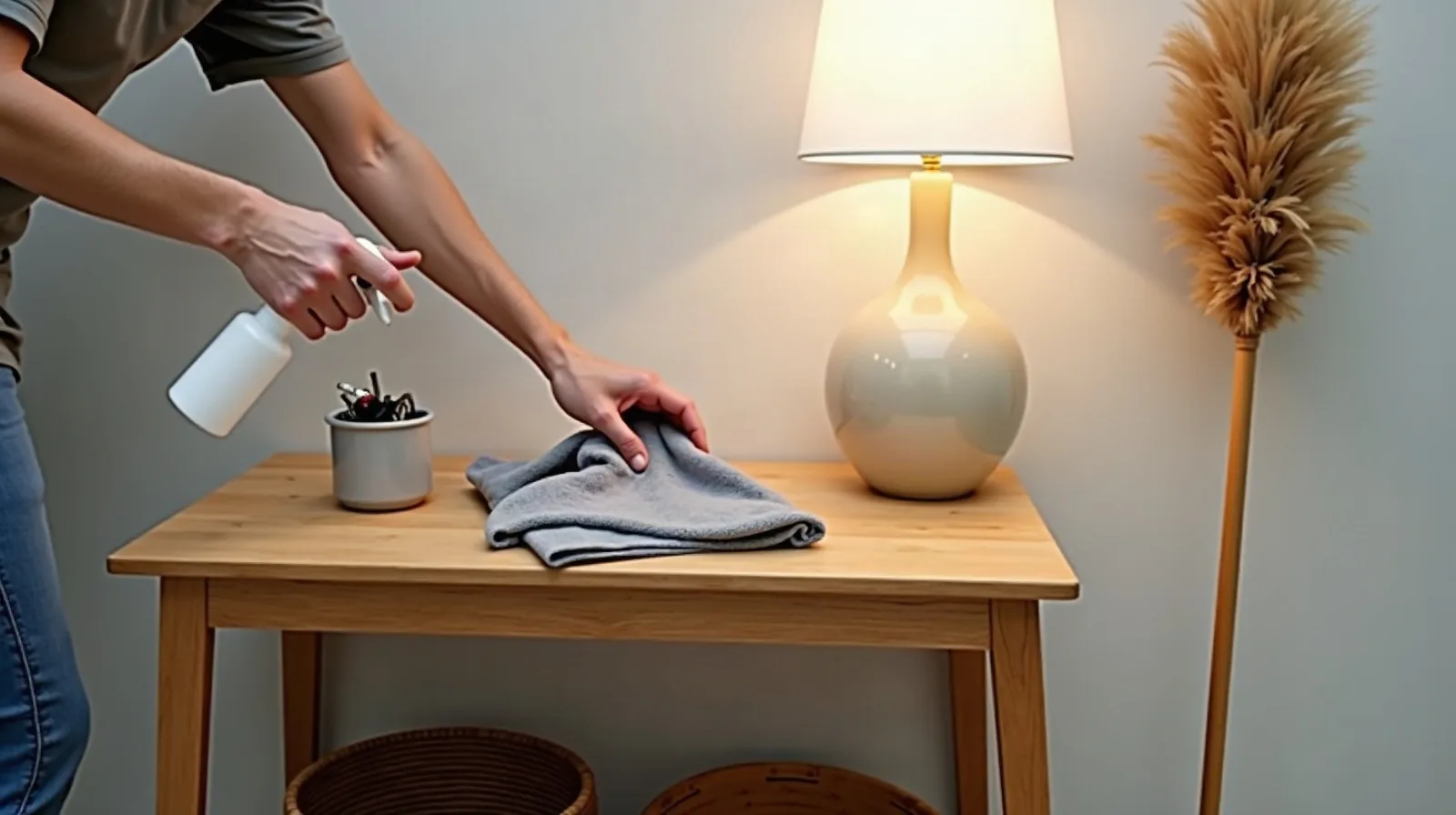
The right cloth does most of the work. A folded microfiber cloth, wrung out until it’s barely damp, picks up dust without leaving streaks or water marks on most finished wood, laminate, metal, and painted surfaces.
- Dampen the cloth, not the furniture. Spraying a surface directly leaves puddles at the edges and can swell unsealed wood.
- Plain water is usually enough. Polish sprays leave a film that makes the next layer of dust stick faster.
- Fold the cloth into quarters. When one side is gray, turn to a clean side so you’re lifting dust instead of smearing it.
- Rinse often. Swish the cloth in a bucket of water, wring it out, and keep going.
- Keep a dry cloth for the exceptions. Unsealed or antique wood, some leather, and delicate finishes do better with a dry cloth and a light touch.
A long-handled duster or a vacuum with a soft brush covers what a cloth can’t comfortably reach — high corners, ceiling fan blades, and the grille of a vent. Wash cloths on their own, without fabric softener, which coats the fibers and makes them far less effective.
The Spots Most Routines Miss
Surfaces you can see get wiped; the ones you can’t see quietly build up. These are worth a pass every time:
- Electronics and screens. Dust loves static. Unplug them and wipe the casing with a dry or barely damp cloth. Never spray liquid on a screen or a vent.
- Blinds and slatted shutters. Run a damp cloth across each slat, or close the blinds and wipe one direction, then flip the slats and repeat.
- Lampshades. A lint roller or the vacuum’s brush attachment lifts dust off fabric shades.
- Baseboards. A long strip of dust collects here and shows up whenever the light hits it sideways.
- The tops of door frames and the fridge. Nobody looks up there, so the layer gets thick, and on a fridge it mixes with kitchen grease.
- Behind and under furniture. Dust bunnies gather where air barely moves.
- Books and shelf edges. Wipe the top edge of each row and the shelf itself rather than every cover.
Cut Down the Supply
You can wipe all day, but less dust coming in means less dust to wipe. A few habits at the source do more than a longer cleaning session.
- Use doormats inside and out. Shoes are one of the biggest carriers of soil, and a shoes-off habit at the door makes a noticeable difference.
- Wash bedding weekly. Beds shed skin and fibers constantly, and that goes airborne every time you shake out a sheet.
- Swap the furnace or air filter on schedule. A clogged filter stops catching dust and starts recirculating it.
- Vacuum with good filtration. A vacuum that exhausts dust back into the room defeats the purpose. A sealed system with a fine filter holds it in.
- Cut surface clutter. Every knickknack is another thing to lift and wipe. Fewer objects on open surfaces means a ten-minute job instead of a thirty-minute one.
If dust triggers allergies, wear a simple dust mask while you work and open a window. Damp methods matter even more, since they keep particles out of the air you breathe.
A Ten-Minute Rhythm That Holds Up
You don’t need a deep clean to stay ahead of dust. A short, regular pass beats a long, rare one.
- Weekly: a quick damp wipe of the surfaces you touch and see most — tables, shelves, the TV stand — then vacuum the floor.
- Monthly: blinds, lampshades, baseboards, and the vents.
- Twice a year: the high spots — fan blades, door frames, the tops of tall furniture — and behind the heavier pieces.
Tie the weekly pass to something you already do, like the day you change the sheets, and it stops being a decision.