A humidifier sits quietly on the nightstand all winter, and it is easy to forget it is a bowl of warm standing water with a fan or vibrating plate attached. Left alone, that water grows a slick film, and the mist carries whatever is in the tank into the room.
The good news is that keeping one clean takes about ten minutes a week. This guide covers the daily habit, the weekly soak, and the end-of-season steps that keep it ready for next year.
Why a Dirty Humidifier Is Worse Than None
Water that sits for days in a warm tank grows a thin, slippery layer of bacteria and mold — that pink or gray slime in the corners. A humidifier can then push tiny particles of it into the air. Tap water adds a second problem: dissolved minerals. They leave a white crust on the tank and heating element, and some units spray that mineral dust as a fine white powder on nearby furniture.
Neither is dramatic, but both are avoidable, and both are more noticeable if anyone in the home has allergies, asthma, or a sensitive nose.
The Daily Habit: Empty, Rinse, Refill
Daily care is small and does most of the work.
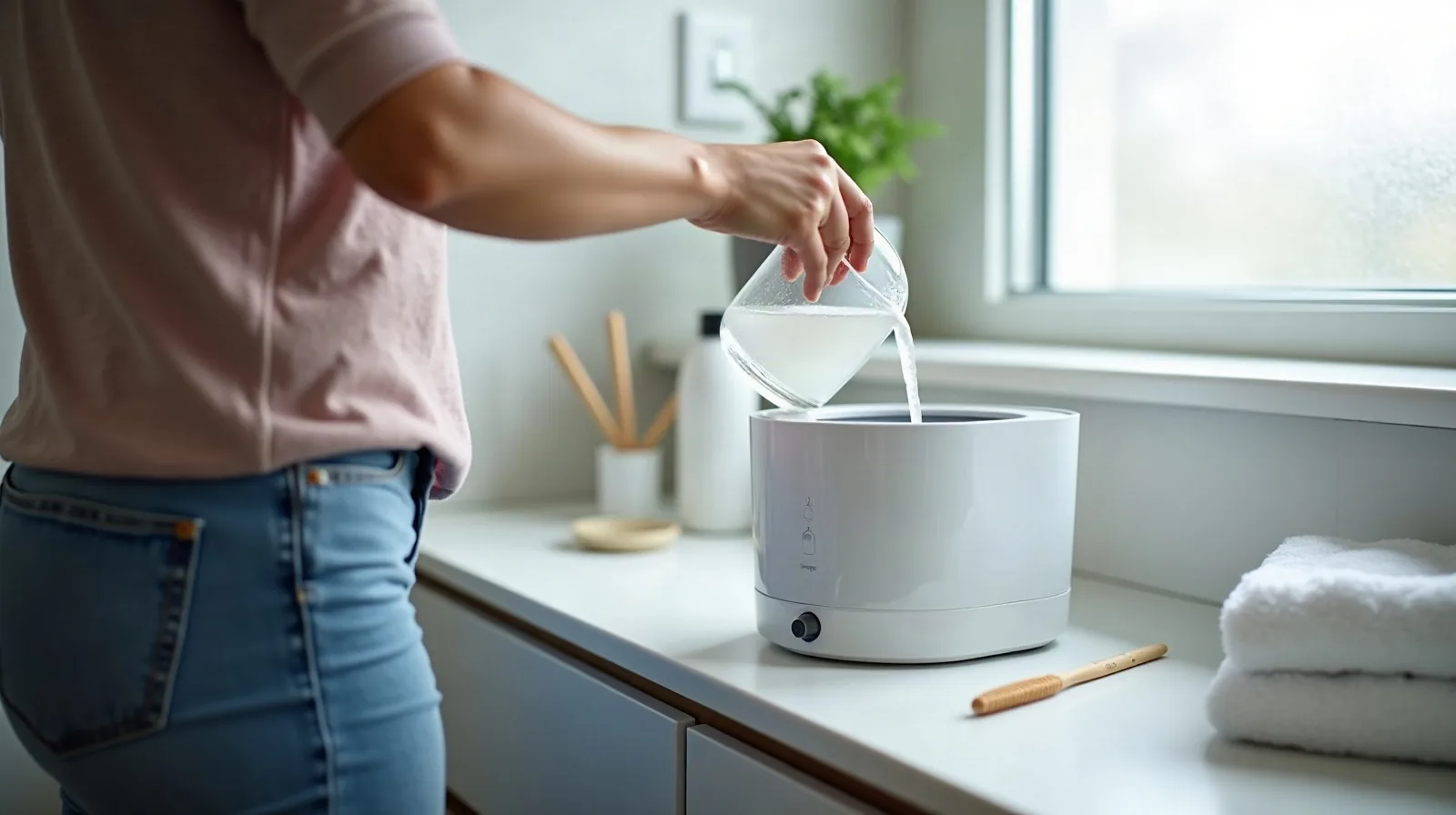
- Empty the tank and the base. Never top off yesterday’s water. Pour out whatever is left in both.
- Rinse and wipe. Swirl a little clean water around the tank, then wipe the base basin with a clean cloth.
- Refill with fresh water. Distilled or demineralized water cuts the white dust and slows crust. If tap water is all you have, expect to descale more often.
- Turn it off and leave it empty when not in use. Water sitting for a day or two in a stopped unit is the fastest route to slime.
The Weekly Soak
Once a week, take the unit apart and give it a proper clean. Always unplug it first, and keep the electrical base out of water.
- Descale with white vinegar. Pour enough undiluted white vinegar into the tank and base to cover the mineral buildup, and let it sit for 20 to 30 minutes. Vinegar dissolves scale and helps loosen film.
- Scrub the corners. A narrow bottle brush or old soft toothbrush reaches the neck of the tank, the float, and the little channels around the mist outlet. Cotton swabs handle the tight spots.
- Rinse thoroughly. Run clean water through until there is no vinegar smell. Leftover vinegar can irritate when it turns into mist.
- Check the filter or wick. If your model has a wick or filter, look at it every week. Replace it when it turns stiff, discolored, or smelly, and follow the instructions for how often to swap it.
If the film is stubborn, a very diluted bleach solution can be used on tank parts only, with a thorough rinse afterward — but never mix it with vinegar or any other cleaner. Check the manual first, since some materials do not tolerate it.
Which Kind Do You Have?
The routine is the same for every type, but a few details differ.
- Cool-mist (evaporative or ultrasonic). The most common. Ultrasonic models are the ones that spray mineral dust, so distilled water matters most here.
- Warm-mist. These boil the water, so scale builds on the heating element. Vinegar soaks are essential, and the unit must be fully cool before you handle it.
- Whole-house or furnace-mounted. These have a pad or drum that needs replacing on a schedule; check it at the start of the heating season.
Mistakes That Make Things Worse
- Topping off instead of emptying. New water on old water just keeps the slime fed.
- Running it all day at maximum. More mist is not better. Indoor humidity between roughly 30 and 50 percent is the goal; above that, windows fog and mold gets a foothold. A small, inexpensive humidity gauge tells you where you stand.
- Using scented oils or additives. Unless the manual allows it, they can clog the unit and add irritants to the air.
- Soaking the electrical base. Clean it with a damp cloth only.
Putting It Away for the Season
At the end of the heating season, do one last full clean: vinegar soak, scrub, and rinse. Then let every part air-dry completely — a damp unit stored in a closet is a mold farm waiting for next autumn. Store it with the tank cap off so air can circulate, replace the filter or wick, and write the date on a piece of tape on the base so you know when it was last serviced.
When the cold returns, give it a quick rinse and a vinegar pass before the first fill. It takes five minutes and means the first mist of the season is a clean one.