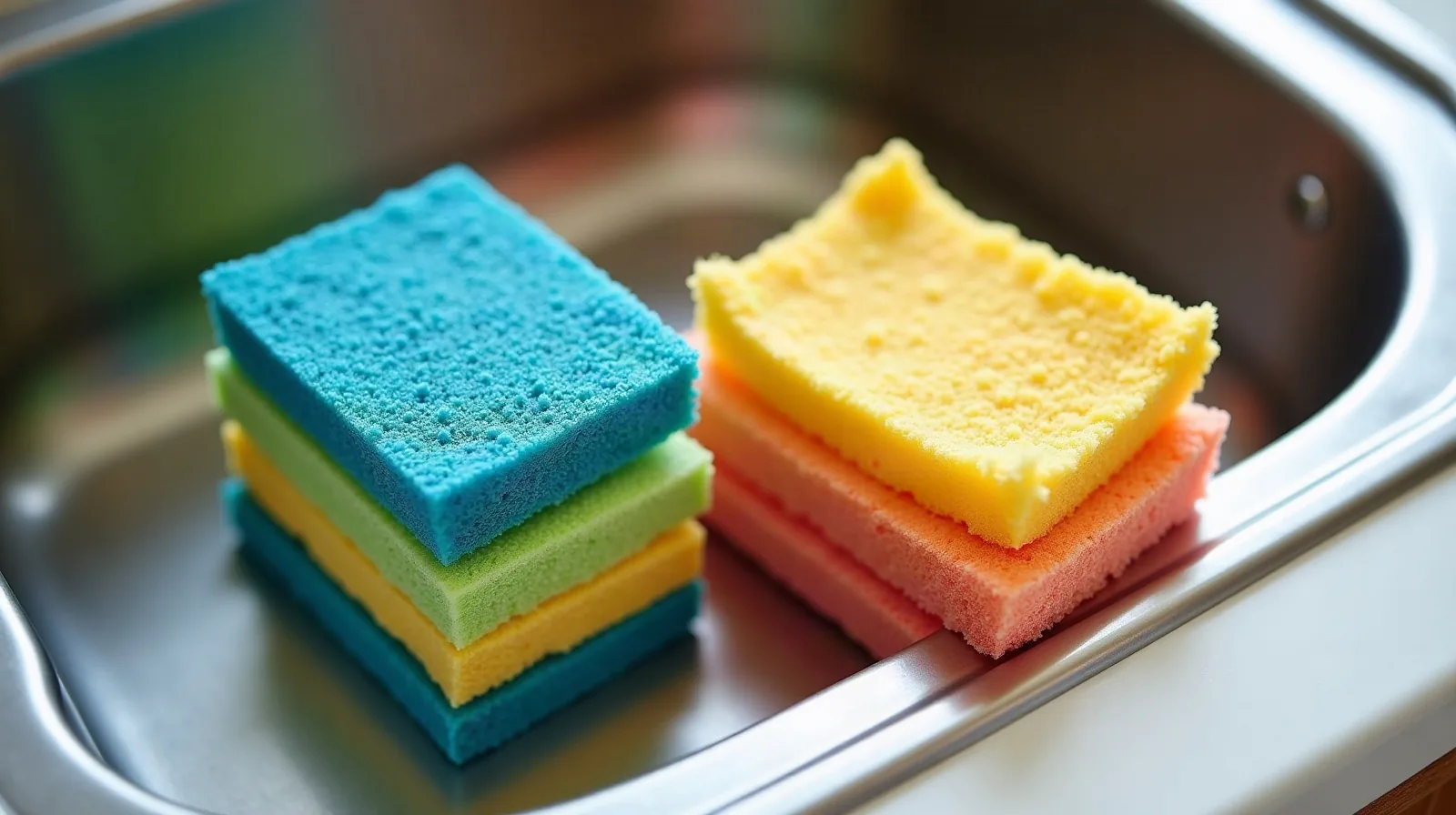
The sponge sitting in a small puddle by the kitchen faucet gets more daily traffic than almost anything else in the house — it touches raw meat juices, greasy pans, and the counter where takeout containers rest, then sits wet at room temperature until the next use. That combination of moisture, food residue, and warmth is exactly what bacteria need to multiply, and it happens faster than most people replace the sponge that’s doing it. None of this means the sponge itself is a lost cause. A few small habits, plus knowing when a sponge is actually past saving, keep the risk in check without switching to disposable everything.
Why a Damp Sponge Turns Into a Bacteria Colony So Fast
A kitchen sponge is essentially a lattice of tiny pockets, and that structure is exactly what makes it so good at holding onto both water and food particles long after a dish is clean. Bacteria need three things to multiply: moisture, a food source, and a warm temperature, and a used sponge left on the counter checks every box at once. Researchers who study kitchen surfaces have repeatedly found that a sponge in normal daily use can carry a bacterial density that rivals or exceeds far grosser-sounding objects in the house, simply because nothing else combines that much surface area with that much retained moisture. A cutting board or a countertop dries out between uses; a sponge, sitting in its own little puddle, usually doesn’t.
The Microwave Trick That Actually Works — and Where It Falls Short
Soaking a sponge fully with water, then microwaving it on high for about a minute (closer to two if the microwave runs cool) kills off a meaningful share of the bacteria living inside it, using the same principle that sterilizes canning jars: sustained high heat. It only works on sponges that are actually sopping wet going in — a dry or barely damp sponge can scorch or even catch fire — and it should never be tried on a scouring pad or a sponge with any metal scrubbing layer attached. A dishwasher’s heated dry cycle does something similar and is the easier habit for most households, since the sponge can just ride along with a normal load. Either method knocks the bacterial count down, but neither restores a sponge that’s already breaking down, and neither undoes an odor that’s worked its way fully into the material — at that point, sanitizing is just buying a few more days, not resetting the clock.
The Signs a Sponge Is Actually Done
A sponge doesn’t need to look dramatic to be finished. The clearest signal is smell: a sponge that comes out of a hot sanitizing cycle and still smells sour or musty within a day has bacteria embedded deeper than heat or soap can reach, and no amount of rinsing will fix that. Visible dark spots, a slimy film that returns quickly after rinsing, or fraying and falling apart at the edges are all straightforward reasons to toss it, no debate needed. Short of those obvious signs, a sponge used daily for dishes is generally past its useful life within one to two weeks regardless of how it looks — a timeline most people double or triple without realizing it, mostly because a sponge that still looks fine feels wasteful to replace.
Dish Towels Have the Same Problem, Just on a Slower Clock
A hanging dish towel dries faster than a sponge sitting in a puddle, which is why it doesn’t get talked about as often, but a towel used to wipe hands, counters, and dishes throughout the day and then left balled up on the counter or oven handle runs into the same moisture-plus-food-residue problem, just spread over a bit more time. The fix is mostly about keeping jobs separate: one towel for drying clean dishes, a different one for wiping hands and countertops, and neither one used to mop up raw meat juice or clean up after handling something you wouldn’t want in the fridge. Wash them on a hot cycle every one to two days if they’re getting daily use, and hang them fully spread out between washes rather than folded or bunched, so they actually get the chance to dry.
The One Habit That Matters More Than Any Cleaning Trick
Every method above buys time, but the single change that does the most is also the simplest: give the sponge a real chance to dry out between uses. A sponge wrung out firmly and left sitting upright, with air able to reach all its sides, dries out in a couple of hours; the same sponge left flat in a puddle by the faucet can stay damp indefinitely, which is exactly the condition bacteria need to keep multiplying instead of dying off as the sponge dries. A small suction-cup caddy or a simple dish that tips the sponge up off the counter — instead of letting it sit directly in standing water — costs almost nothing and does more for a sponge’s cleanliness than any sanitizing routine layered on top of a sponge that never actually dries.
What to Reach for When a Sponge Isn’t the Right Tool
A sponge isn’t the only option, and for some jobs it isn’t even the best one. A dish brush with a replaceable head dries fully within an hour because it has no foam to hold water in, which makes it a genuinely lower-maintenance swap for everyday dish washing. Silicone scrubbers are catching on for the same reason — the nonporous surface doesn’t give bacteria anywhere to hide the way foam does, even though they scrub differently and take some adjustment. And for the messiest jobs — mopping up raw meat juice, wiping up a spill that touched the floor, or degreasing something particularly grim — reaching for a paper towel instead of the everyday sponge keeps that job from ever becoming part of the sponge’s daily routine in the first place.
A Rotation System That Makes Replacing Automatic
The habit that actually sticks is the one that doesn’t require remembering. Buying sponges in a bulk multi-pack rather than one at a time removes the small friction of a special trip to replace one, and keeping a spare within reach of the sink means swapping takes ten seconds instead of feeling like a chore. Tying the swap to something that already happens weekly — trash day, a Sunday kitchen reset, whatever the household already does on a schedule — turns replacement into a habit instead of a decision that has to be made fresh every time. It doesn’t need to be precise; a sponge replaced every week or two on a loose schedule beats one replaced only when it finally falls apart.
None of this requires overhauling how a kitchen gets cleaned — just wringing the sponge out properly, giving it somewhere to actually dry, sanitizing it between replacements if that’s part of the routine, and swapping it out on a rough schedule instead of waiting for it to fall apart. The sponge will still do the job it’s meant to do; it just won’t be quietly working against the very cleaning it’s supposed to be doing.