Cast iron has a reputation for being high-maintenance — you can't use soap, you have to season it constantly, one wrong move and it's ruined forever. Almost none of that is true. A cast-iron pan is one of the most forgiving tools in the kitchen, and it can genuinely last for generations. You only need to understand three things: what seasoning actually is, how to clean the pan day to day, and how to rescue one that's gone rusty.
What “seasoning” really is
Seasoning isn't a flavor and it isn't a coating you buy — it's layers of oil that have been heated until they bond to the iron and turn hard and slick. That's the black, non-stick surface a well-used pan develops. Every time you cook with a little fat and heat, you're adding to it. Understanding this removes most of the anxiety: seasoning is built up gradually through normal use, and small damage is easily repaired, not catastrophic.
How to season (it takes minutes)
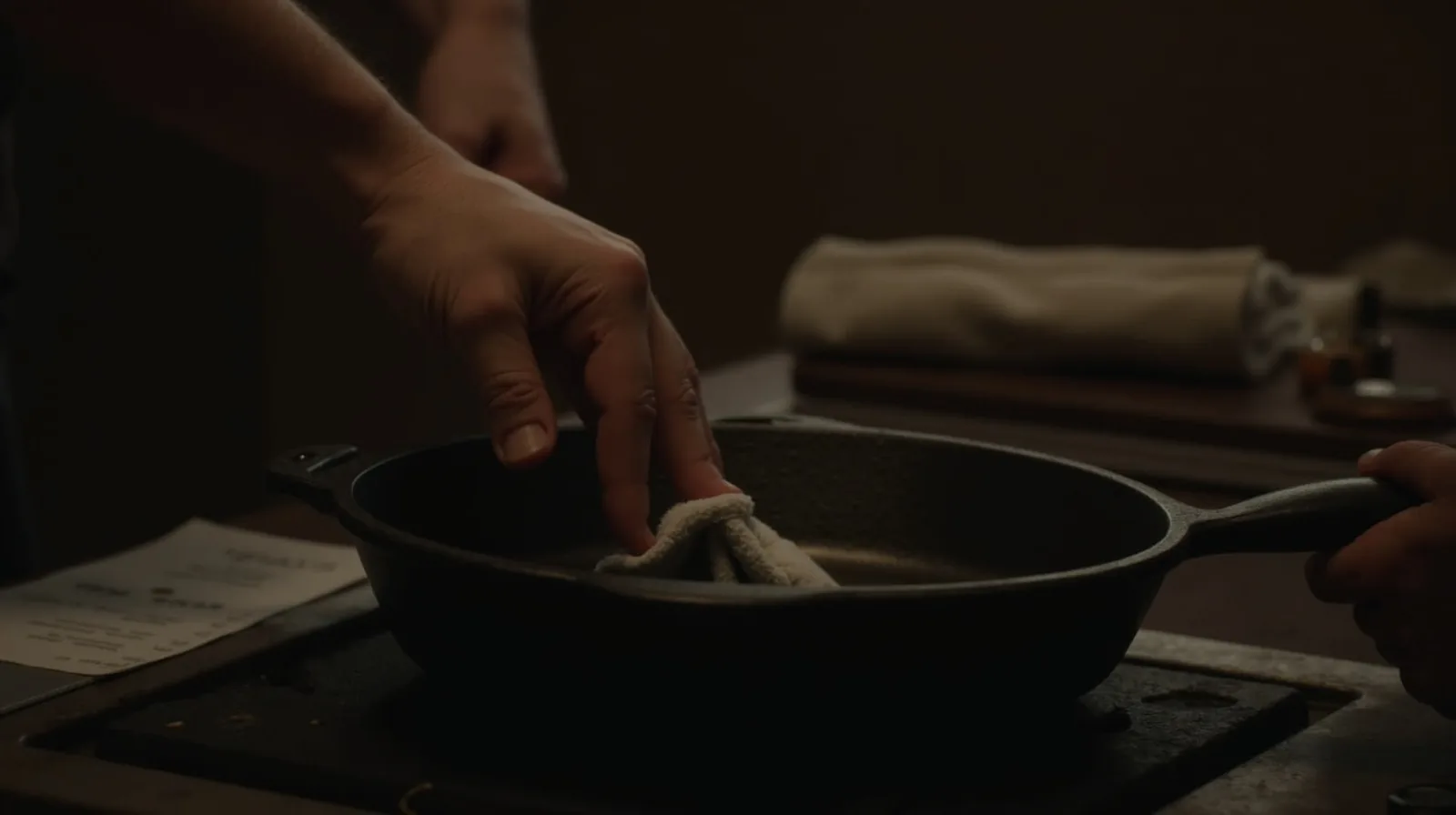
To add a layer of seasoning: rub the clean, dry pan all over with a very thin coat of a neutral cooking oil — so thin it looks almost dry — then heat it until the oil stops smoking and bonds. Too much oil is the number-one mistake; it turns sticky and blotchy instead of hard and smooth. A new pan benefits from a couple of rounds of this, but after that, simply cooking with a little fat maintains it.
How to clean it without ruining it
Here's the part everyone worries about. Day to day, cleaning is simple:
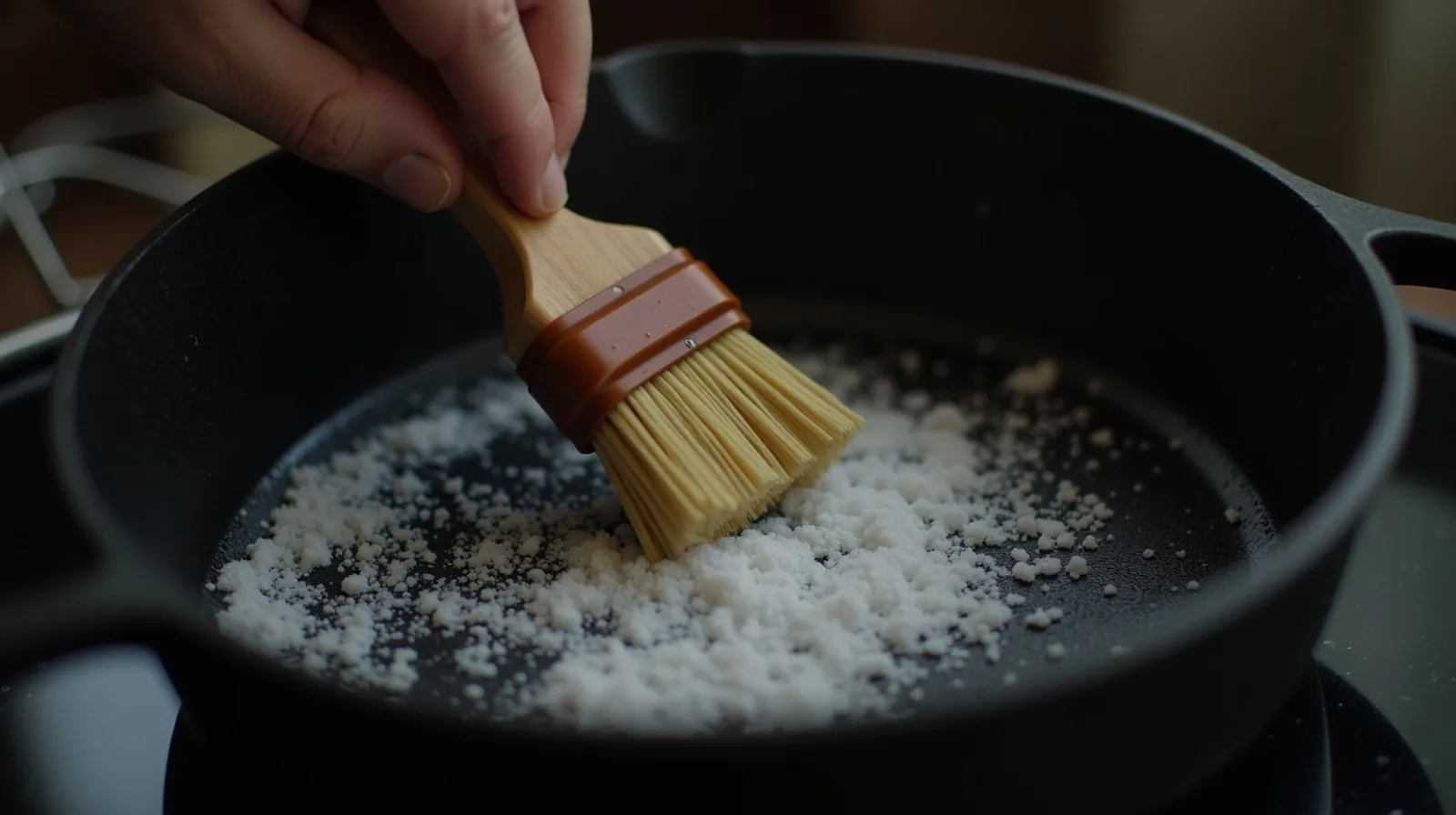
- Clean it while it's still warm. Rinse under hot water and scrub with a stiff brush or a non-metal scrubber. Stuck-on bits lift with a sprinkle of coarse salt as a gentle abrasive.
- A little soap is actually fine. Modern dish soap won't strip a well-bonded seasoning the way old lye-based soaps did. What you truly want to avoid is a long soak, the dishwasher, and leaving it wet.
- Dry it immediately and completely, then wipe on a whisper-thin coat of oil before you put it away. This last step is the real secret — a dry, lightly oiled pan simply doesn't rust.
Rescuing a rusty or crusty pan
Found a neglected pan at the back of a cupboard or a yard sale? It's almost never beyond saving. Scrub the rust off with a stiff brush and a coarse abrasive like salt or fine steel wool until you're back to bare grey metal, wash and dry it thoroughly, then re-season it from scratch with a few thin oil-and-heat rounds. A pan that looked like a lost cause comes back to a smooth black finish. That resilience is the whole point of cast iron: it can always be reset.
A few habits that keep it happy
- Cook with a little fat, especially early on — every meal builds the surface.
- Ease into acidic foods like tomato sauce on a new pan; a lot of acid on thin seasoning can eat at it, but a well-established pan handles it fine.
- Store it dry, and if you stack pans, slip a paper towel between them to wick away any moisture.
That's the entire skill set. Season with a thin coat, clean it warm and dry it right away, and re-season anything that goes wrong. Do that and a cast-iron pan stops being intimidating and becomes the thing you reach for first — and quite possibly the one your grandkids inherit.