
A closet that smells musty usually isn’t dirty in any obvious way — there’s no visible stain, no spill, nothing you can point to. The smell comes from something less obvious: trapped moisture and air that never circulates. Closets are small, enclosed, and usually windowless, which makes them one of the easiest places in a home for humidity to build up unnoticed. Once you understand what’s actually causing the odor, clearing it — and keeping it from coming back — is a straightforward fix.
What Actually Causes the Smell
Musty odor is the smell of mold and mildew getting started, even at a stage too early to see. Mold needs three things to grow: moisture, stagnant air, and a food source like fabric or wood, and a closed closet supplies all three. Humidity gets trapped inside every time the door stays shut, clothes are hung up slightly damp from a workout or a rainy commute, or a closet backs onto an exterior wall that runs cooler than the rest of the room. Without airflow to carry that moisture away, it settles into the fabric, the shelving, and the drywall, and mildew starts to establish itself on a microscopic level long before it’s visible.
Finding the Source Before You Clean
Before deodorizing anything, it’s worth spending a minute figuring out where the moisture is actually coming from, since the fix is different depending on the cause. Deodorizing sprays and scented sachets can mask a musty smell for a day or two, but if the underlying humidity problem isn’t addressed, the odor comes right back — often stronger, since it’s now layered under a synthetic fragrance instead of gone.
- Damp or worn clothing. Anything hung up before it’s fully dry — gym clothes, a coat caught in the rain, shoes worn in wet weather — brings moisture directly into the closet.
- An exterior wall. Closets built against an outside wall run cooler and are more prone to condensation, especially in humid climates.
- No airflow at all. A closet that’s packed tight with clothes and kept shut around the clock has nowhere for moisture to go.
- A nearby leak. A musty smell paired with a visible stain on a wall or ceiling is worth investigating as a plumbing or roofing issue, not just a ventilation one.
- Seasonal humidity swings. A closet that only smells musty during a particular time of year is usually just reflecting the ambient humidity of the season — worth noting, since it points toward a moisture-absorber solution rather than a one-time deep clean.
Clearing the Smell
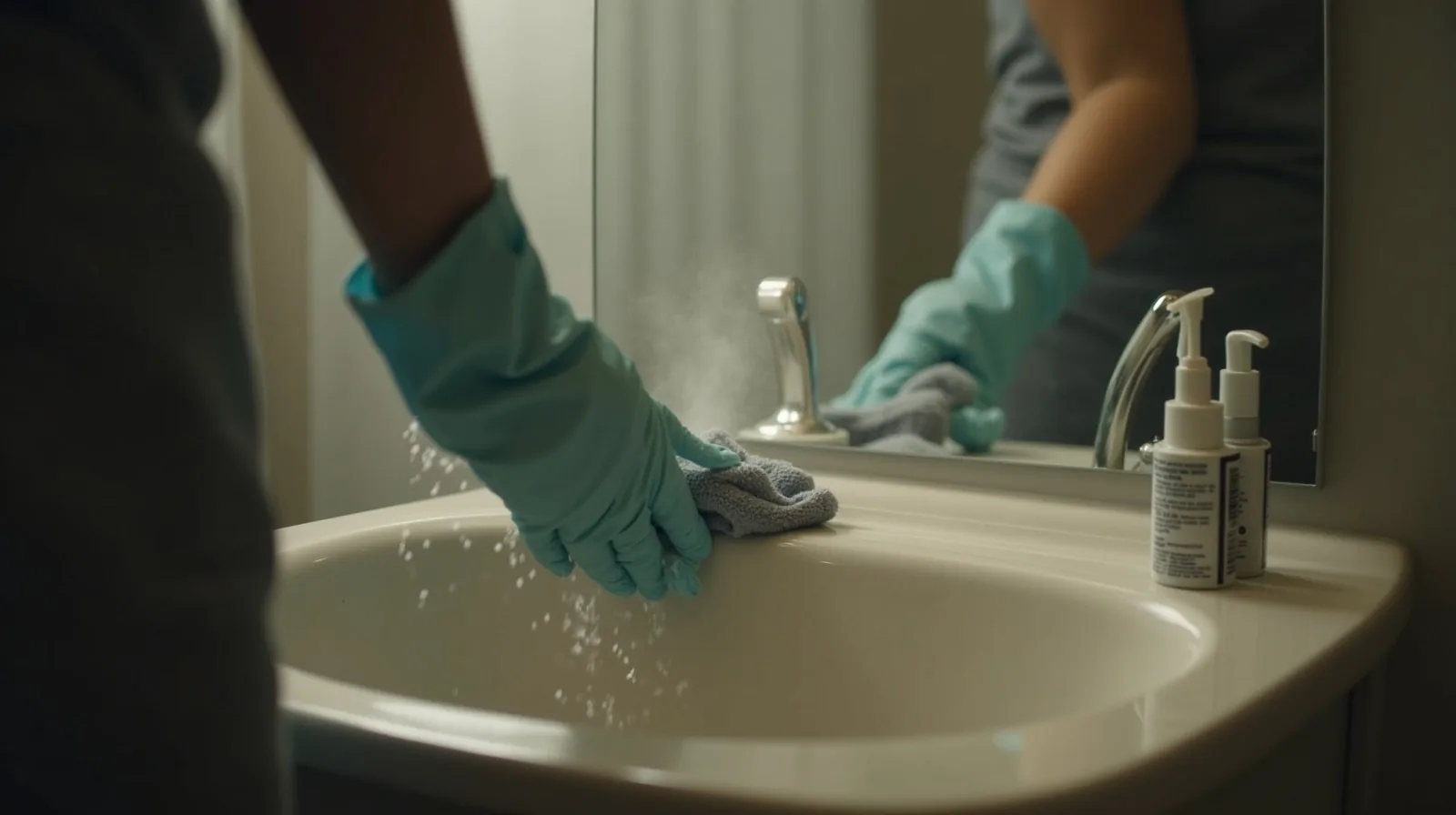
Once the likely cause is clear, the fix is mostly about restoring airflow and pulling the existing moisture out. Start by emptying the closet completely and leaving the door open for a full day if possible — letting fresh air move through does more than any spray. Wash or air out every textile that was in there, including anything that felt even slightly damp, since fabric holds onto trapped moisture and the smell it produces. Wipe down the shelves and walls with a mild solution of water and a little dish soap or white vinegar, which helps neutralize odor-causing bacteria without leaving a strong scent of its own. If the closet has any visible mildew — small dark speckling in corners or along baseboards — a diluted vinegar solution on a cloth will usually lift it; for anything more established than surface speckling, it’s worth treating it as a mold issue rather than a cleaning one.
Keeping It From Coming Back
Prevention is mostly about not letting the same conditions rebuild. A small moisture-absorbing tub or a few sachets of silica-gel style absorber on the shelf will pull ambient humidity out of the air continuously and need only occasional refilling. Give clothes room to breathe by leaving space between hangers instead of packing the rod tight — air needs to move between garments, not just around the closet as a whole. Cedar blocks or cedar-lined shelving help too, both by absorbing some moisture and by adding a scent that masks any early mustiness. Most importantly, never hang up anything that isn’t fully dry, and crack the door open regularly rather than keeping it sealed shut day after day.
It’s worth checking back in after a couple of weeks, since a closet that was genuinely humid for a long stretch can take a little time to fully dry out even after the airflow improves. A faint trace of the old smell right after the fix isn’t a sign it failed — it’s usually just residual moisture in the drywall or shelving working its way out.