A microwave is the one appliance almost nobody cleans on purpose. Every splatter that flies off a reheating bowl gets baked on a little harder by the next thing you microwave, until the walls carry a faint varnish of every meal that came before — and a dry paper towel just slides right over it. Scrubbing harder doesn’t help much either; it mostly scratches the interior coating, which gives the next splatter more texture to cling to. The real trick isn’t elbow grease. It’s steam, followed by checking the two or three spots that quietly hold onto the smell.
Steam first, scrub never
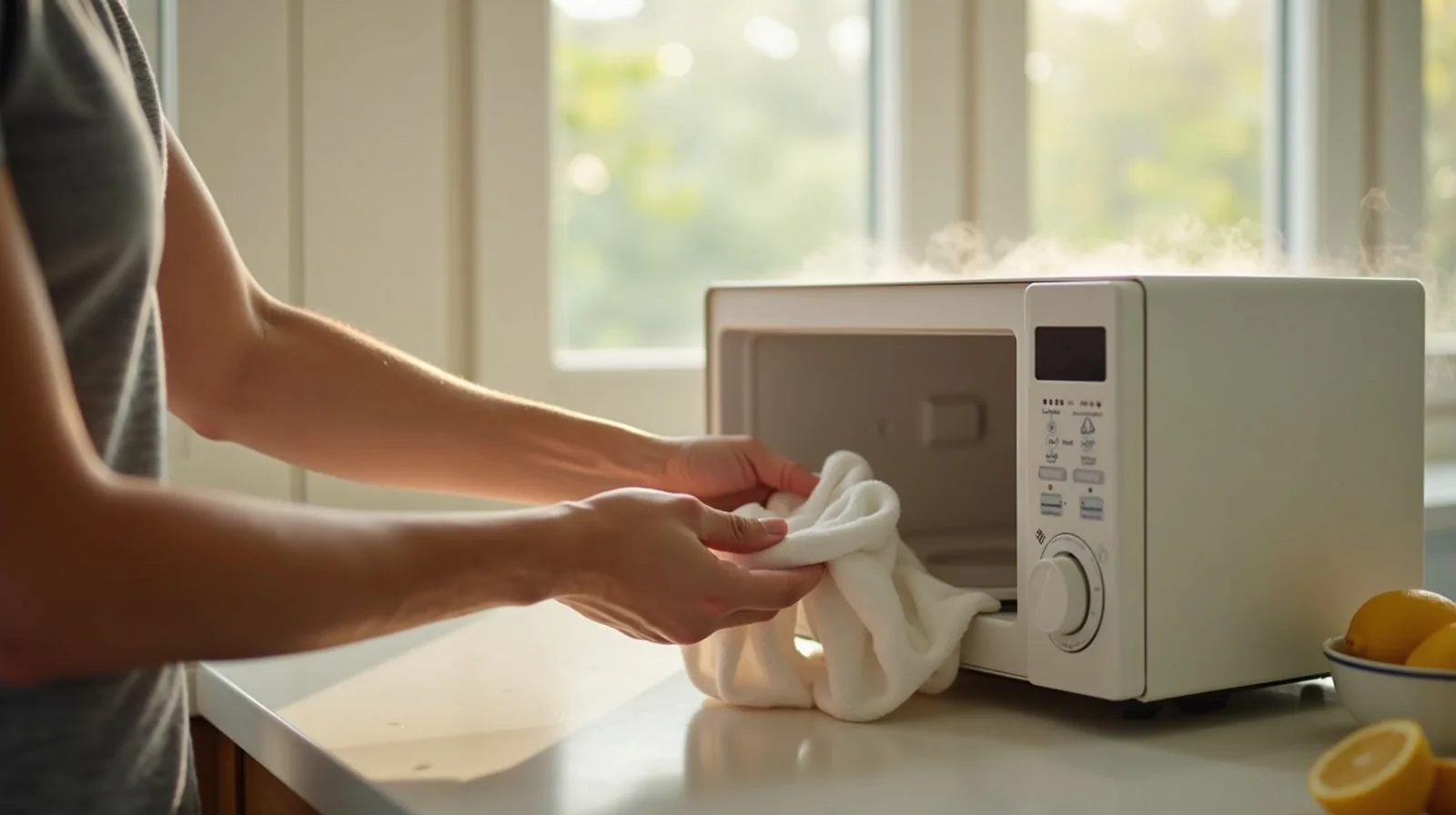
Fill a microwave-safe bowl with about a cup of water and either a squeeze of lemon juice with the spent half dropped in, or a splash of white vinegar. Microwave it on high for three or four minutes, until the door fogs up and the water is visibly steaming. Then leave the door closed for another few minutes without opening it — the trapped steam keeps working on the dried splatter the whole time it sits. When you finally open the door, every hardened spot wipes away with a damp cloth and almost no pressure. Skip the abrasive scrubber entirely; if steam alone doesn’t lift something, let it steam a second round rather than scraping at it.
The turntable, the track, and the ceiling
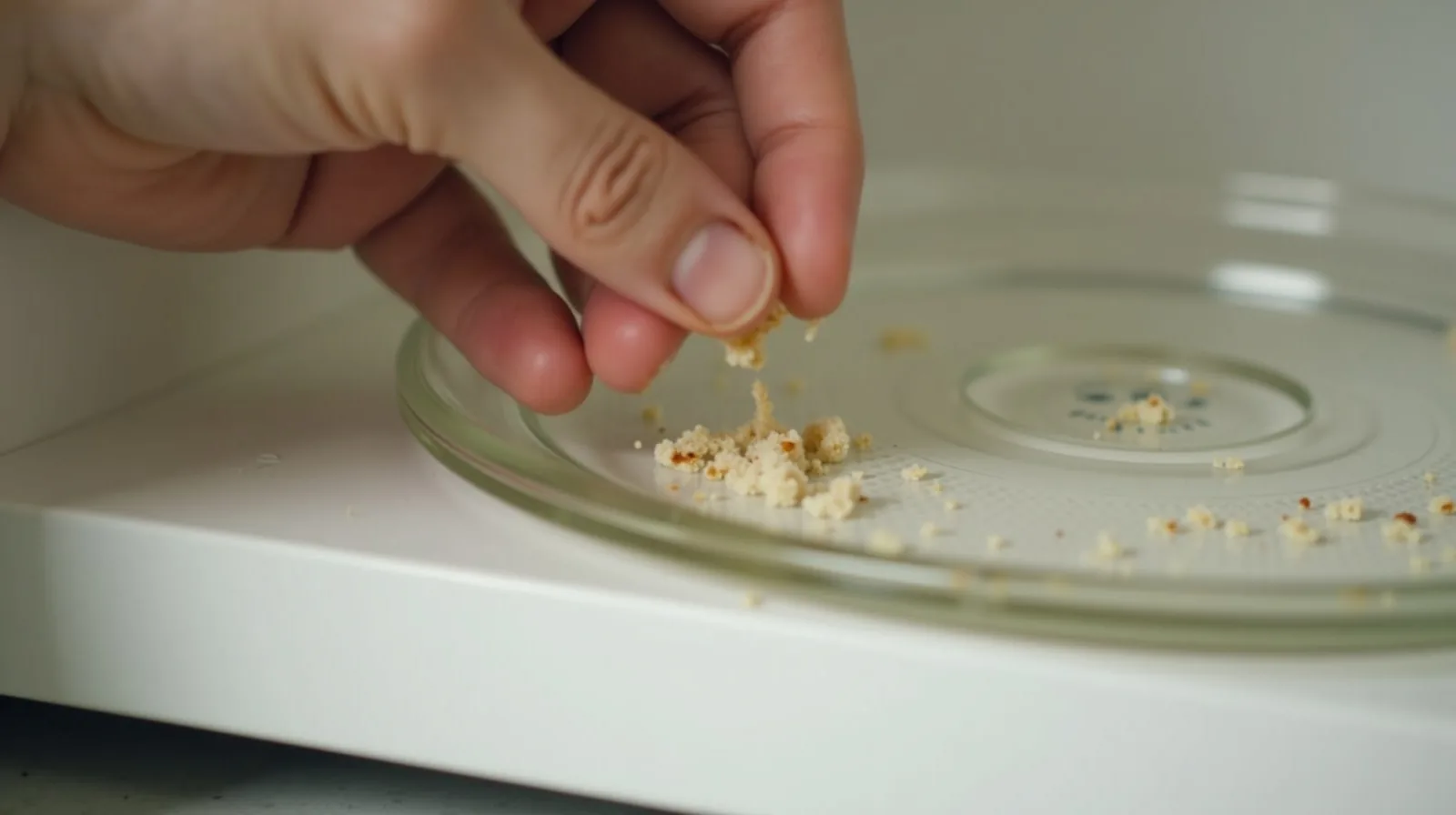
The glass turntable and the plastic roller ring it sits on both lift straight out, and almost nobody ever takes them out to look underneath. Crumbs, grease, and dried sauce collect in that track precisely because it’s never in view during a normal wipe-down. Pull both pieces and wash them in the sink like any other dish, then dry and reset them before you put the turntable back. While it’s out, take a second to check the ceiling of the microwave — anything that pops or bubbles sprays upward, and that surface gets skipped by anyone cleaning at eye level.
The keypad and the door seal
Two more spots worth a specific check:
- The keypad picks up a thin film of grease every time you touch it with cooking hands, and that film builds up in the seams between buttons. Wipe it with a barely damp cloth — not a soaked one — since liquid can work its way behind the membrane.
- The door seal and the vents around it trap crumbs and condensation right where the door meets the cavity, and that combination is a common source of a musty smell that has nothing to do with the interior walls. Run a cloth along the full seal, including the underside of the door itself.
What’s actually causing that smell
If the inside looks clean but still smells off, the cause is usually one of three things: food particles trapped in the door seal or the turntable track (covered above), a lingering plasticky odor from a container or wrap that got a little too hot at some point, or a film of oil from microwave popcorn that’s settled into the walls. For the plasticky or oily kind, a bowl of baking soda left inside overnight absorbs a surprising amount of it. For a smell that’s really set in, steam a bowl of water with a spoonful of used coffee grounds for a few minutes and let it sit — the same steam-and-absorb principle, aimed specifically at odor instead of grime.
A 30-second habit that prevents most of this
The single best time to wipe a microwave is right after something splatters, while it’s still warm and hasn’t had a chance to set. A quick pass with a paper towel the moment you open the door takes thirty seconds and means you’ll rarely need the full steam treatment at all. Add a once-a-week swipe of the keypad and door seal on whatever day you already wipe the counters, and the smell never gets the chance to build up in the first place.