Jewelry is small, so it tends to get small-space storage: a dish on the dresser, a box with one big compartment, a drawer where everything lands together. That works until the morning you need one particular necklace and pull up three others knotted to it, or find one earring and spend ten minutes hunting for its partner.
The fix isn’t a bigger box. It’s giving each type of piece the kind of storage that suits its shape, so chains stay straight, pairs stay paired, and the things you wear most are the easiest to reach. Here’s how to set that up in an afternoon, with whatever space you have.
Why Jewelry Ends Up in a Knot
Almost every jewelry mess comes from the same three habits, and once you see them the solutions are obvious.
- Chains share space. Fine necklaces and bracelets that lie loose together will twist around each other every time the box or drawer moves. Contact plus motion equals a knot.
- Pairs get split. Earrings come off one at a time, often in different rooms, and the backs end up somewhere else entirely. Without a fixed spot for each pair, singles pile up.
- Everyday and occasional pieces are mixed. The two things you wear daily are buried under twenty you wear twice a year, so taking anything out disturbs everything else.
Good jewelry storage solves all three: separation for chains, a two-slot home for pairs, and a clear split between what you reach for daily and what can live further back.
Sort Before You Store
Before buying a single tray, empty every box, dish, and pouch onto a towel on a table. A towel keeps small pieces from rolling away and gives you a soft surface for untangling. Then sort into four groups:
- Wear it often. Pieces worn at least a few times a month. These get the most accessible spot.
- Keep for occasions or sentiment. Formal pieces and things you keep for the memory rather than the outfit. They can live in a closed box.
- Needs a fix. Broken clasps, missing stones, stretched rings. Put them in one small bag and take it to a repair shop or tackle them in one sitting, or decide honestly that they aren’t worth fixing.
- Let it go. Lone earrings that have been single for a year, costume pieces that turn your skin green, and anything you dislike wearing. Donate wearable pieces; some recycling programs and jewelers accept broken metal jewelry.
To untangle a knotted chain, lay it flat, add a drop of baby oil or a little cornstarch to the knot, and work it loose from the center with two straight pins rather than pulling from the ends. Patience beats force every time.
As you go, pair up every earring and put its back on. A stud with its back attached is a stud that stays findable.
Give Every Type the Storage It Needs
Different shapes want different homes. Matching storage to type is what keeps a system tidy without effort.
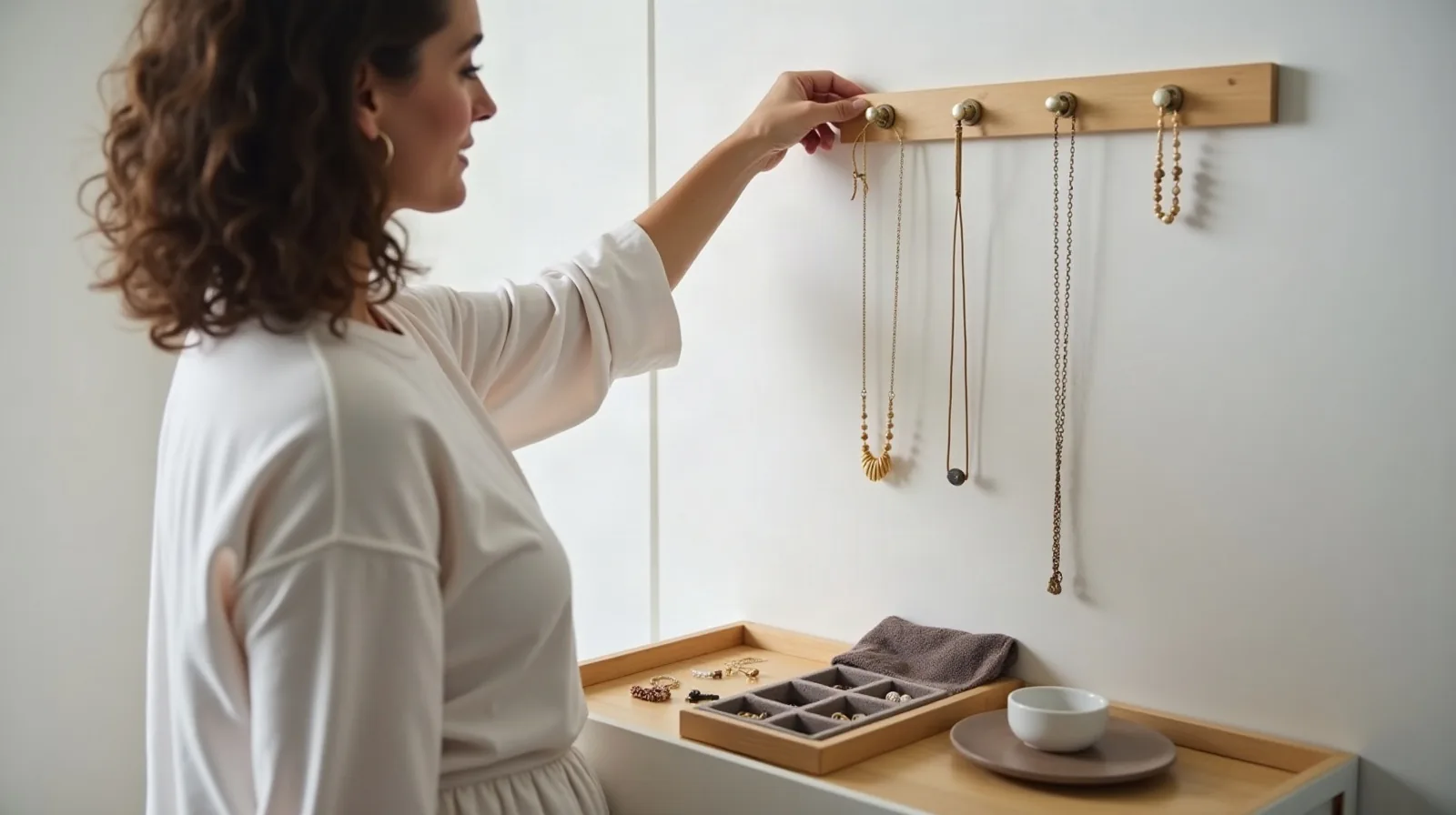
- Necklaces: hang them. Hanging is the single best tangle-preventer, because a chain under its own weight can’t twist around anything. A short wall rail with small hooks or knobs, a few adhesive hooks inside a closet door, or a hanging organizer with clear pockets all work. Give each necklace its own hook, and hang long and short ones on alternating hooks so they don’t overlap.
- Earrings: one cell per pair. A tray with small compartments, an ice cube tray, or a pill organizer gives each pair its own space. For studs and hooks, a piece of fabric stretched over a frame or a perforated card lets you hang pairs side by side and see them all at once.
- Rings: slots or a shallow dish with dividers. A ring tray with foam rolls keeps bands upright and separate. If you only own a few, a small dish by the sink or bed for the ones you take off daily is fine — just keep it to rings.
- Bracelets: stack or coil. Rigid bangles stack on a short upright rod or slide over a cylinder. Chain bracelets go flat in their own compartments, or fasten each one closed before storing so it can’t snag.
- Watches: their own soft spot. A cushion or a compartment big enough to lay the watch flat protects the face from scratches by other pieces.
Any drawer can become a jewelry drawer with stacking trays: a deep layer for bangles and watches on the bottom and a shallow, finely divided tray on top for earrings and rings. Felt or fabric linings keep pieces from sliding and scratching.
Travel Without a Tangle
Packing jewelry loose in a toiletry bag is how a weekend trip ends with a knot that takes an evening to undo. A few small habits keep everything intact.
- Bring less. Pick a small set that goes with everything you packed. Two pairs of earrings and one necklace cover most trips.
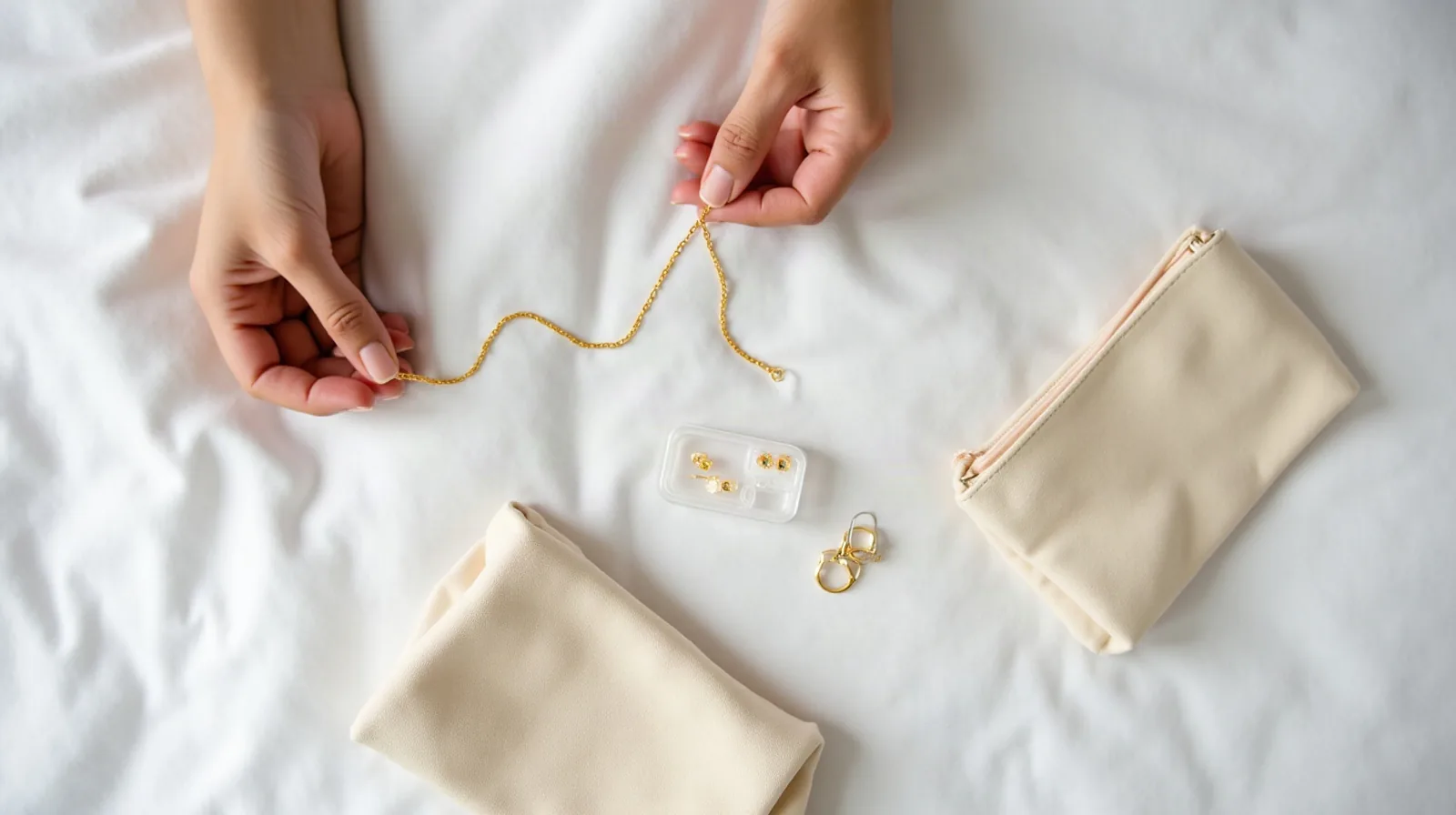
- Thread fine chains through a straw. Unclasp the necklace, feed one end through a cut drinking straw, and fasten it again around the outside. The straw keeps the chain straight and stops it from twisting.
- Use a small compartment case. A clear pill case or a travel jewelry case keeps earring pairs together and lets you check that everything is still there before you leave the hotel.
- Give each chain its own pouch. Separate soft pouches or folded tissues stop pieces from rubbing against each other in transit.
- Keep valuables with you. Anything precious or irreplaceable goes in your carry-on or personal bag, never in a checked suitcase.
When you arrive, unpack the jewelry case first and set it in one spot in the room. A hotel checkout sweep is a lot easier when there’s only one place to look.
Protect the Pieces That Need It
Organization is also about keeping pieces in good shape. A few materials need a little extra care in storage.
- Silver tarnishes in air. Store sterling pieces in a closed box or a sealed small bag, ideally with an anti-tarnish strip or a piece of chalk to absorb moisture. Keep them out of the bathroom, where steam speeds up tarnish.
- Pearls need to breathe. Lay pearl strands flat in a soft pouch rather than hanging them, which can stretch the silk thread over time. Avoid airtight plastic, which can dry them out.
- Soft stones scratch. Harder gems and metals can scuff softer stones and costume pieces, so give delicate items their own compartment instead of a shared one.
- Costume jewelry dislikes moisture. Plated finishes and glued stones last longer kept dry and away from perfume and lotion. Put them on after skincare and fragrance, not before.
For anything valuable, take a clear photo of each piece and note what it is. That record helps with insurance, and it’s useful if something ever goes missing.
A Landing Spot Keeps It Working
Even a perfect drawer falls apart if pieces come off and get dropped on the nightstand, by the sink, and in a coat pocket. Choose one landing spot where everything goes when you take it off — a small lined dish or tray wherever you usually undress for the night.
- Empty it weekly. Once a week, return everything in the dish to its proper home. It takes two minutes.
- Keep the daily set out. The few pieces you wear every day can live in that dish or on the nearest hooks permanently. That’s fine — it’s a decision, not a pile.
- Check before laundry. Rings and earrings left in pockets are a common way small pieces vanish. A quick pocket check before washing saves them.
- Rotate seasonally. When the seasons change, swap a few pieces from the occasional box into the everyday spot, so what you see matches what you actually wear.