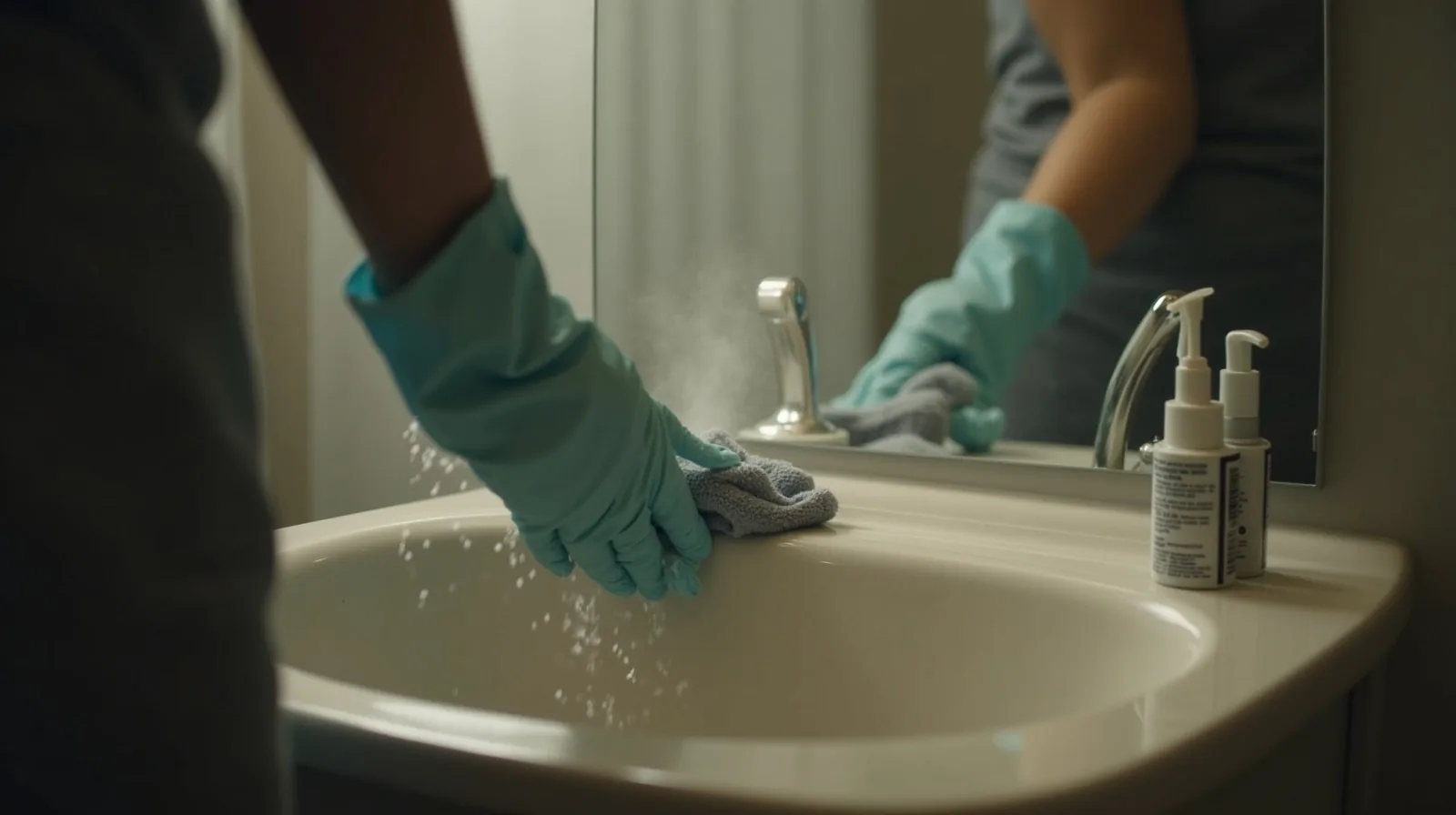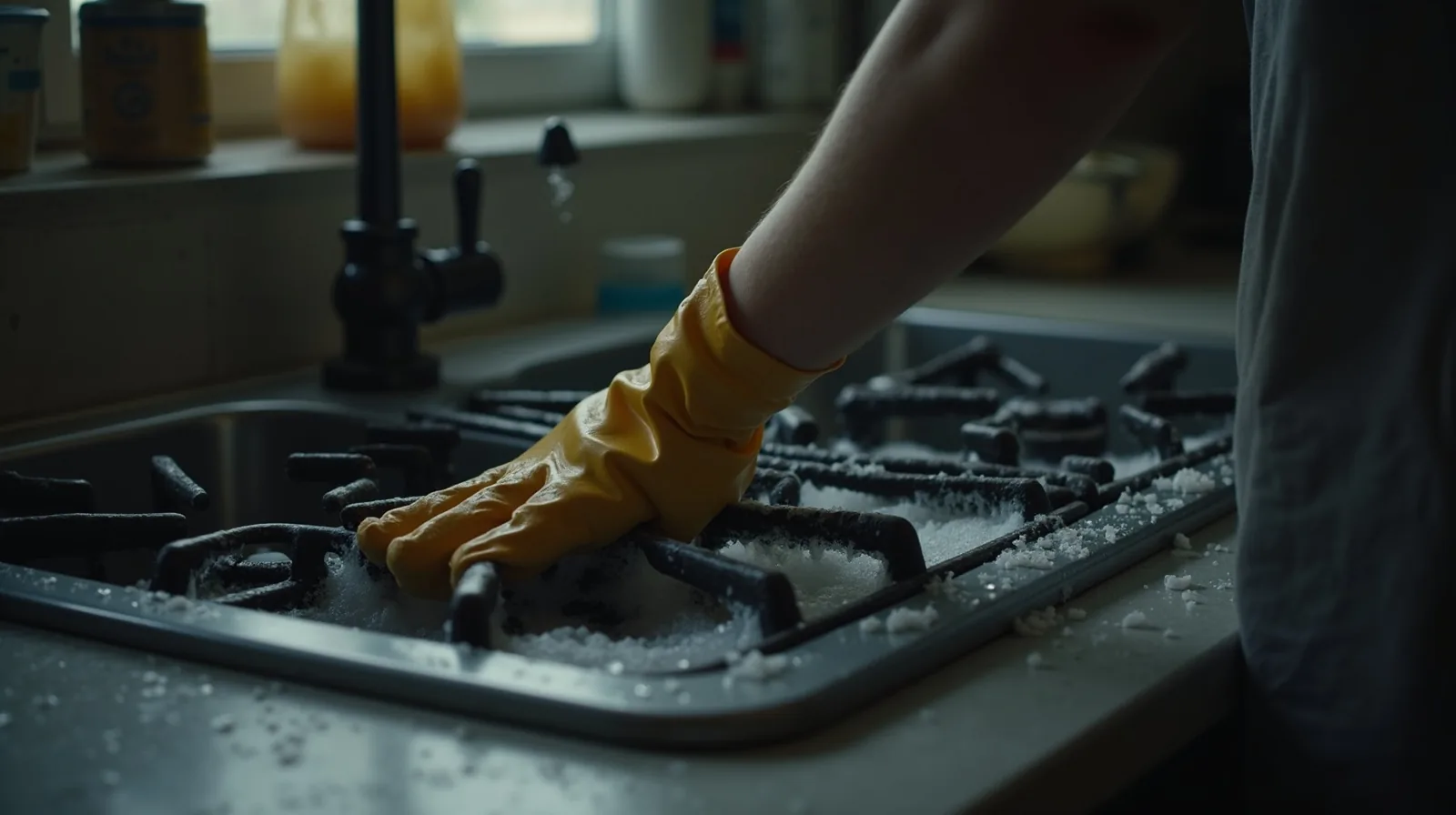
Most cleaning routines run on a loop: wipe the counters, vacuum the floors, do the dishes, repeat. That loop is great at keeping the surfaces you touch and see every day in shape, but it quietly skips a whole category of surfaces — the ones too high, too low, or too easy to forget about. Ceiling fan blades, the tops of door frames, baseboards, light fixtures, vents, and the floor under the couch can go untouched for months, sometimes longer, because they simply never come up in the normal rotation. None of them take long to fix. The trick is remembering they exist and knocking them all out together, a couple of times a year, instead of letting them build up indefinitely.
Why These Spots Get Skipped
The surfaces that get neglected share a pattern: they’re out of the direct sightline of daily life. A ceiling fan is only really visible if you tilt your head back and look. Baseboards sit below where your eyes naturally land. The top of a door frame is basically invisible unless you’re standing on something. Because none of these surfaces demand attention the way a sticky counter or a full trash can does, they don’t make it onto the mental checklist — even for people who clean regularly. Dust also behaves differently in these zones. It settles undisturbed for long stretches, builds up in visible layers, and on a ceiling fan blade in particular, can grow thick enough to drop clumps when the fan finally gets turned on for the season.
The Twice-a-Year List
A short, specific list is easier to actually complete than a vague resolution to “deep clean.” These are the spots worth a dedicated pass roughly twice a year — a natural pairing is once when the seasons flip toward warmer weather and once when they flip toward colder:
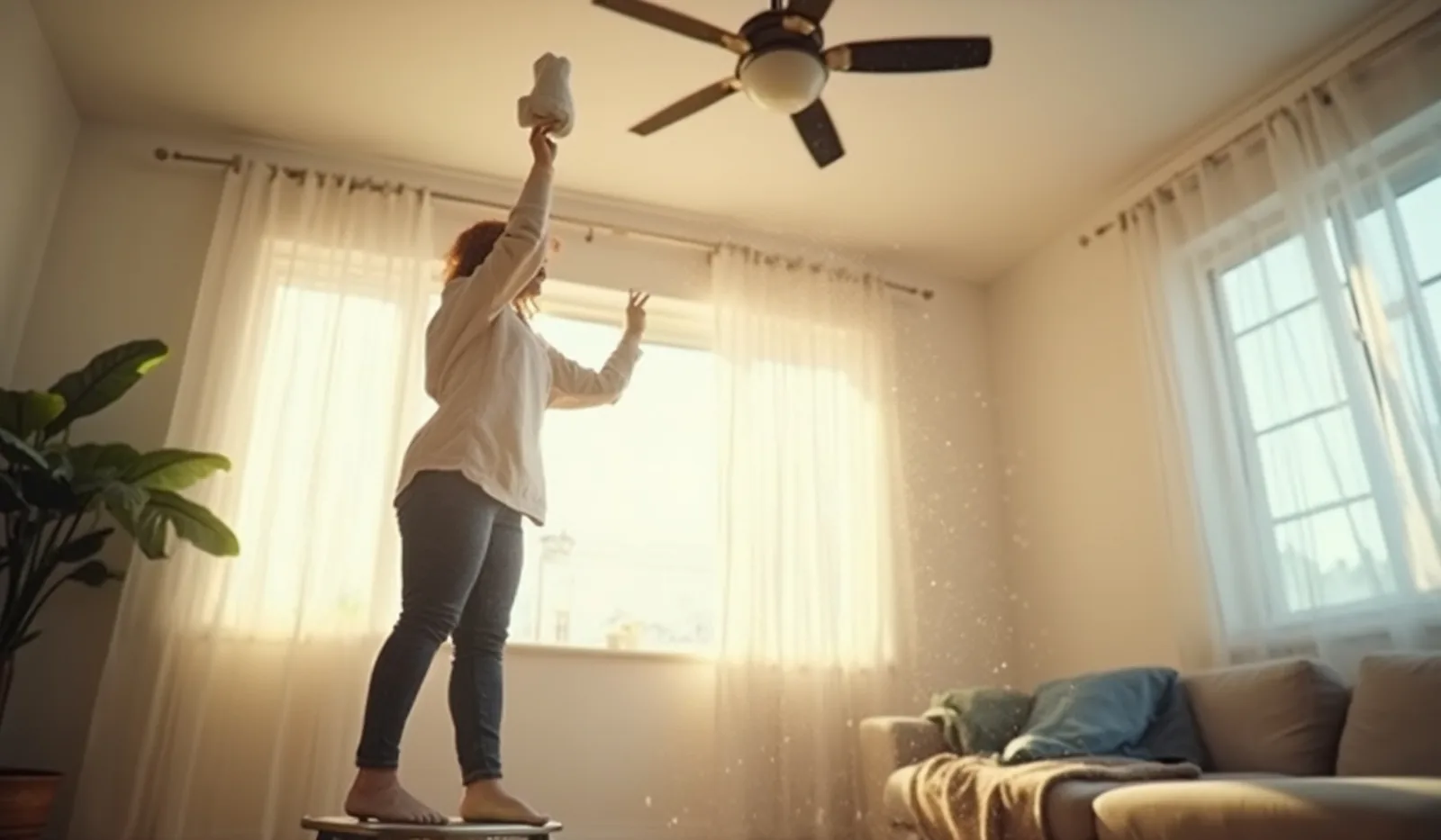
- Ceiling fan blades. Dust accumulates on the top surface of each blade, out of sight until the fan is running.
- Baseboards. A thin grey line of dust and floor debris builds up along the top edge, especially in rooms with hard flooring.
- Tops of door frames and door tops. A flat horizontal surface at head height or above that never gets wiped in a normal pass.
- Light fixtures and lampshades. Dust collects on the upper surfaces of fixtures and inside shades, dimming the light they give off.
- Vents and grilles. Both supply vents and return grilles trap dust on their slats, which then blows back into the room.
- Under and behind furniture. The floor under a couch, bed, or dresser collects dust bunnies that a quick vacuum pass around the edges never reaches.
Work Top to Bottom, in One Pass
Doing this as a single, ordered pass through the house is faster than treating each item as a separate task. Start high and work down, room by room, so dust falls onto surfaces you’re about to clean anyway rather than onto a floor you’ve already finished. Light fixtures and ceiling fans go first, then the tops of door frames, then vents, then baseboards, then furniture gets pulled out (or at least vacuumed under with an extension wand) last. For ceiling fan blades specifically, a well-known trick makes the job nearly mess-free: slide an old pillowcase over one blade at a time, press the fabric against the top surface, and pull it back toward you. The dust stays trapped inside the pillowcase instead of raining down onto the furniture below. A damp microfiber cloth works well for a final pass on any blade with sticky buildup, but the pillowcase alone handles most of it.
Turning It Into an Actual Habit
The reason these spots keep getting missed is that there’s no natural trigger to remind you they exist. Anchoring the task to something that already happens twice a year solves that problem — clock changes, the first week of a new season, or a recurring calendar reminder all work. Some households pair it with switching out seasonal decor or swapping air filters, since that already involves getting a step stool out. Keep a pillowcase or two set aside specifically for this job so the tool is never the reason the task gets postponed. Once it’s a twice-a-year habit rather than an occasional guilt-driven scramble, the whole pass through a typical home takes well under an hour.