
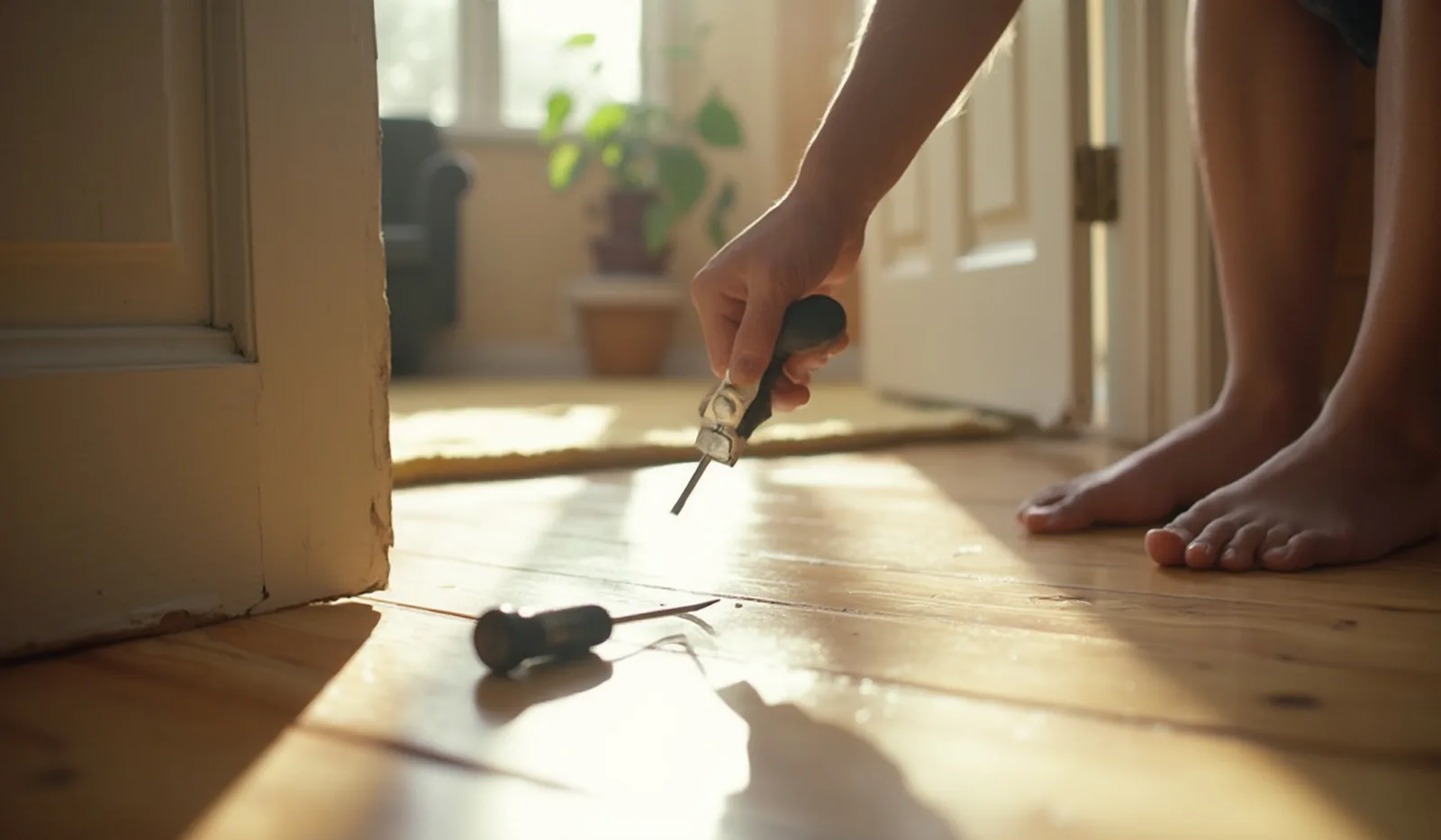
Every home collects the same short list of small irritations — a door that groans on the way in, a drawer that needs a shove, a window that won’t slide without a fight. None of it is urgent enough to stop for, so it just gets tuned out for months, sometimes years. The thing worth knowing is that almost none of it is a real project. Most of these fixes take five minutes and something that’s probably already in a kitchen drawer.
Doors and Hinges That Complain
A squeaky hinge is dry metal rubbing on metal, not a sign anything is failing. Pull the hinge pin partway out, wipe off any rust or grime with a rag, and coat it with a thin layer of household oil or a dab of petroleum jelly. Work the pin up and down a few times to spread the lubricant through the knuckle, wipe off the drip, and slide it back in.
A door that rubs the frame or sticks on humid days is usually sagging just slightly, not swollen. Before sanding anything, try driving one long screw through the top hinge into the door frame’s structural framing behind it — it pulls the whole door back square and often solves rubbing that looks like a wood problem. If the wood really has swollen, a light hand-sanding along the sticking edge, followed by a quick coat of paint or sealant on the bare wood, fixes it for good and keeps it from happening again.
A door that won’t stay open, or swings shut on its own, is almost always a slightly out-of-level floor rather than anything wrong with the door. A cheap hinge-pin doorstop or a spring-loaded stop solves it without touching the hinge at all.
Drawers and Cabinets That Fight You
A drawer that sticks or needs two hands to open usually just needs its wooden runners lubricated. Rub a bar of soap or the stub of a candle along the top and sides of the runners, or a dry silicone spray on metal glides, and the drag disappears almost instantly. It takes thirty seconds and lasts for months.
A loose cabinet knob or handle is normally just a screw that needs a quarter-turn. If the screw spins freely because the hole has stripped out, back the screw all the way out, pack the hole with a couple of broken toothpicks and a dab of wood glue, let it set for an hour, and drive the original screw back in — it bites into the fresh wood like new.
A cabinet door that won’t stay closed on its own usually has an adjustable tension screw built into the hinge; a small turn with a screwdriver restores the self-close. On older hinges without that feature, a two-dollar self-adhesive magnetic catch does the same job.
Windows and the Drafts Around Them
A window that’s stiff or grinds in its track usually just needs a clean track and a dry lubricant. Wipe out the dust and grit first, then run a bar of paraffin wax or plain soap along the metal or vinyl channel. Skip spray lubricants here — they feel great for a week, then attract dust and gum the track up worse than before.
A drafty window or door is one of the cheapest fixes on this list. A roll of self-adhesive foam or V-strip weatherstripping pressed along the frame closes the gap in a few minutes and is noticeable the first cold night. For under a door, a rolled towel works in a pinch, but a proper draft stopper across the bottom does the same job permanently.
A window pane that rattles in a stiff wind just needs the sash gap padded, not resealed. A small foam or rubber wedge pressed into the gap between the sash and frame stops the rattle without ever touching the glass.
Furniture and Floors That Squeak or Wobble
A wobbly chair or table leg is worth diagnosing before you touch a tool. If the floor itself is uneven, a self-adhesive felt pad built up under the short leg solves it instantly. If the leg is genuinely loose at the joint, the fix is tightening the bolt or dowel that holds it, sometimes with a little wood glue worked into the joint first for good measure.
A squeaky floorboard is almost always two boards rubbing at a seam, not a structural issue. Working a little talcum powder or powdered graphite into the seam silences most squeaks without pulling up anything. If there’s access from below — a basement or crawlspace — tapping a thin wood shim into the gap between the joist and the subfloor fixes it for good.
A wobbly toilet seat is rarely a broken seat. Check the two bolts at the hinge first; nine times out of ten, one has simply worked loose, and a quarter-turn with a screwdriver is the whole repair.
Keep a Small Kit for These
None of these fixes are worth a trip to the hardware store on their own, which is exactly why they pile up. Keeping a small “annoyance kit” in one drawer — a screwdriver, a travel bottle of household oil, a bar of soap or a stub of paraffin wax, a few felt pads, a short roll of weatherstripping, and a spare pack of toothpicks — means the next squeak or stick gets fixed the moment you notice it, not filed away as something to deal with eventually.