It’s a small, recurring kitchen tragedy: a recipe calls for two tablespoons of fresh herbs, you buy a whole bunch, use a fraction, and the rest liquefies in the crisper drawer within the week. Fresh herbs are expensive and delicate, and most of what we buy gets thrown away. Keeping them alive a few extra days helps — but the bigger win is preserving the surplus so a big bunch turns into weeks of flavour instead of a slimy bag of regret.
Short-term: a few more days
Different herbs want different things in the short term:
- Tender, soft herbs (parsley, cilantro, basil) behave like cut flowers — trim the stems and stand them in a glass with a little water. Most keep in the fridge loosely covered; basil is the exception and prefers the counter, since cold turns it black.
- Hardy, woody herbs (rosemary, thyme, sage) keep well wrapped in a slightly damp paper towel in the fridge.
These tricks buy you days, not weeks — which is exactly why preserving the extra matters.
The oil-cube trick (the one to remember)
The best way to save a surplus of soft herbs is to freeze them in oil. It sounds fussy; it isn’t:
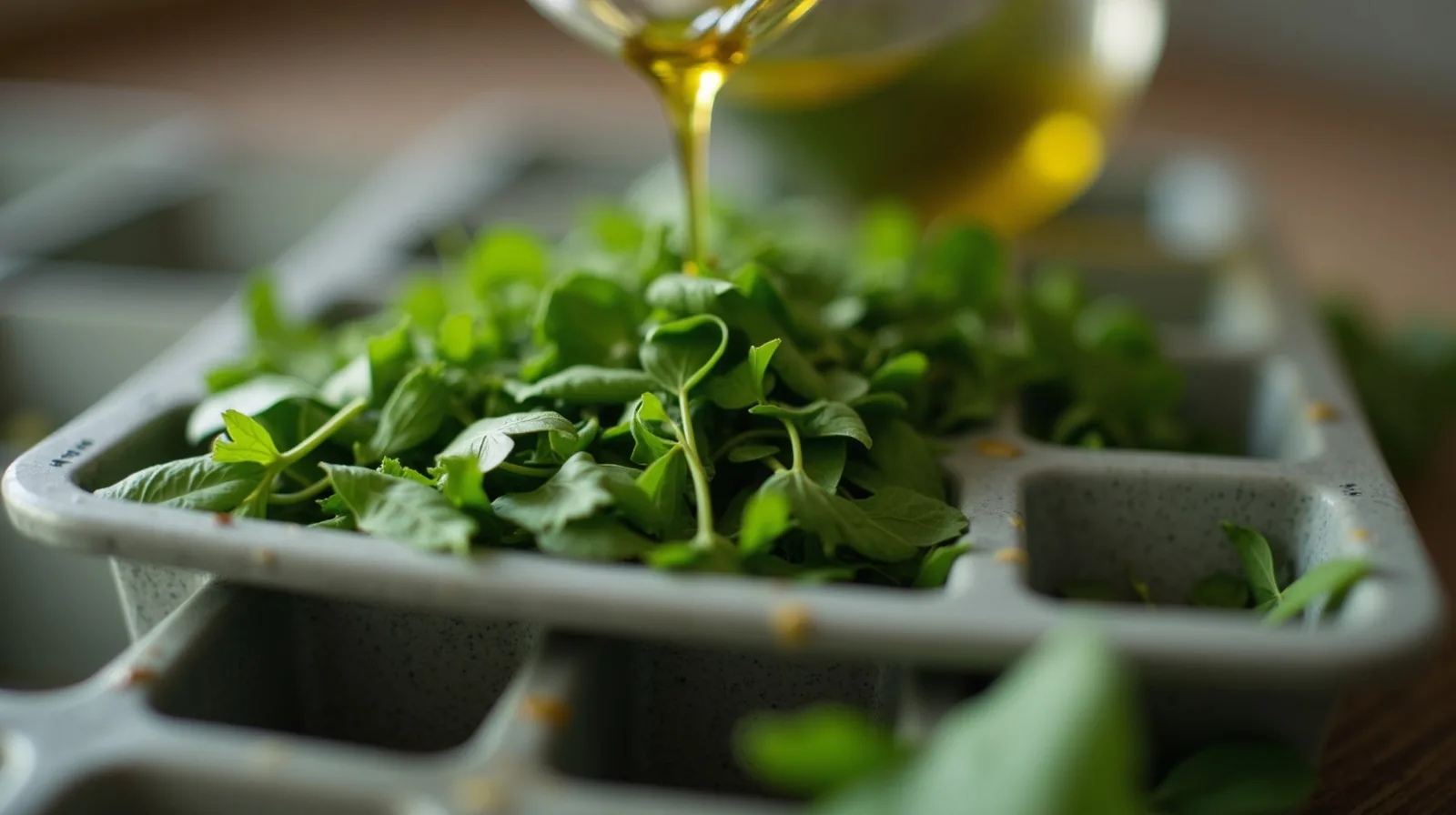
- Chop the herbs and pack them into the compartments of an ice-cube tray.
- Pour olive oil (or melted butter) over to fill the gaps and cover them.
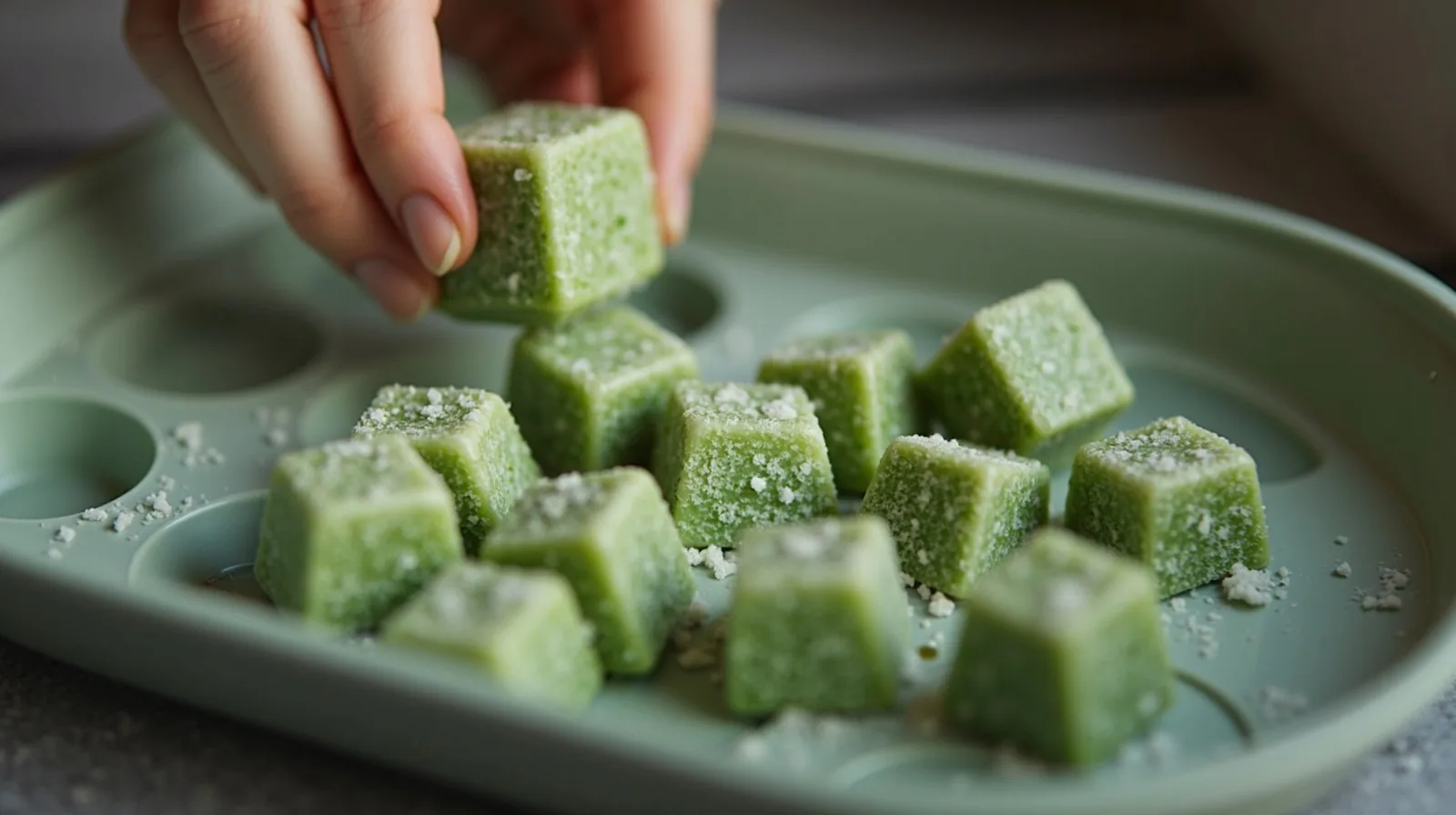
- Freeze, then pop the cubes into a labelled bag.
Now you have portioned, ready-to-cook flavour bombs: drop a cube straight into a hot pan for sautéing, into a soup, or over roasting vegetables. The oil protects the herbs from freezer burn and preserves their flavour far better than freezing them dry, and there’s no thawing step. It’s the single most useful thing you can do with too many herbs.
Drying the woody ones
Soft herbs don’t dry well — they lose most of their character — but the woody, hardy herbs (rosemary, thyme, oregano, sage) dry beautifully and keep for months. Bundle the stems and hang them somewhere warm and airy until brittle, or dry them low and slow in the oven, then strip the leaves into a jar. Dried herbs are more concentrated than fresh, so use a smaller amount, and add them earlier in cooking to let the flavour bloom.
Match the method to the herb
The quick rule: soft herbs freeze (ideally in oil); woody herbs dry. Basil surplus can also become pesto and freeze in cubes; leftover herb stems can flavour stocks. Whatever you choose, preserve herbs while they’re still fresh and green — not once they’ve already started to wilt. Do that, and buying the big bunch stops being wasteful and starts being a stockpile.
Fresh herbs don’t have to be a race against the crisper drawer. Keep what you’ll use soon standing in water or wrapped in a damp towel, and turn the rest into frozen oil cubes or a jar of dried leaves. The bunch you used to throw away becomes flavour you reach for all month.