A garbage disposal is one of the few kitchen appliances nobody thinks about until it stops behaving — a rotten smell rising out of the sink, a low hum with no grinding, or water backing up instead of draining. None of that usually means the unit is dying. Disposals are simple machines, and most of what goes wrong comes down to the same handful of habits: the wrong things going down the drain, no water running while it grinds, and a chamber that never gets a proper rinse. A few minutes a week heads off almost everything else.
How a Disposal Actually Works
A garbage disposal doesn’t have blades in the way people picture — it uses blunt spinning impellers that fling food scraps against a stationary grind ring, shredding them into pieces small enough to wash down the drain with running water. Water is doing the actual work of carrying waste through the trap and into the pipes; the grinding just makes the pieces small enough to move. That’s why the golden rule is to run cold water before you flip the switch, keep it running the whole time the disposal is on, and let it run another fifteen seconds or so after the grinding noise stops. Skip the water and you’re not clearing anything — you’re packing ground food straight into the trap. Cold water also matters more than hot: hot water can soften grease just enough for it to coat the inside of the pipe instead of washing straight through, where cold keeps it solid until it clears the trap.
What Never Goes Down It
A disposal handles small, soft food scraps — it isn’t a trash can with a motor. A short list of things reliably causes trouble: fibrous vegetables like celery, corn husks, and onion skins, whose strings wrap around the impellers instead of shredding; grease and cooking fat, which coat the chamber and the pipe beyond it and solidify as they cool; coffee grounds in any real quantity, which pack into a dense sludge lower in the drain; pasta, rice, and other starches, which keep absorbing water and swelling long after they’re out of sight; bones and fruit pits, which are simply too hard; and starchy peels like potato skins, which turn into a paste. Eggshells are a genuine myth — they don’t sharpen the impellers, and the membrane inside them tends to catch on the grind ring rather than break down cleanly. When in doubt, it’s compost or the trash, not the sink.
The Weekly Habit That Prevents Most Problems
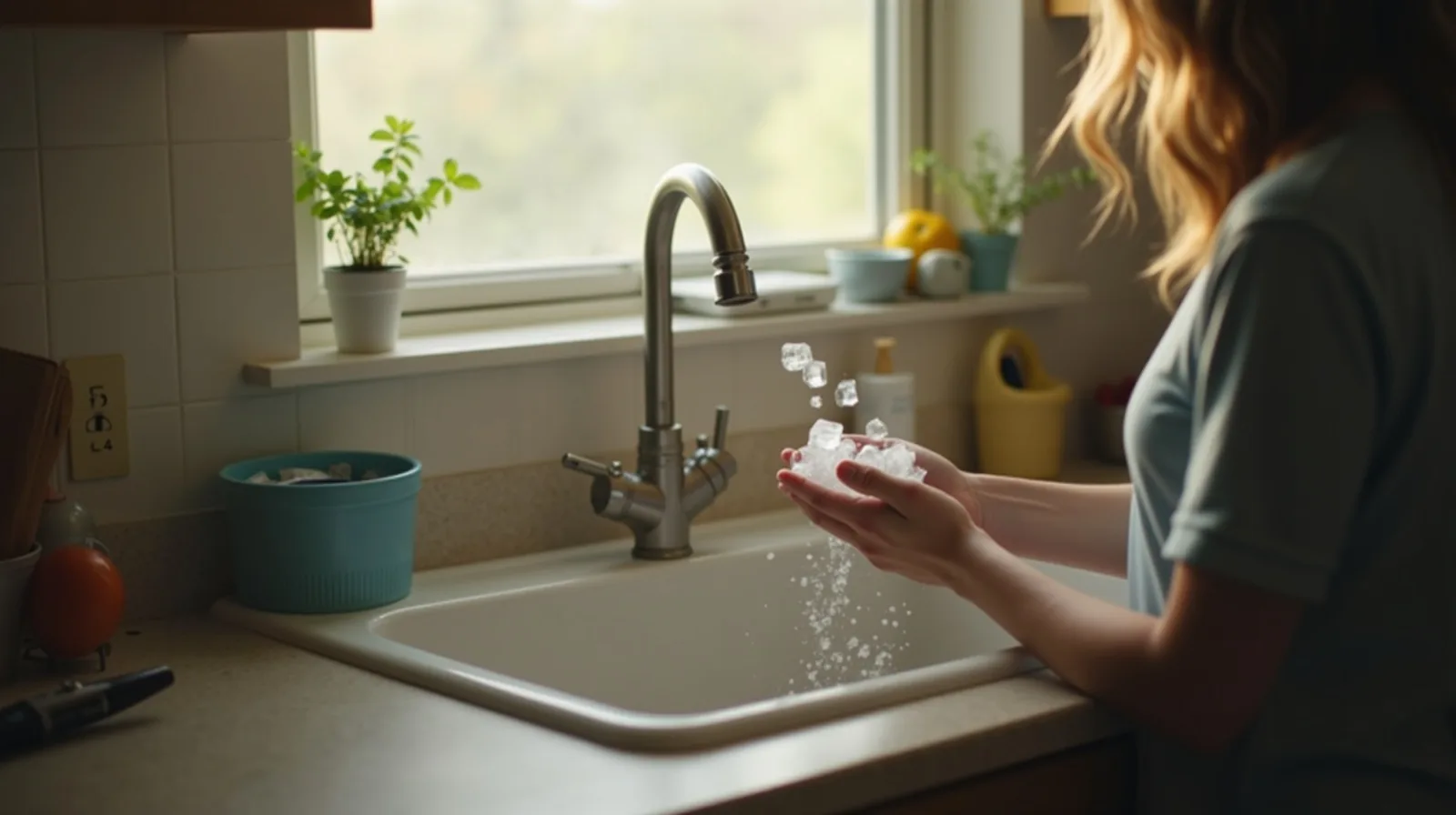
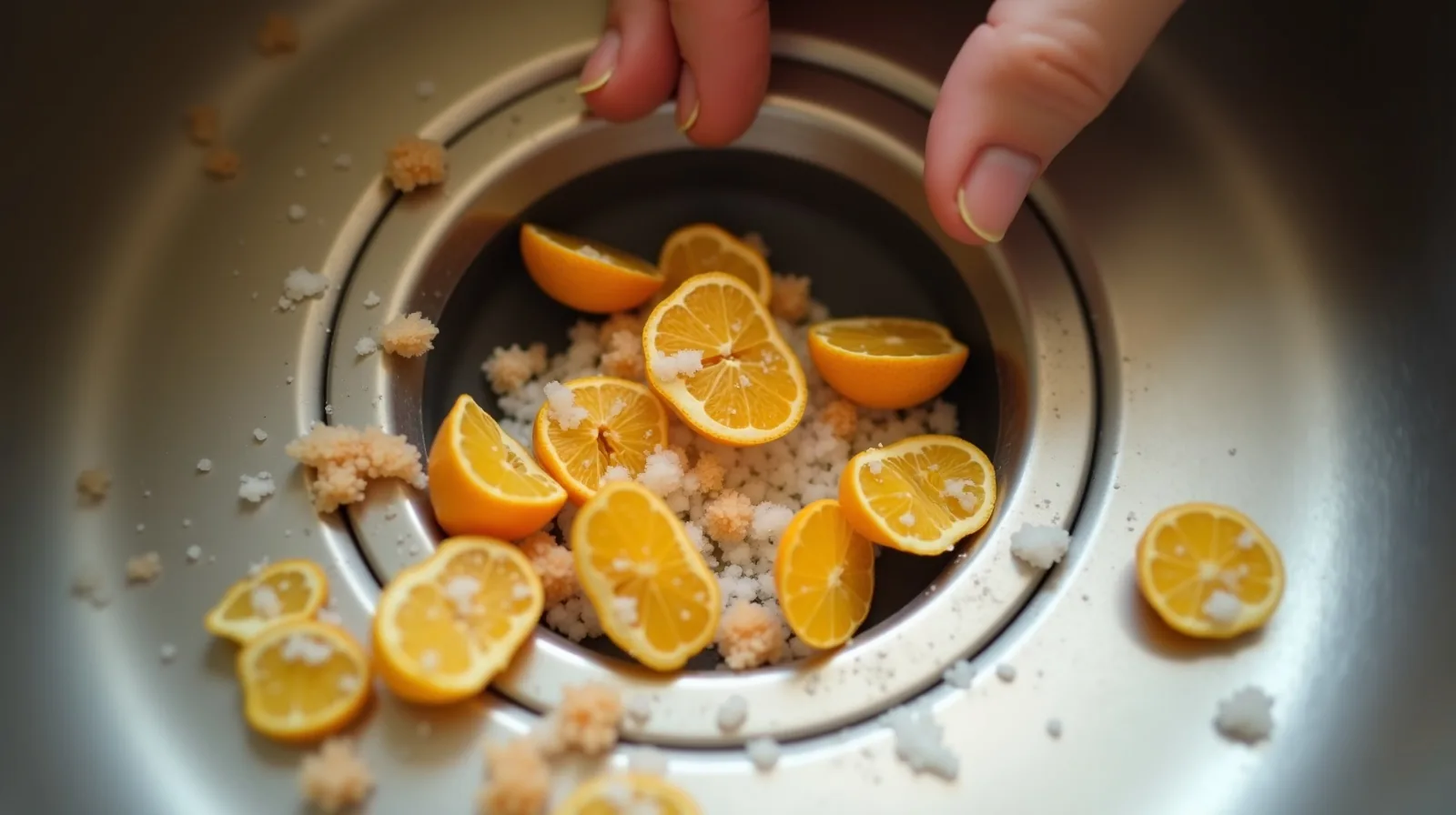
The single best habit is also the simplest: once a week, run cold water, drop in a handful of ice cubes, and let the disposal grind them down. The ice doesn’t sharpen anything — it’s just hard enough to knock loose the soft buildup clinging to the impellers and the inside of the grind chamber, and it does it without anything abrasive touching the metal. A tablespoon or two of coarse salt added with the ice adds a bit more scrubbing action for a chamber that sees heavy use. Follow it with a few citrus peels — lemon, lime, or orange — ground with the water still running, which leaves the chamber smelling clean instead of masking an existing odor with something stronger. The whole routine takes under a minute and does more for a disposal’s long-term health than any specialty cleaner.
Clearing the Smell for Good
A disposal that already smells needs more than ice. Start by checking the rubber splash guard — the flexible flaps just inside the drain opening — by folding it back and wiping underneath; food debris collects on the underside where normal use never rinses it, and it’s a surprisingly common source of odor on its own. For the chamber itself, a half cup of baking soda followed by a cup of white vinegar, left to fizz for ten minutes before a cold-water flush, breaks down the grime clinging to the grind ring without any harsh fumes. If the smell persists after that, a small squeeze of dish soap ground through with cold water usually finishes the job — the soap cuts through anything greasy that vinegar alone couldn’t budge.
When It Hums but Won’t Spin
A disposal that hums without grinding almost always means the impeller plate is jammed, not that the motor has failed. Turn the switch off first. Most units have a small reset button on the underside of the housing — press it firmly and it will pop back out if the internal breaker had tripped from the strain. If the hum continues, look for a small hexagonal hole in the center of the bottom of the unit; most disposals ship with a matching hex wrench (or accept a standard quarter-inch Allen key) that fits there and lets you manually rock the impeller plate back and forth from underneath the sink until whatever’s jamming it works loose. Never reach into the disposal with a hand to clear a jam, even with the switch off — always work from underneath with a tool, and only turn the water and power back on once the plate spins freely.
When to Call a Pro
Most disposal problems are a five-minute fix, but a few signs mean it’s time to stop troubleshooting. Water pooling in the cabinet under the sink points to a leak in the seal or housing, not a clog. A burning smell, rather than a food smell, usually means the motor itself is failing. A reset button that won’t stay popped, or a unit that trips the circuit breaker repeatedly, is an electrical problem worth a professional’s attention rather than repeated resets. And a disposal that’s been humming and jamming for years, well past a typical eight-to-fifteen-year lifespan, is often cheaper to replace than to keep nursing along.