Buy a hard, green avocado on Monday and by Thursday it's either still a rock or already brown and mushy — there rarely seems to be a good day in between. It feels like luck, but it isn't. Ripening after harvest is a real, controllable process, driven by a gas called ethylene that certain fruit gives off as it matures. Once you know how that gas works, you can push a fruit toward ready days sooner, or hold it back once it's already there. You can't do this with everything — plenty of produce is exactly as ripe as it will ever be the day you bring it home — but for the fruit that does keep changing, the timeline is yours to manage.
The gas doing all the work
Ethylene is a plant hormone that some fruits produce as they mature, and it triggers a chain reaction: starches convert to sugar, cell walls soften, color deepens, and the fruit turns fragrant. Fruits that keep ripening after they're picked are called climacteric — avocados, bananas, tomatoes, peaches, pears, and mangoes are the common ones. They give off ethylene themselves, and being near more of it, or sitting somewhere warm, speeds the whole process along. Other fruits are non-climacteric: once they're off the plant, their sugar and acid levels are locked in for good. They can still soften or spoil, but they will never taste any sweeter than the day they were picked.
How to ripen fruit faster, on purpose
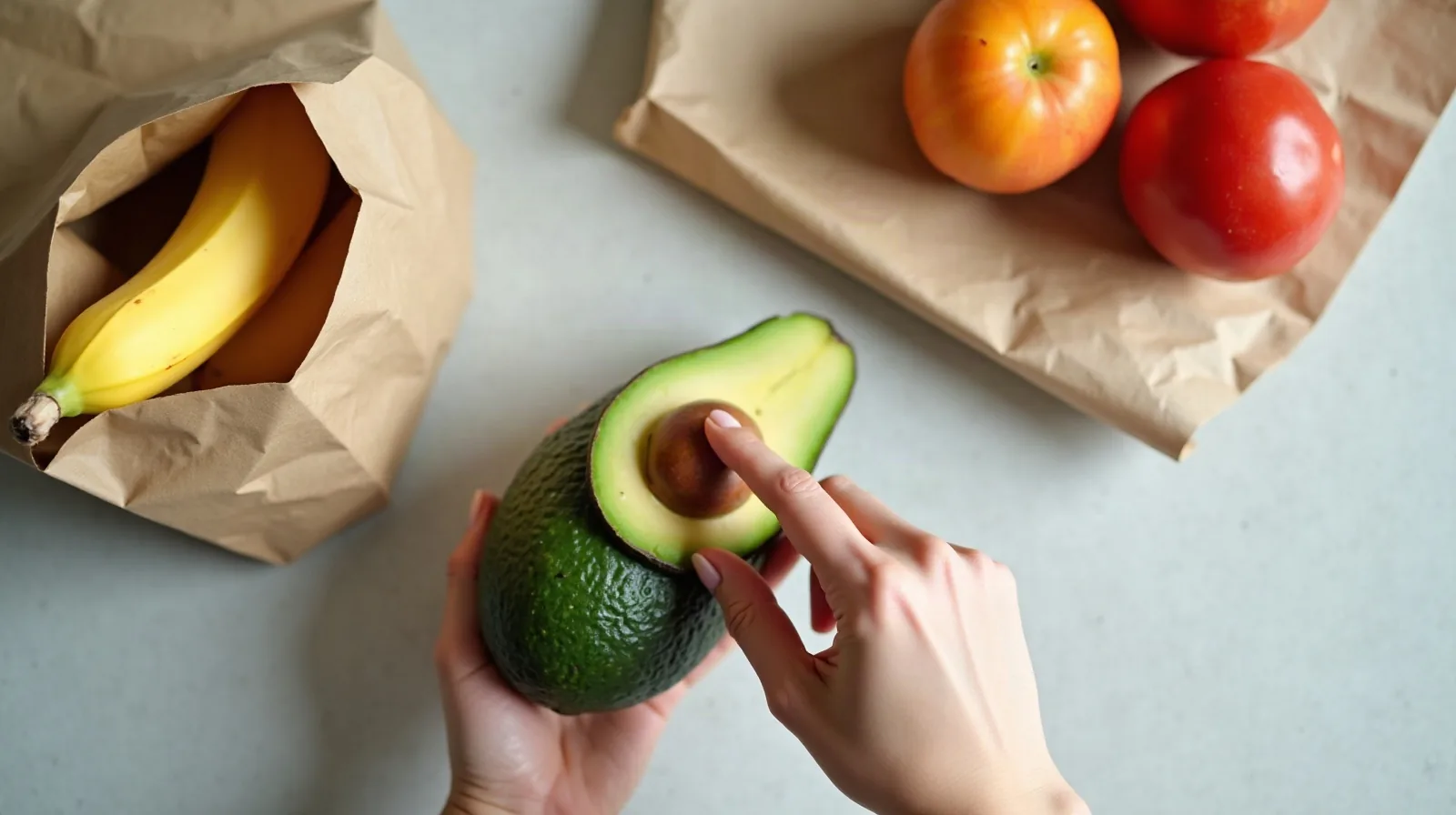
The paper bag trick works because it does exactly what a fruit bowl doesn't: it traps the ethylene gas around the fruit instead of letting it drift away into the room. Put the hard fruit in a paper bag, not plastic (it needs a little airflow, or trapped moisture can turn into mold), fold the top over loosely, and leave it at room temperature out of direct sun. Check it once a day — most fruit goes from hard to ready in one to three days this way.
Want it faster still? Tuck a ripe banana or apple into the same bag. Both are unusually heavy ethylene producers, so a bagged avocado with a banana alongside it usually ripens noticeably quicker than one bagged on its own. It's also the reason a single overripe banana left in an open fruit bowl seems to age everything around it — that's not your imagination, either.
Which fruits keep ripening once you bring them home (and which don't)
Before you bag anything, it helps to know whether waiting will actually pay off:
- Keeps ripening (climacteric): avocados, bananas, tomatoes, peaches, nectarines, pears, mangoes, kiwifruit, and apples.
- Done ripening the day it's picked (non-climacteric): citrus fruit, grapes, berries, pineapple, cherries, and watermelon.
That second list is worth memorizing, because no amount of bagging, waiting, or windowsill time will make a hard nectarine's rules apply to an underripe orange or a green pineapple. If it's a non-climacteric fruit and it isn't sweet, that's as good as it's going to get — the only real fix at that point is choosing more carefully next time you're at the store.
How to slow ripening down once it's ready too soon
The same principle works in reverse. Cold temperatures slow the enzymes and respiration behind ripening almost to a stop, which is why the fridge is the move once a climacteric fruit is exactly where you want it — a ripe avocado, a soft peach, a fully colored tomato. Move it to the crisper and you can usually buy several extra days. Just don't refrigerate a fruit before it's ripe: cold halts the process outright, so an avocado chilled while still hard may simply never finish. The other lever is separation — keep ethylene-heavy fruit like bananas and apples away from anything you want to take its time, whether that's more fruit or vegetables that turn quickly, like leafy greens.
A few fruit-specific tricks worth knowing
- Bananas: to slow a bunch down, break them apart — separated bananas release less ethylene at the crown than a connected bunch. To speed one up, seal it in a bag with an apple.
- Avocados: if you've cut into one before it's fully ready, wrapping the stem end in a small piece of plastic wrap slows the ethylene it keeps releasing from that cut surface.
- Tomatoes: ripen stem-side down, out of direct sunlight, and never in the fridge until they're fully colored — cold before that point kills the flavor for good.
- Peaches and pears: both ripen from the inside out, so a slight give near the stem is a more reliable test than color alone.
None of this takes special equipment — a paper bag, a spare banana, and the fridge cover almost every case. The only real skill is knowing which list your fruit is on before you spend three more days waiting on it.