
Wedding registries and big-box "starter sets" suggest a first kitchen needs forty or fifty pieces. In practice, a handful of well-chosen items cover almost every meal you will cook in your first year, and the rest are things you can add the day you actually miss them.
This is the short list, organized by what it lets you do, plus what to leave on the shelf for now.
Start With What You Will Actually Cook
Before you buy anything, write down the five or six meals you expect to make most. Scrambled eggs, pasta with sauce, a stir-fry, soup, a sheet-pan dinner, and a sandwich need very different gear than a baking-heavy or grill-heavy kitchen. Your real habits beat any generic checklist.
Then buy in this order: the things you will touch daily first, the things you will use weekly second, and the "someday" items last, if ever.
The Core Cookware
Four pieces handle the vast majority of stovetop cooking:
- A 10 to 12 inch skillet. Eggs, sautéed vegetables, pancakes, seared chicken, and quick pan sauces all happen here. A heavier pan holds heat better and lasts longer.
- A medium saucepan with a lid. Rice, oatmeal, small batches of soup, reheating sauces, and boiling eggs.
- A large pot with a lid. Pasta, big batches of soup, chili, and boiled potatoes. Pick one that holds at least four to six quarts.
- A rimmed sheet pan. It roasts vegetables, bakes anything flat, catches drips under a pie, and doubles as a tray. Two are even better.
Add a baking dish or a small roasting pan once you start making casseroles or lasagna. Until then, the sheet pan covers most of it.
The Knives and Cutting Tools
You need far fewer knives than a block of twelve implies. Three do the work:
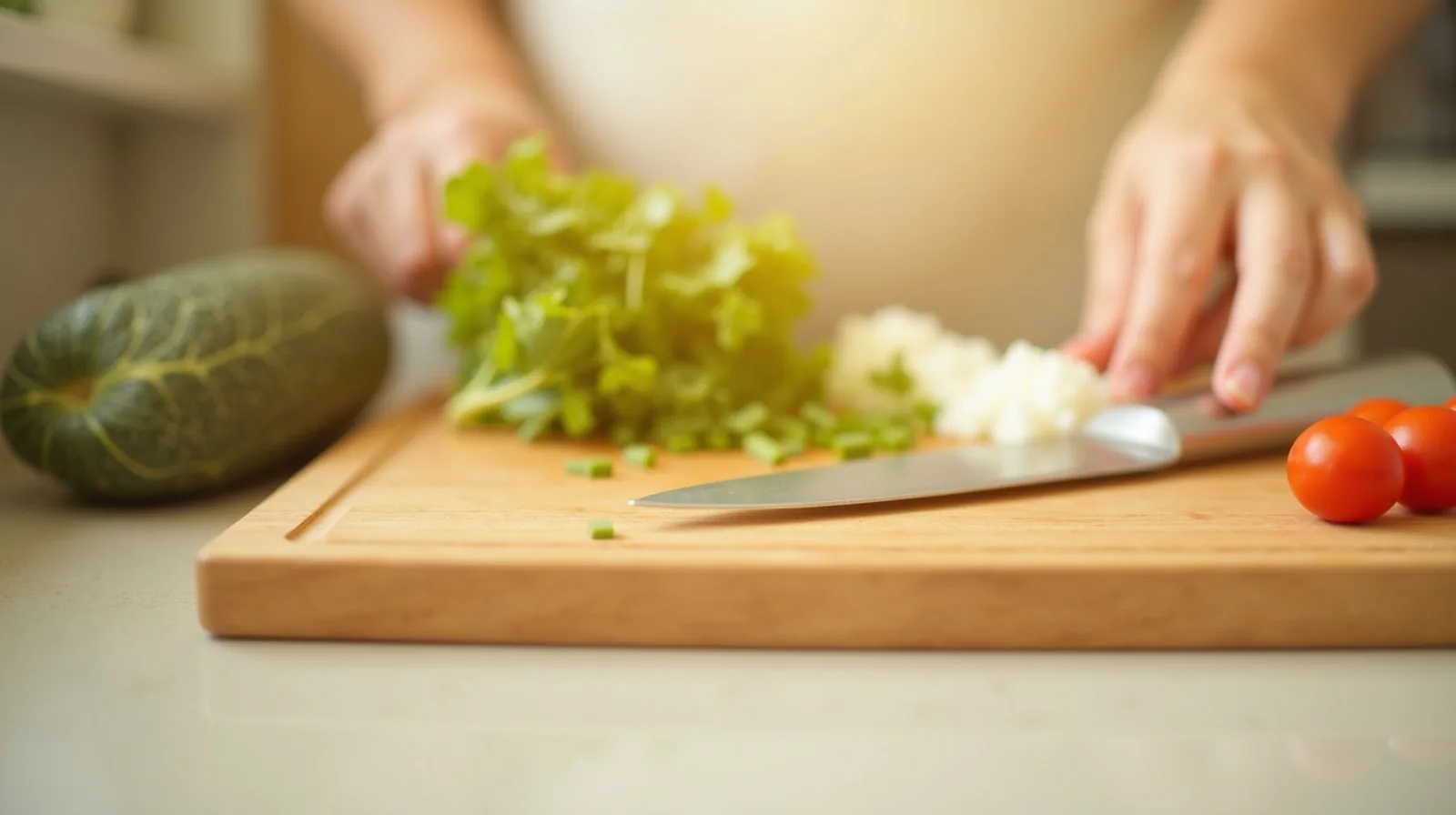
- An 8-inch chef's knife. This is the one you will use for nearly everything. Try holding a few; it should feel balanced and comfortable in your hand.
- A small paring knife. For peeling, trimming, and any job that needs control.
- A serrated bread knife. It cuts bread, tomatoes, and delicate foods without crushing them.
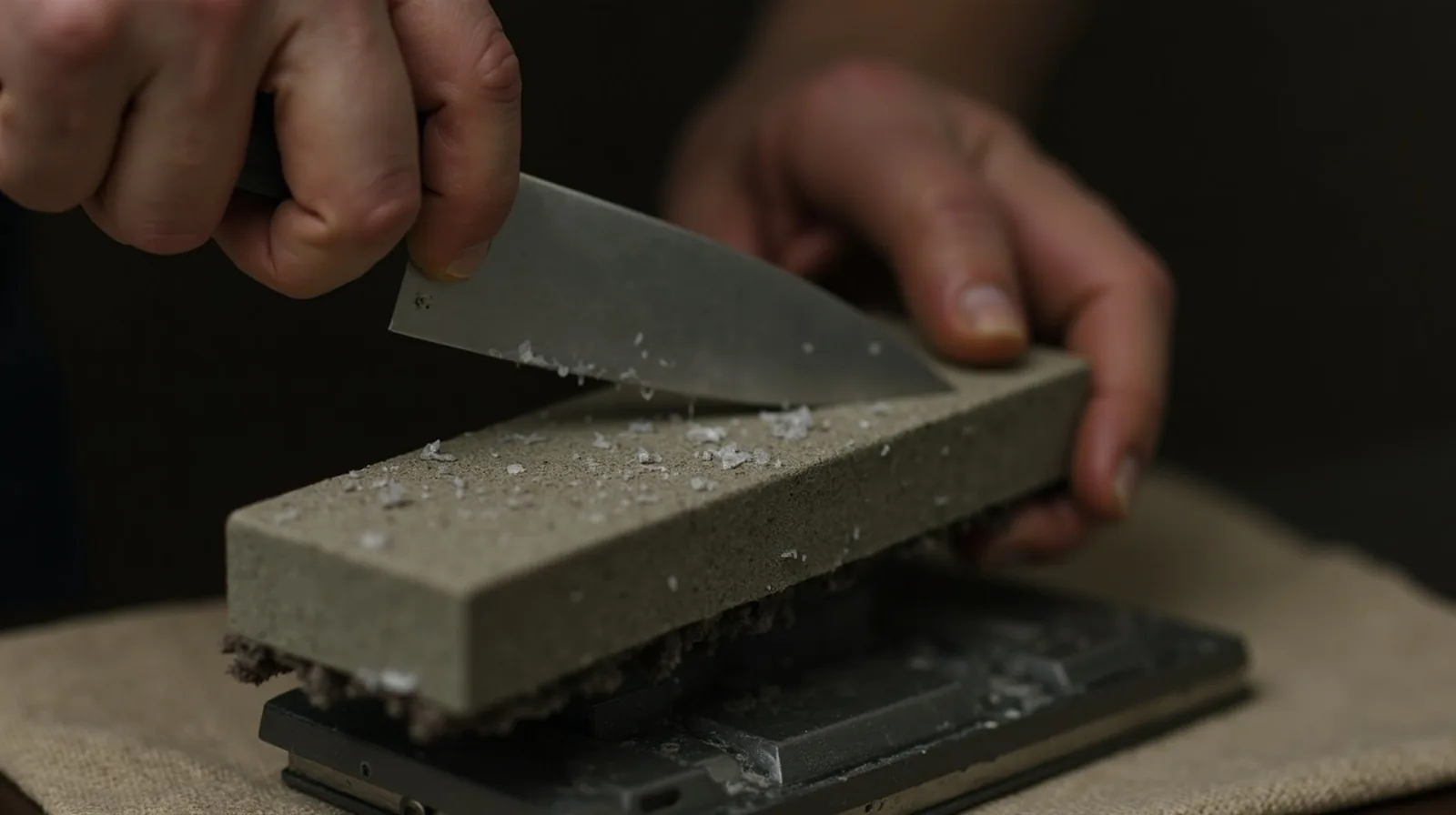
Pair them with a large cutting board that does not slide. A damp towel or a thin rubber mat under it keeps it steady. Keep the edges true with an occasional touch-up, and your cheaper knives will cut like expensive ones.
The Small Tools That Earn Their Drawer Space
A short list of utensils does the daily work. Look for items that are heat-safe and easy to wash:
- A wooden or silicone spoon and a slotted spoon
- A flat spatula (turner) and a rubber spatula
- Tongs, which stand in for a fork, a spoon, and a hand near hot oil
- A whisk
- A colander for pasta and rinsing produce
- Liquid and dry measuring cups, plus measuring spoons
- One large and one medium mixing bowl
- A box grater and a vegetable peeler
- A can opener and a bottle opener, if your cans and bottles do not have pull tabs
- Oven mitts or a couple of thick towels
An instant-read thermometer is the one "extra" worth adding early. It takes the guesswork out of meat and prevents both overcooked and undercooked dinners.
Tableware and Storage
Buy for the people who actually eat at your table, plus a few for guests. Four plates, four bowls, four mugs, and a set of everyday glasses and silverware is plenty. Choose pieces that stack and go in the dishwasher or sink without fuss.
For leftovers, a small set of lidded containers that share one or two sizes saves you from hunting for matching lids. Matching sizes also stack neatly in a cabinet.
What to Skip (For Now)
These get bought in a burst of enthusiasm and then take up cabinet space:
- Single-purpose gadgets like avocado slicers, egg separators, and herb strippers. A knife and a spoon do the same jobs.
- Large countertop appliances until you know your habits. Wait until a gap in your cooking shows up, then buy the appliance that fills it.
- Full cookware sets. They often include sizes you will never use. Individual pieces let you buy the ones you need and upgrade one at a time.
- A full knife block. Three good knives beat ten mediocre ones.
- Specialty bakeware until you bake regularly.
Where to Buy Smart
Most of this list can be found secondhand or at a fraction of retail. Thrift stores, estate sales, and neighborhood giveaway groups often have heavy skillets, baking sheets, and mixing bowls in great shape. Check that pans sit flat, handles are tight, and nonstick coatings are not scratched or peeling.
Buy the pieces you will use constantly, like the chef's knife and skillet, with a little more care. Buy the rarely used items cheaply or borrow them. And add things one at a time as a recipe or a habit calls for them.