A can of beans is fine. A pot of beans you cooked yourself is a different food — creamier, better seasoned, and a fraction of the cost per serving — and almost none of the time it takes is active. The trouble is that bean advice is full of contradictions: soak overnight, don’t soak, never salt, always salt. Most of it comes down to a handful of small choices, and once you know which ones matter, a batch is close to foolproof.
Sort and rinse before anything else
Dried beans are an agricultural product, so spread them on a plate or baking sheet and look them over before they go anywhere near water. Pick out small stones, dirt clumps, and shriveled or split beans. Then rinse them in a colander under cold water. It takes two minutes and saves you from the one bad bite that makes everyone distrust the whole pot.
Does soaking actually help?
Yes, though less than the folklore claims. Soaking shortens the cooking time, helps the beans cook more evenly so fewer burst while others stay hard, and leaches out some of the compounds that cause gas. There are two easy ways to do it:
- Overnight soak: cover the beans with a few inches of cold water and leave them on the counter for 8 to 12 hours. Drain and rinse before cooking.
- Quick soak: cover with water, bring to a boil for a couple of minutes, turn off the heat, and let them sit covered for an hour. Drain and rinse.
Skipping the soak is also fine — the beans simply take longer, often by an hour or more, and need a bit more water along the way. Lentils, split peas, and black-eyed peas are the exceptions that never need soaking at all. Always discard the soaking water; it’s where the compounds you were trying to remove ended up.
The simmer: gentle beats fast
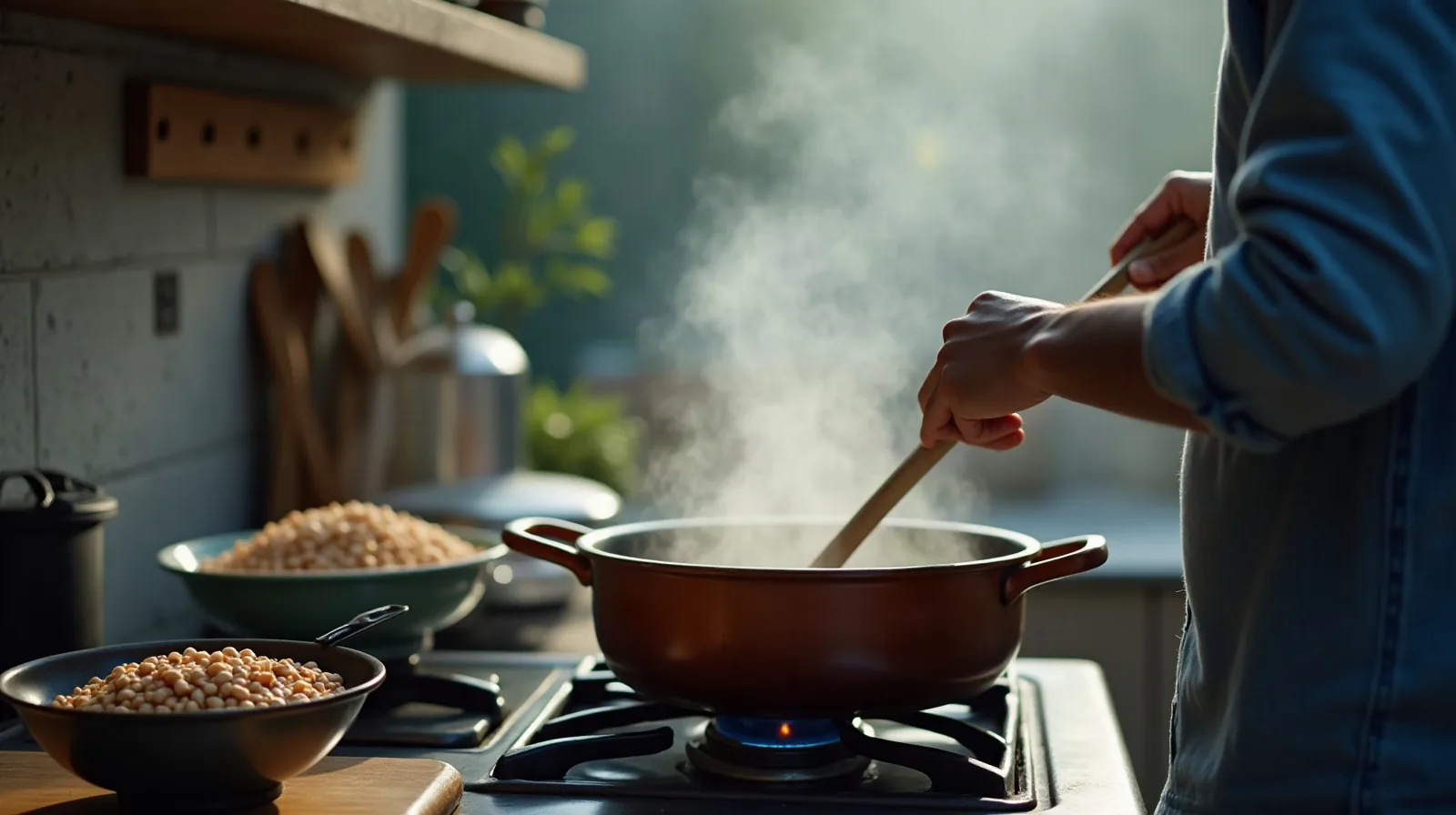
Put the drained beans in a pot and cover them with about two inches of fresh water or broth. Bring it to a boil, then drop the heat right away to a bare simmer — small bubbles breaking now and then, not a rolling boil. Hard boiling knocks the beans around, splits their skins, and turns the outside to mush before the center is done. Partly cover the pot, stir occasionally, and top up with hot water if the level dips below the beans.
Timing varies a lot with the type and how old the beans are. Small beans like black beans often finish in 45 to 90 minutes, while larger varieties such as chickpeas and kidney beans can need 1 to 2 hours or more. Start tasting early. A bean is done when it’s tender all the way through and creamy in the middle, with no chalky center. Old beans that have sat in a cupboard for years may never soften properly, which is a good reason to buy from a store with quick turnover.
One safety note: kidney beans contain a natural toxin that is only destroyed by a full, sustained boil. Boil them hard for at least ten minutes before dropping to a simmer, and never cook them in a slow cooker from raw at low heat.
When to add salt, acid, and flavor
The old rule that salt toughens beans doesn’t hold up. Salting the soak water or the pot early tends to give more evenly seasoned beans with softer skins. Acid is the real culprit: tomatoes, vinegar, citrus, and wine can keep beans from softening, so add them only after the beans are tender.
- Early, into the pot: salt, an onion halved, a few smashed garlic cloves, a bay leaf, a strip of dried seaweed, or a splash of olive oil.
- At the end: a squeeze of lemon, a spoonful of vinegar, tomato, chopped fresh herbs.
Don’t pour off the cooking liquid. That starchy, seasoned broth is what makes a pot of beans taste rich, and it’s the best thing to store the beans in.
Store and freeze a batch
Cook a full pound at a time; the effort is nearly the same as a smaller pot. Cool the beans in their liquid, then refrigerate in a covered container for up to about four days. For longer storage, portion them into freezer containers or bags, about a cup and a half per portion (roughly what a can holds), covered with some of their liquid. They keep well for several months, thaw quickly in a bowl of warm water or a saucepan, and go straight into soups, tacos, rice bowls, and salads. Label the bag with the bean type and the date.
Quick fixes when things go wrong
- Beans still hard after hours: they’re probably old, or your water is very hard. A pinch of baking soda in the pot can help soften them, though too much affects the taste.
- Skins splitting: the heat was too high. Lower it to a bare simmer next time.
- Bland beans: add salt in stages and finish with acid. Most flat-tasting beans are just under-seasoned.
- Too much broth: simmer uncovered for a few minutes, or mash a scoop of beans against the pot to thicken it.
Once the routine clicks, dried beans become a background task: sort and rinse, soak while you sleep, simmer on a quiet afternoon, and freeze the rest. The payoff is a freezer full of ready-to-use protein that costs pennies a serving.