Most kitchen trash cans smell because of what the can has absorbed, not what is currently inside it. Leaky bags, a splash of juice, and a bit of damp food residue settle into the bottom and the corners, and no fresh liner can outrun that.
The fix is a quick scrub, a thorough drying, and a few habits that keep moisture out. It takes about twenty minutes and holds for months.
Find Out Where the Smell Lives
Before you scrub, take the can outside, or to the tub, and look. The smell usually hides in one of four places:
- The bottom and corners, where leaked liquid pools and dries into a sticky film.
- Under the rim and lid hinge, where splashes collect and are rarely wiped.
- The lid's underside, which touches rising air and every bag you toss in.
- The pedal, bucket, or inner liner of a step can, which can trap grime where you cannot see it.
If the can has a deep crack, a rough, pitted interior, or an odor that survives a full cleaning, the plastic has absorbed too much and replacing it is cheaper than fighting it.
Do the Deep Clean
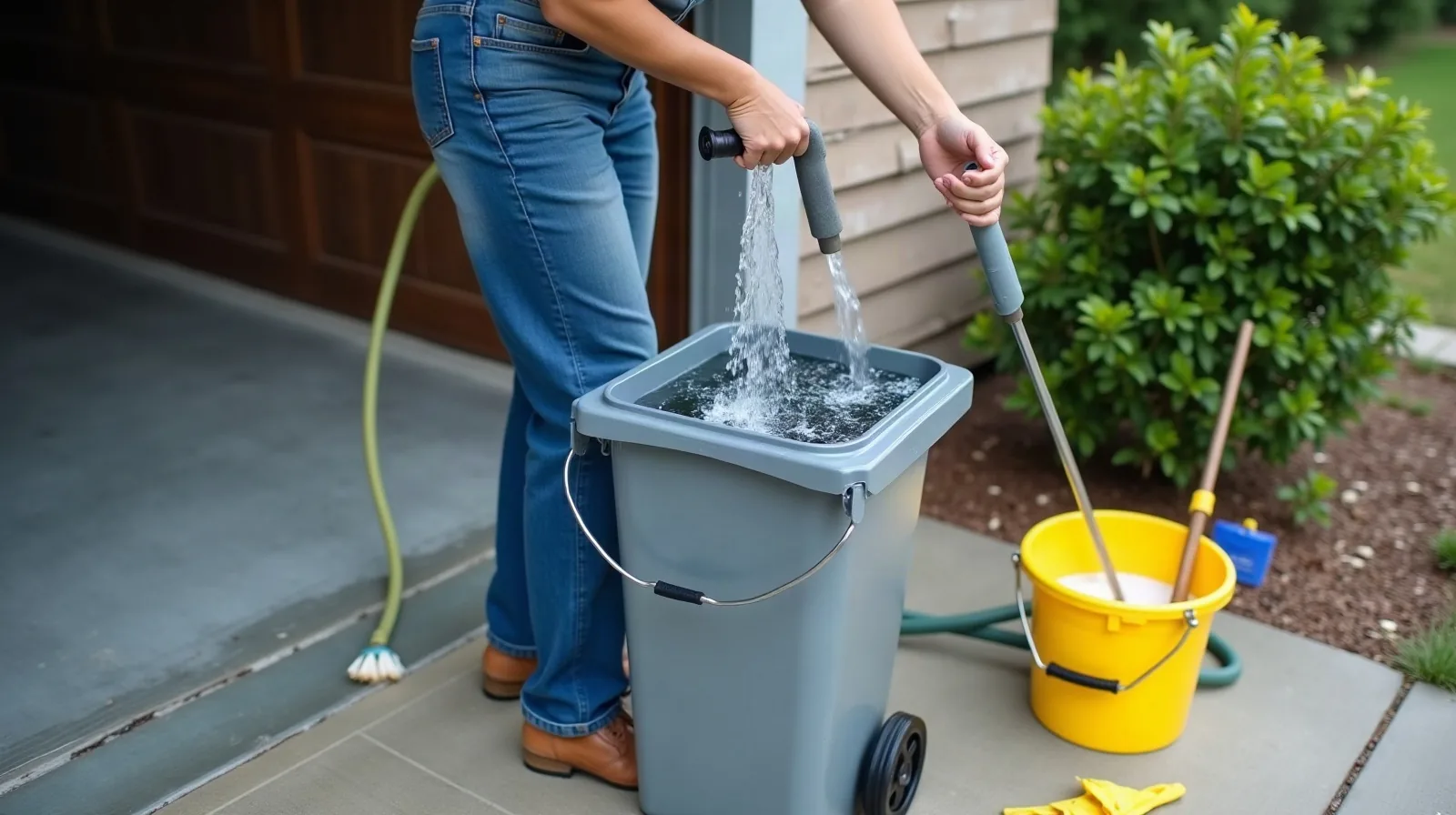
You need a hose or a tub, hot water, dish soap, a long-handled brush, and rubber gloves. Work in this order:
- Empty and rinse. Remove the bag and spray or pour out any loose residue first, so you are not scrubbing around chunks.
- Soak. Add a few inches of hot water and a generous squirt of dish soap, then let it sit for ten minutes to loosen the film.
- Scrub every surface. Brush the bottom, the corners, the walls, the rim, and the lid, inside and out. Pay extra attention to the hinge and the lip.
- Disinfect if needed. For a lingering smell, wipe or spray with a mix of equal parts white vinegar and water, and let it sit a few minutes. Never combine vinegar with bleach or any cleaner containing it.
- Rinse well. Soap residue attracts dirt, so rinse until the water runs clear.
Dry It Completely
This is the step most people skip, and it is why the smell returns. A damp can is the perfect spot for odor-causing bacteria to grow. Turn the can upside down in the sun or in a breezy spot, and wipe the inside with an old towel. Sun is a bonus: bright light and fresh air are natural deodorizers.
Do not put a liner in until the inside is bone dry to the touch.
Add an Odor Barrier
With a clean, dry can, a little prevention makes the freshness last:
- Baking soda. A thin layer sprinkled in the bottom absorbs moisture and odors. Refresh it each time you change the bag.
- An absorbent layer. Crumpled newspaper or a paper towel on the bottom catches small leaks before they reach the plastic.
- Dry coffee grounds or a small cup of kitty litter. Either one soaks up moisture and mutes smells.
- A bag with room to spare. Pick a liner large enough to fold over the rim, and thick enough that it will not puncture on bones and sharp edges.
Build Habits That Keep It Fresh
A few small routines do more than any product:
- Take the trash out before it is full, especially when it holds meat, fish, or dairy.
- Drain liquids, and wrap wet or smelly scraps in a separate bag or paper towel first.
- Freeze meat scraps and fish trimmings until trash day when you can.
- Keep food scraps out of the can entirely by composting them where available.
- Rinse and wipe the can each time you notice a leak, rather than waiting for a smell.
Put a monthly reminder on your calendar to repeat the quick rinse and wipe, and a full soak and scrub every three to four months, or after any big leak.