Blinds are the dustiest surface in most rooms, and the one most people avoid. Every slat is a tiny shelf, and in a kitchen or near a stove each one also picks up a fine film of grease that makes dust stick like glue.
The trick is to stop treating it as a big project. A quick dry pass every couple of weeks and a damp pass a few times a year keep blinds looking fresh, and neither one requires taking them down.
Start Dry, Always
Wetting dusty blinds just turns the dust into gray streaks. Do a dry pass first, every time.
- Close the slats and wipe one direction. Tilt them fully shut, run a dry microfiber cloth or a soft duster across, then tilt them the other way and repeat for the back side.
- Use a vacuum brush for heavy dust. A soft brush attachment on low suction lifts what a cloth would just push around. Work top to bottom so dust falls onto the part you have not done yet.
- Try a pair of kitchen tongs. Wrap a microfiber cloth around each tong tip and secure it with a rubber band. Pinching a slat cleans the top and bottom in one stroke.
Do this every two weeks or so and the damp pass becomes rare.
The Damp Pass for Grime and Grease
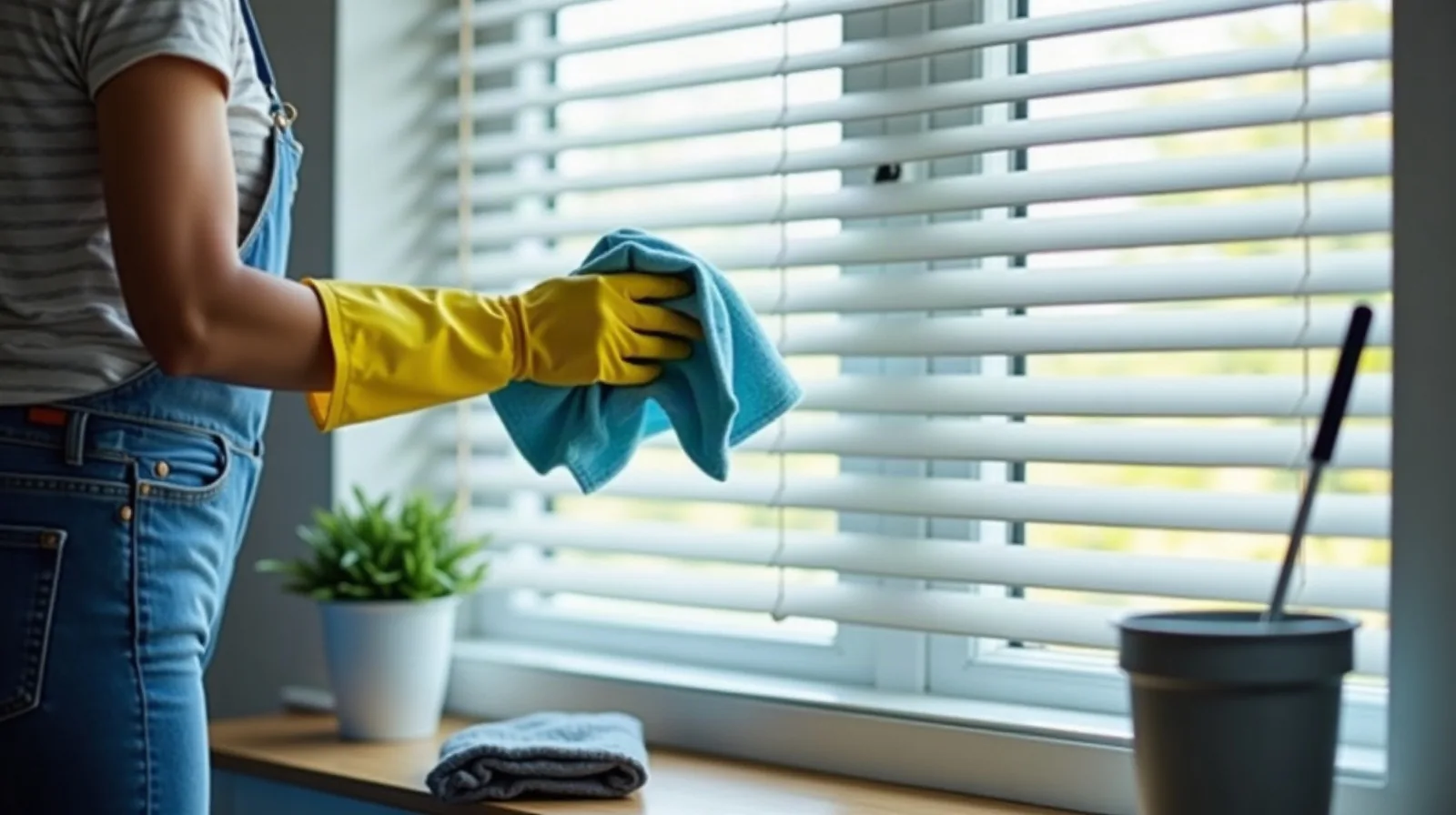
When slats feel tacky or look dingy, step up to a damp wipe.
- Mix a gentle cleaner. A few drops of dish soap in a bowl of warm water is enough for most blinds. For kitchen grease, add a splash of white vinegar.
- Wring the cloth almost dry. Dripping water pools in the slat edges and can warp wood or loosen finishes.
- Wipe slat by slat. Support each slat with your other hand so it does not bend, wipe along its length, and rinse your cloth often. Clean the cord, ladder strings, and wand too.
- Dry as you go. Follow with a dry cloth so no moisture lingers.
A cotton work glove works well here: slip it on, dip your fingers in the solution, and pinch each slat between thumb and finger.
Match the Method to the Blind
The routine is similar everywhere, but materials change what is safe.
- Aluminum or vinyl mini-blinds. The most forgiving. Soapy water is fine, and these are the ones that can take a damp pass most often.
- Real wood and faux wood. Keep them as dry as possible. Use a barely damp cloth, never soak them, and skip vinegar on real wood, which can dull the finish.
- Fabric roller shades and cellular shades. Vacuum with a brush attachment, then spot-treat marks with a lightly damp cloth and a dab of soap. Do not scrub, which can leave shiny patches or fray the fabric.
- Vertical blinds. Wipe each vane from top to bottom with a cloth, or run a vacuum brush down them. Vinyl vanes take a damp wipe, and fabric ones need a gentle blot.
When They Are Truly Grimy
Blinds that have gone years without attention, or hang over a stove, may need a deeper clean. Aluminum and vinyl blinds can come down and soak in a bathtub with warm water and a little dish soap for 15 to 20 minutes. Rub each slat gently, rinse, and hang them or lay them flat on a towel to dry fully before rehanging.
Do not soak wood blinds, fabric shades, or anything with delicate cords. For those, repeat gentle damp passes instead of one big wash.
Keep Them From Getting That Bad Again
- Add blinds to a recurring task. Pair the dry pass with something you already do, such as vacuuming day.
- Run the range hood. In the kitchen, ventilation takes the grease before it reaches the slats.
- Keep the slats slightly open on dusty days. Closed slats sit flat and catch dust on the full upper face, while a small tilt lets some fall away.
- Check the cords. Frayed or dirty cords are worth wiping or replacing, and loose cords should always be kept out of reach of young children.
Once the first deep clean is behind you, the upkeep is genuinely quick. Ten minutes every few weeks beats a full-day blind rescue every year.