A fabric couch takes more daily abuse than almost anything else in the house. It absorbs body oils, crumbs, spilled drinks, pet dander, and the dust that drifts down from every corner of the room, and most of it sinks below the surface where a quick swipe never reaches.
The good news is that most sofas do not need a professional. They need the right liquid (or no liquid at all), a patient vacuum, and a habit of blotting instead of scrubbing. The one thing that turns a small stain into a big problem is using too much water on a fabric that cannot handle it.
Check the Cleaning Code Before Anything Gets Wet
Look for a tag under the seat cushions or along the bottom of the frame. Most upholstered furniture carries a one- or two-letter code that tells you what the fabric tolerates:
- W means water-based cleaners are fine. Mild dish soap and water, or a gentle upholstery shampoo, are safe here.
- S means solvent only. Water can leave rings, shrink the fabric, or make the dye bleed, so use a water-free dry-cleaning solvent or rubbing alcohol in small amounts.
- W/S means either works. Start with the gentlest water-based option and move to a solvent only if it fails.
- X means vacuum and brush only. Any liquid, even plain water, risks damage. Leave serious stains to a professional.
No tag at all? Treat the couch as an S until you test. Dab a little of your cleaner on a hidden spot, like the back of the skirt or the underside of a cushion, wait until it dries completely, and check for color loss, rings, or a stiff texture.
Vacuum Like It’s the Main Event
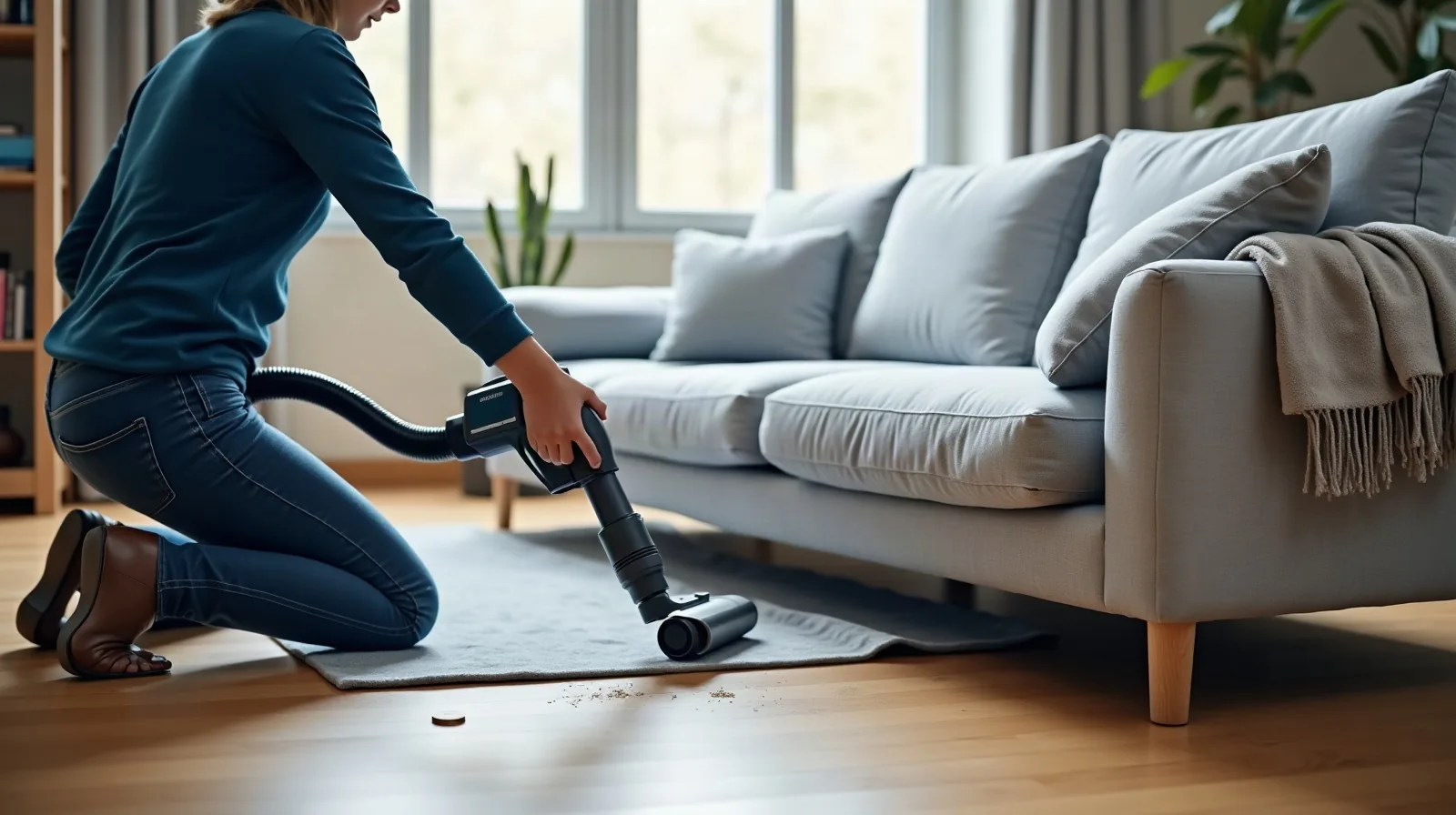
Vacuuming does more for a couch than any cleaner, and it should always come first. Wetting a dusty sofa turns that dust into muddy streaks.
- Pull every cushion off. Crumbs, coins, and grit collect on the deck underneath and in the crease where the back meets the seat.
- Use the crevice tool on the seams. Run it slowly along every seam, any tufting, and the gaps beside the arms.
- Switch to the upholstery brush for broad surfaces. Work in overlapping strokes, first in one direction and then across, to lift what is caught in the weave.
- Do both sides of every cushion and the back and sides of the frame, then flip and rotate the cushions as you put them back so they wear evenly.
A stiff, dry brush worked over the fabric before you vacuum loosens embedded dust and hair and makes the vacuum pass far more effective.
Spot-Clean Stains by Blotting, Not Scrubbing
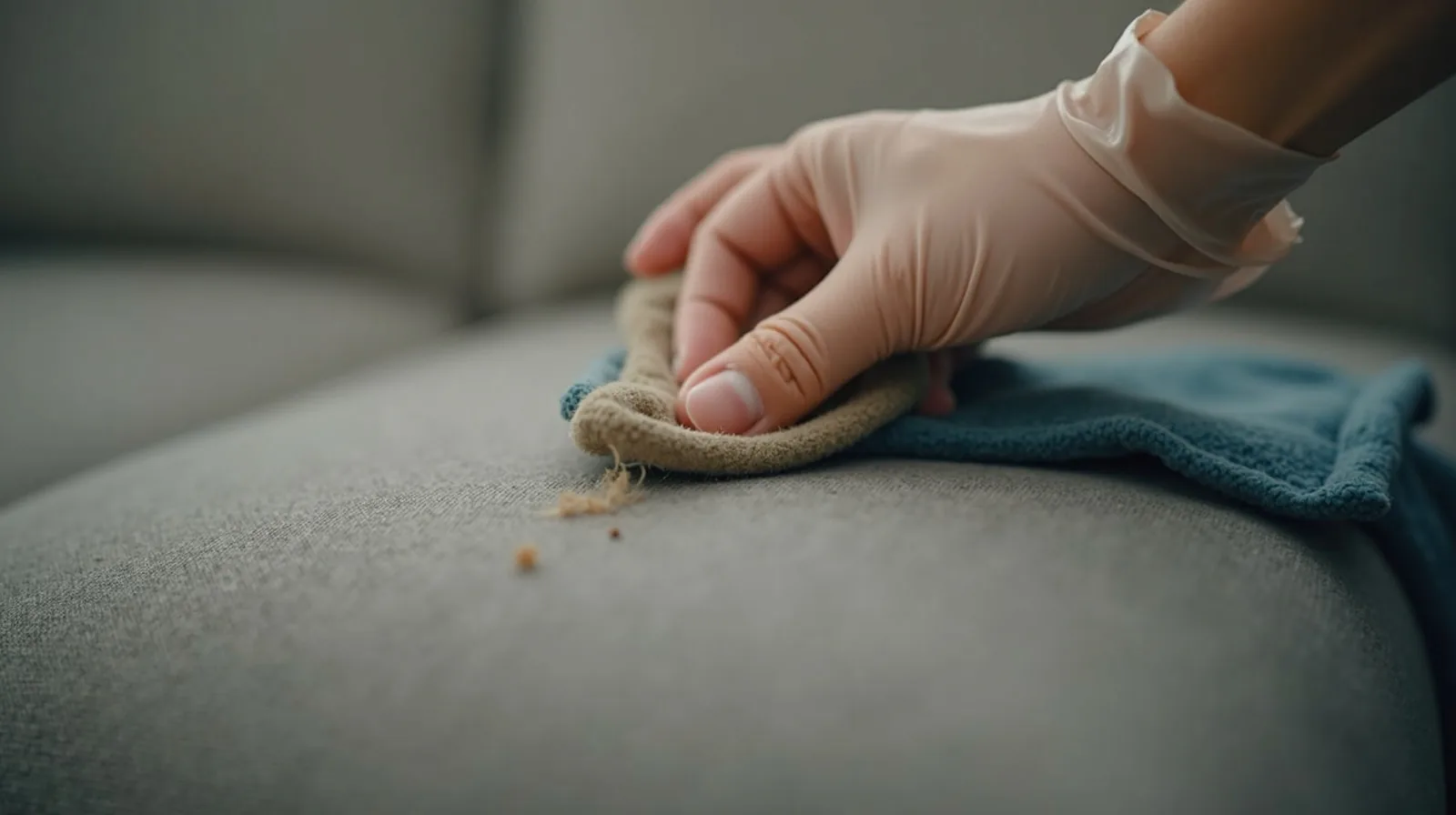
Scrubbing pushes a stain deeper, spreads it outward, and roughs up the fibers so the spot looks fuzzy even after it fades. Blotting lifts it instead.
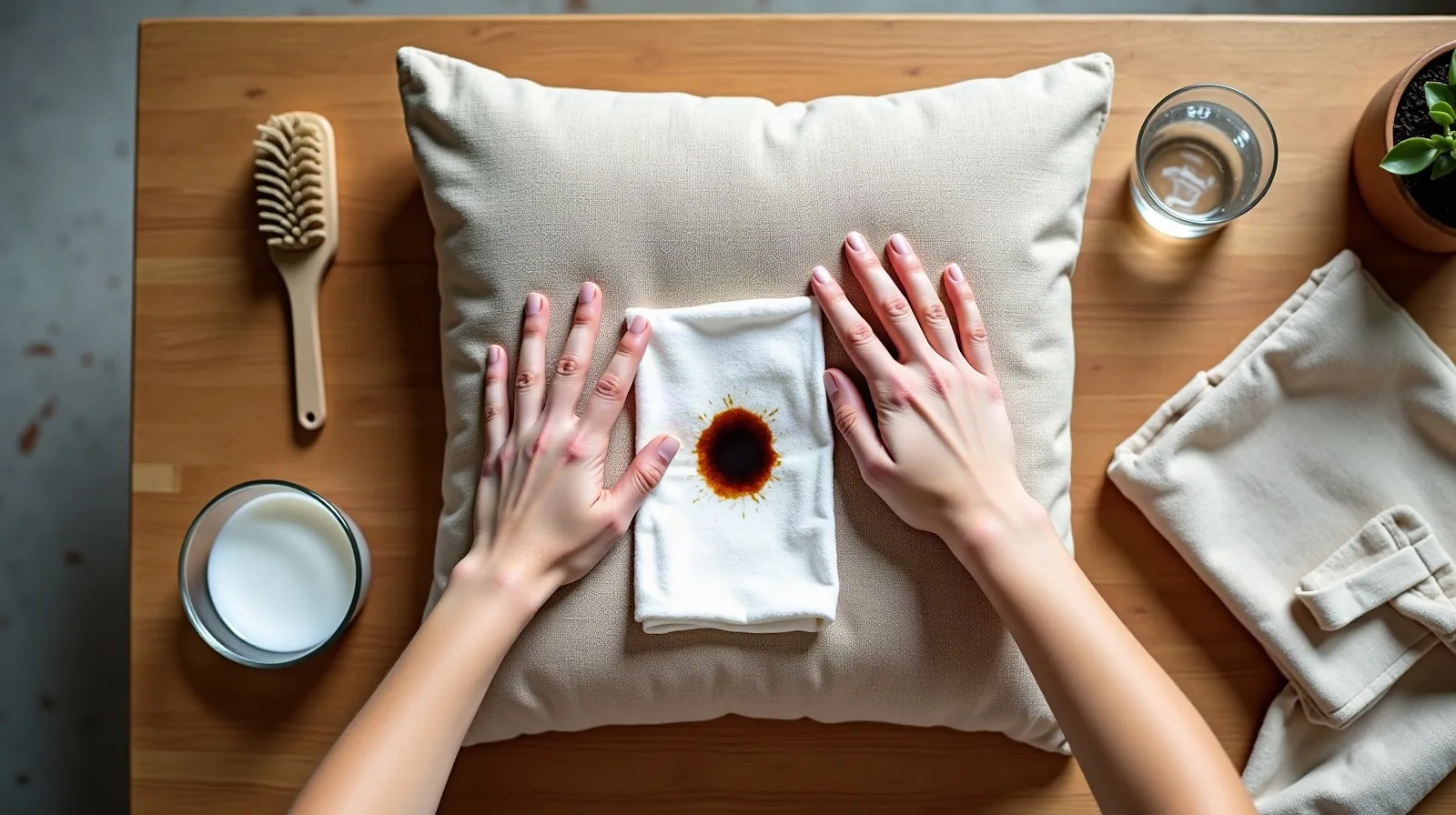
- Act fast and remove what you can. Scrape off solids with a dull knife or spoon, and press a dry cloth onto any liquid to soak it up.
- Mix a gentle cleaner that matches the code. For W fabrics, a few drops of clear dish soap in a cup of cool water. For S fabrics, a little rubbing alcohol in a spray bottle.
- Apply sparingly. Dampen a white cloth rather than pouring anything onto the couch. The cushion foam underneath should never get wet.
- Blot from the outside in. Working toward the center keeps the stain from spreading. Move to a clean part of the cloth as soon as it picks up color.
- Rinse and blot dry. On W fabrics, blot again with a cloth dampened in plain water to lift soap residue, which otherwise attracts dirt. Then press a dry towel firmly over the spot.
The ring that sometimes appears after spot-cleaning is usually the line where damp fabric met dry fabric. Feathering outward from the stain with a barely damp cloth, so there is no sharp wet-to-dry edge, and drying the area quickly with a fan helps prevent it.
Deodorize the Dry Way
Musty or pet smells live deep in the cushions, and soaking them is the fastest way to make the problem worse. A dry treatment pulls odors out without adding moisture:
- Baking soda. Sprinkle a light, even layer over the seats, back, and arms, work it gently into the fabric with a soft brush, and let it sit for at least an hour, or overnight for stubborn smells. Then vacuum it all up thoroughly.
- Fresh air. On a dry day, set removable cushions outside in the shade or near an open window for a few hours. Long stretches in strong direct sun can fade colored fabric.
- Find the source. A smell that keeps coming back often traces to a spill that soaked into the foam. Check the cushion inserts, not just the covers.
Removable Covers: Wash Them or Leave Them On?
A zipper on a cushion does not always mean the cover is meant to be washed. Many zippers are there only so the insert can be fitted at the factory. Check the tag and the cleaning code first.
If the covers are machine washable, wash them all together so color and texture stay even, in cold water on a gentle cycle. Skip the dryer or use the lowest heat, and put the covers back on while they are still slightly damp: they stretch over the foam more easily and dry to the right shape. Washing just one cover can leave it a shade lighter than the rest.
A Simple Routine That Keeps It Looking New
Couches look worn mostly from slow buildup, not from one bad spill. A light rhythm keeps that buildup from starting:
- Weekly: vacuum the seats and seams, and fluff and rotate the cushions.
- As it happens: blot spills right away, before they have time to set.
- Monthly: a full vacuum with the cushions off, plus a dry baking soda refresh if it smells stale.
- Once or twice a year: a deeper clean that matches the fabric code, or a professional cleaning for X-coded or delicate fabrics.
A washable throw on the spots that get the most use, like the arm everyone leans on or the seat the dog prefers, takes most of the wear and is far easier to clean than the couch itself.