The single biggest factor in whether a carpet stain comes out clean or sets in permanently isn’t the product used — it’s what happens in the first sixty seconds. Scrubbing pushes a spill deeper into the fibers and spreads it wider than it started; the right response depends on what was actually spilled. A few golden rules apply across the board, and then each type of stain has its own best approach. Treat this as a quick reference to grab in the moment — the fastest fix is almost always the right one, so it’s worth knowing the general approach before a spill actually happens rather than looking it up while the coffee is still spreading.
The Golden Rules, Every Time
Before getting into specific stains, a handful of habits apply no matter what spilled:
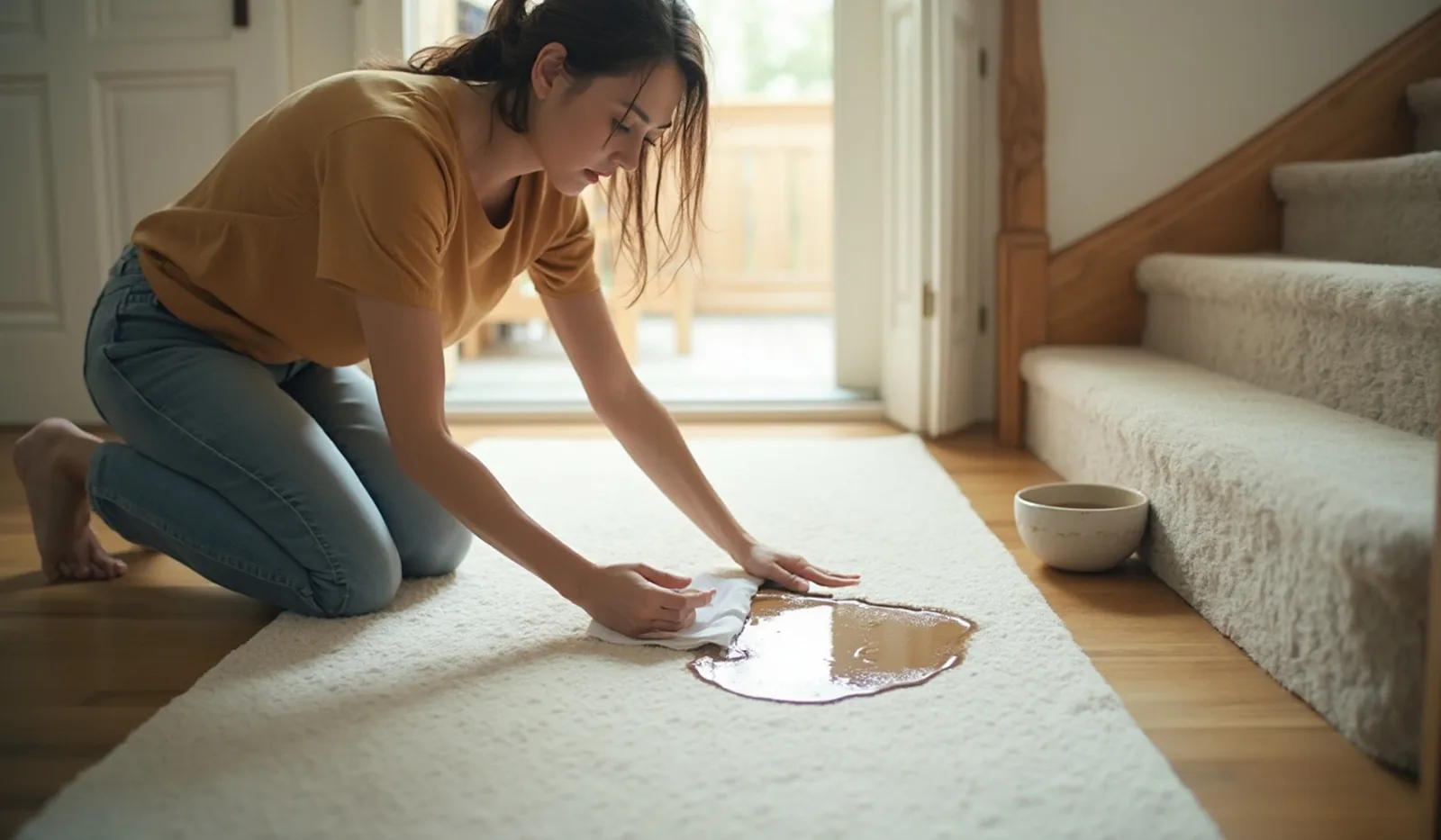
- Blot, don’t rub. Press a clean cloth straight down onto the stain and lift it away, repeating with a fresh section of cloth. Rubbing spreads the stain and grinds it into the fibers.
- Use cold water, not hot. Heat can set many stains — especially protein-based ones like blood — permanently into the carpet.
- Work from the outside in. Start at the edge of the stain and blot toward the center so it doesn’t spread outward as you work.
- Test any solution first. Dab it on a hidden corner of carpet — inside a closet, under furniture — and wait a few minutes to check for discoloration before treating the visible stain.
A Guide by What You Spilled
Different stains respond to different treatments, and using the wrong one can make things worse.
- Coffee or tea. Blot up as much as possible immediately, then treat with a mix of cool water and a small amount of dish soap, blotting from the edges in. A few drops of white vinegar in the solution helps with any tannin staining that lingers.
- Red wine. Blot immediately, then cover the stain generously with table salt or baking soda to absorb what’s left before it sets — let it sit for several minutes, then vacuum it up before treating any remaining color with a cool water and dish soap solution.
- Grease or oil. Skip water at first, since it can spread an oil-based stain. Sprinkle on baking soda or cornstarch to absorb the oil, let it sit, then vacuum before following up with a small amount of dish soap — which is specifically designed to break down grease — and cool water.
- Ink. Blot, never rub, and dab carefully with rubbing alcohol on a cloth, working from the outside in so it doesn’t spread. Test this one especially carefully, since alcohol can affect some carpet dyes.
- Mud or dirt. Let it dry completely first rather than trying to clean it wet — wet mud just smears. Once dry, vacuum or brush it off, then treat any remaining discoloration with cool water and dish soap.
- Pet accidents. Blot up as much liquid as possible, then treat with a mix of cool water and white vinegar, which helps neutralize odor as well as lift the stain. An enzyme-based cleaner made for pet messes is worth keeping on hand for this one specifically, since it breaks down odor-causing compounds that soap alone won’t touch.
- Blood. Always use cold water — hot water cooks the proteins in blood and sets the stain permanently. Blot with cold water and a little dish soap, repeating as needed.
When to Call a Professional
A stain that’s already dried and set before treatment, covers a large area, or keeps reappearing after cleaning (a sign it’s wicking up from the padding underneath) is usually beyond a DIY fix. Deep-set stains, anything on a delicate or antique rug, and large-scale pet damage are all worth handing to a professional carpet cleaner rather than risking further damage with repeated at-home attempts. It’s also worth calling in help before trying a second or third home remedy on the same spot — layering multiple products and solutions on top of one another can sometimes set a stain more firmly than the original spill did, especially when they aren’t rinsed out fully between attempts.
Whatever the spill, resist the urge to declare victory the moment the visible color is gone — a final rinse with plain cool water, blotted dry, removes any leftover soap or solution residue that would otherwise attract dirt and leave the spot looking dingy again within a few weeks.