A pet doesn't pack itself, and most of the stress in a trip that includes one traces back to a handful of things handled at the last minute — a carrier the dog has never seen before the morning you leave, food guessed at instead of measured, no real plan for a three-hour car ride with a cat who hates the car. None of it is complicated. It just has to happen in the right order, starting days before the trip instead of the night before it.
Decide how your pet is actually traveling
The mode decides almost everything else, so settle it first. A car works for almost any pet and almost any distance, as long as you build in real stops. Flying in the cabin is realistic only for a pet small enough to fit in a carrier under the seat in front of you — airlines cap the pet's combined size with the carrier, and most cap how many pets are allowed in the cabin on a given flight at all. Flying in the cargo hold is the option to avoid where you can: it's harder on any animal, genuinely risky for flat-faced breeds that already struggle to regulate their breathing, and worth choosing only when there's no real alternative. When a trip is short enough to drive and a pet gets anxious in unfamiliar places, the car is almost always the calmer choice even if it takes longer.
The carrier or crate that actually works
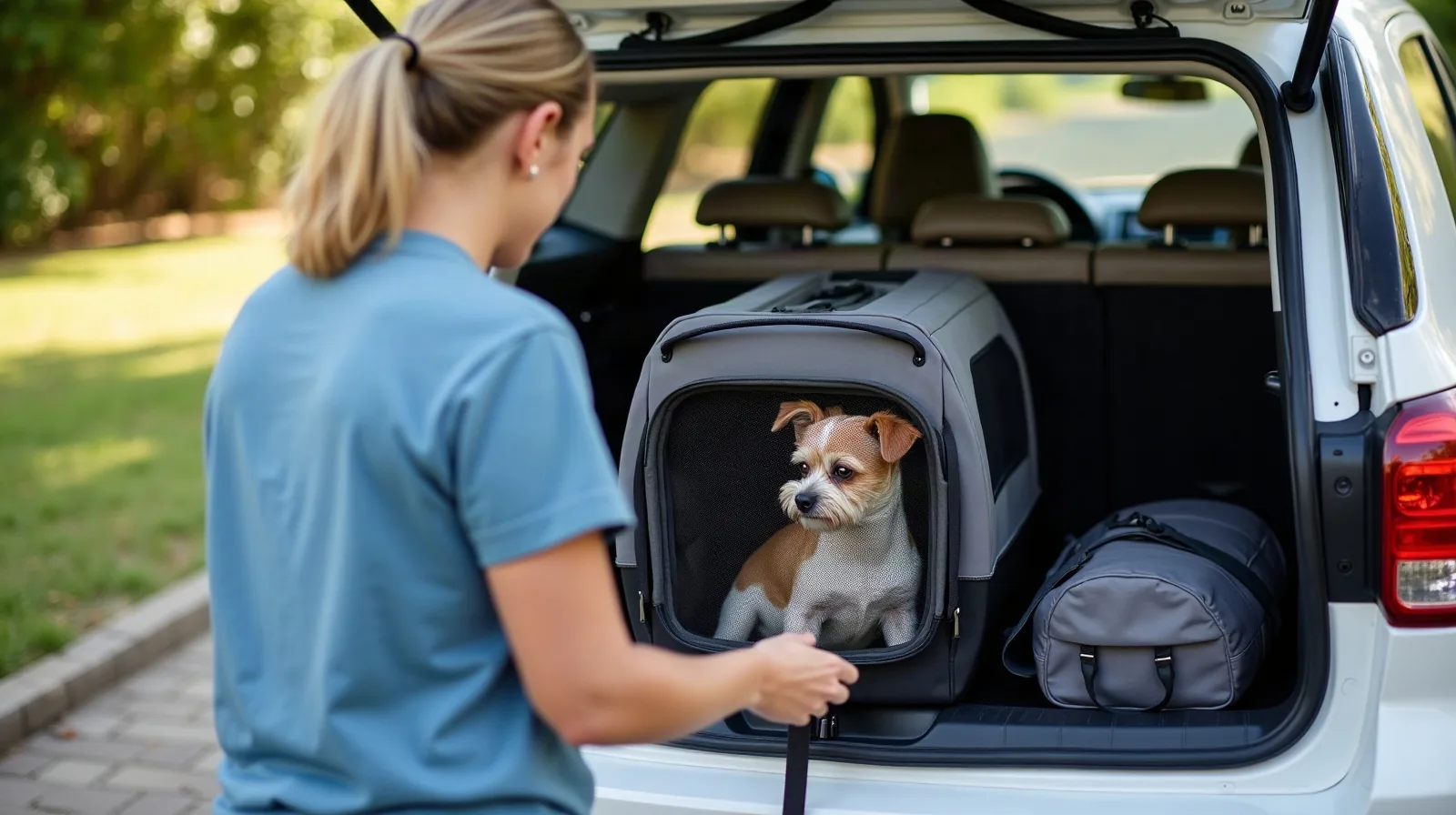
Whatever your pet travels in needs to fit them properly — enough room to stand, turn around, and lie down flat, no more. A hard-sided crate is the safer pick for a car (it won't collapse in a hard stop) and the required pick for cargo; a soft-sided carrier is usually what fits under an airplane seat. The part people skip is introducing it early: leave the carrier out at home for a couple of weeks before the trip with the door open, familiar bedding inside, and a few treats scattered in, so the first time your pet sees it isn't also the first time they're shut inside it and moving. On travel day, secure it so it can't slide or tip — a seatbelt strap through the crate's handle, or wedged flat against the back seat, not loose on a slick trunk floor.
What to pack beyond food and a leash
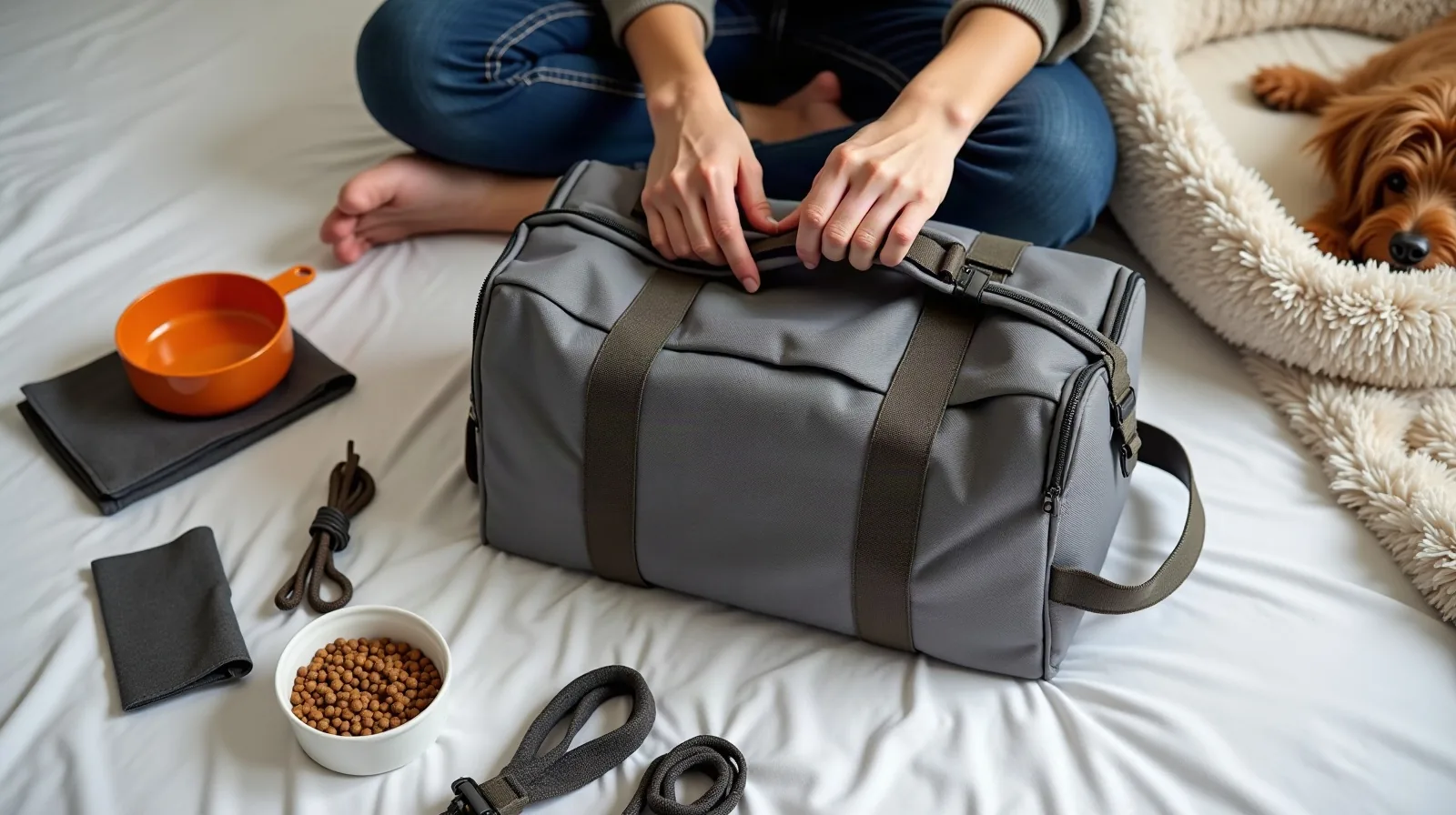
Portion the food before you go — a resealable pouch per meal beats guessing with a scoop in an unfamiliar kitchen or hotel room, and pack a couple of extra days' worth in case the trip runs long. Add collapsible travel bowls, waste bags, any medication in its own labeled-for-you-only pouch, and one genuinely familiar item — a bed, a blanket, a worn toy — that smells like home and does more to settle a stressed animal than almost anything else you can bring. Carry both a printed and a digital copy of vaccination and vet records, especially for flying or crossing a border, and keep a recent, clear photo of your pet on your phone; it's the fastest way to help someone identify them if you're ever separated.
Health and ID prep before you go
Two things matter more than anything else if your pet ever gets loose in an unfamiliar place: a microchip registered with your current phone number, not an old one, and a collar tag with the same. Check both before you leave, not after. If you're flying or crossing a state or country line, ask your vet how far ahead you need a health certificate — some are only valid for a short window before travel, so timing it against your departure date matters. This is also the appointment to ask about anxiety or motion sickness if your pet struggles with either; a vet can recommend something appropriate for the trip well ahead of time. Never give a pet human medication for travel anxiety or nausea on your own.
Car trip specifics
A pet loose in a moving car is a hazard to themselves and to you, so secure them — a crate, or a crash-tested harness that clips into the seatbelt. Feed a light meal a few hours before departure rather than right before you leave; a full stomach and motion are a bad combination for a lot of animals. Build in a real stop every two to three hours for water and a bathroom break, and never leave a pet alone in a parked car, even for a couple of minutes and even with the windows cracked — a car's interior temperature climbs (or drops) far faster than most people expect, in any season.
Flying specifics
Check the airline's actual pet policy before you book anything, not after — carrier dimensions, weight limits, and cabin pet caps vary, and a flight can fill its pet spots before it fills its seats. Book that spot as early as you book the flight itself. Favor a nonstop route when the fare difference is reasonable; a layover means moving a stressed animal through a second unfamiliar terminal. Skip sedation unless your vet has specifically recommended it for this trip — sedatives can affect breathing and temperature regulation at altitude, which is part of why most airlines discourage it. A small travel dish frozen solid before you leave, instead of filled with water, melts gradually through the trip and cuts down on spills during boarding and turbulence.
Hotel etiquette that keeps you welcome back
Confirm the pet policy directly with the specific property, not just the chain — "pet-friendly" brands still have locations that opt out, plus size limits, fees, and deposits that vary by hotel. Keep your pet leashed in hallways and shared spaces even if they're perfectly behaved off-leash at home. Use the crate when housekeeping might enter or whenever you leave the room; an unfamiliar space is exactly when an otherwise calm pet is most likely to bolt through a cracked door. If your dog barks when left alone, don't leave them alone in a hotel room at all — it's the fastest way to become the reason a property stops accepting pets. Bring a small mat or blanket for them to settle on, and clean up after them outside every time, without exception.
The day-of checklist
- ID check: current phone number on the microchip and the collar tag.
- Documents: vaccination records and any required health certificate, printed and saved to your phone.
- Bag: portioned food, collapsible bowls, waste bags, medication, one familiar comfort item.
- Carrier or crate: the right size, already familiar, secured for the ride.
- Photo: a recent, clear picture of your pet saved on your phone.
None of this requires turning your pet's trip into a project. Handle the carrier introduction and the ID check days ahead, pack their bag when you pack yours, and build real stops into the travel day itself — the rest is just showing up prepared instead of improvising at the gate or the front desk.