The difference between a road trip you remember fondly and one you’d rather forget is usually decided before you even leave. A little preparation on a few fronts — getting the car ready, sorting the food, and setting up for comfort over the long hours — heads off the flat tire, the hangry meltdown, and the “are we there yet” misery. You don’t need much; you just need to cover the three things that actually make or break the drive.
Get the car road-ready
A breakdown far from home is the fastest way to ruin a trip, and most are preventable with a quick pre-trip check. Before a long drive:
- Check the basics — tire pressure and tread (including the spare), oil and fluid levels, and that your lights and wipers work. If you’re due for a service, do it before the trip, not after.
- Fuel up and plan fuel stops for longer or remote stretches so you’re never running on fumes in the middle of nowhere.
- Carry an emergency kit — a warning triangle, jumper cables or a jump pack, a flashlight, basic tools, water, and a first-aid kit — plus know where your spare and jack are. You hope never to use it; you’re very glad to have it if you do.
Bring your own snacks and water
Roadside food is expensive, slow, and often terrible, and hunger is what turns a fun car full of people cranky. Packing your own food is one of the highest-value moves there is:
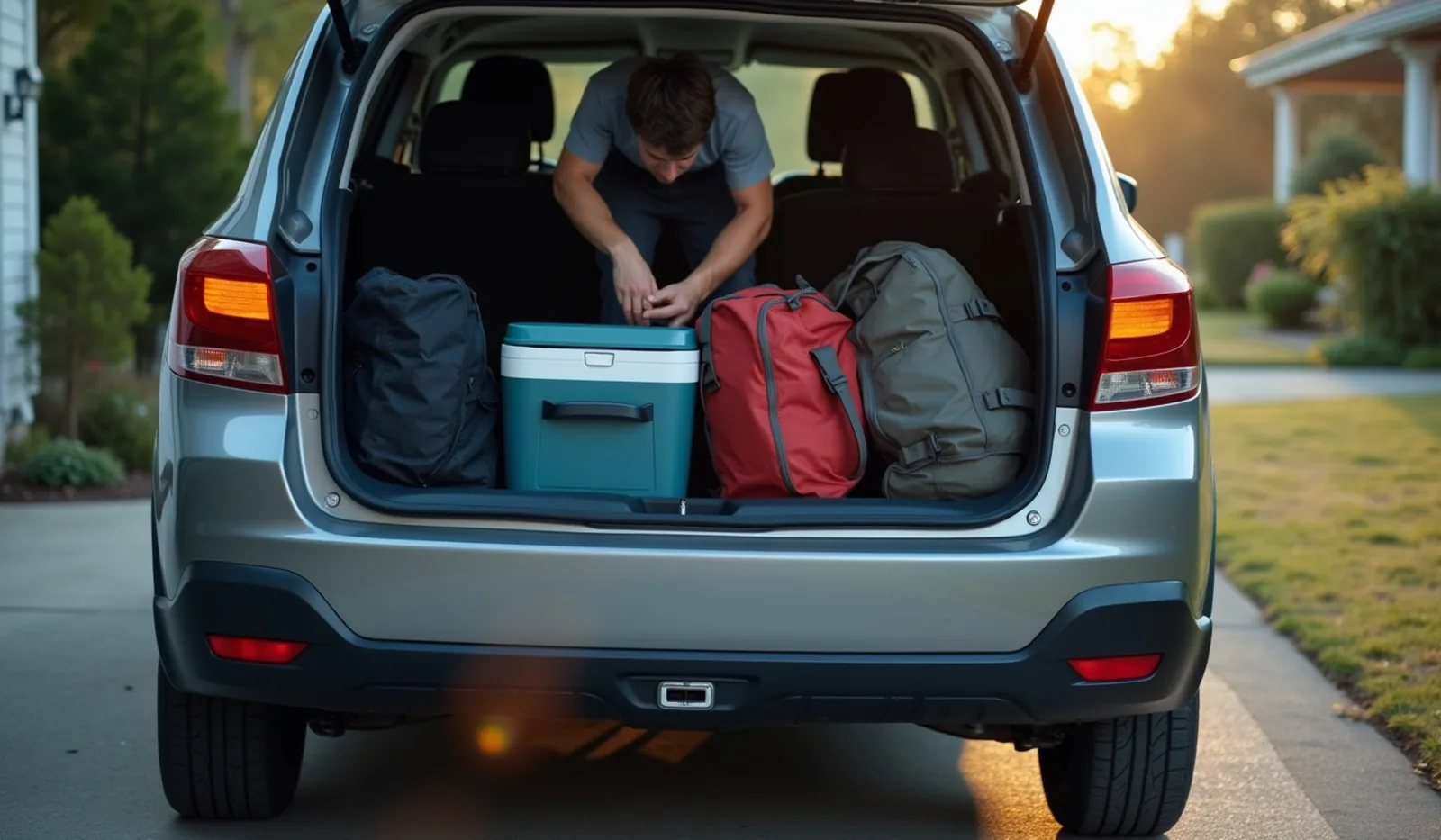
- A cooler with drinks and perishables, plus a bag of non-perishable snacks within reach of the seats.
- Plenty of water for everyone — easy to forget, essential to have.
- A mix of snacks — some healthy, some treats — and mess-friendly choices for kids. Keeping everyone fed and hydrated prevents most on-the-road grumpiness before it starts, and saves real money over stopping constantly.
Set up for comfort and sanity
Long hours in a car are their own challenge, so plan for the time as much as the distance:
- Entertainment — a good playlist or two, podcasts or audiobooks for the driver, and downloaded shows, games, or activities for passengers (especially kids), since you can’t count on signal.
- Comfort items — pillows, a blanket, sunglasses, phone chargers and a car adapter, and anything that makes hours in a seat more bearable.
- Navigation sorted — set your route and, importantly, download offline maps for areas that may lose signal, so a dead zone doesn’t leave you lost.
Plan the drive itself
Finally, think about the shape of the day. Build in regular breaks — every couple of hours to stretch, use the bathroom, and swap drivers — because a tired, stiff driver is a dangerous one, and kids need to burn off energy. Have a rough sense of your stops and where you’ll be around meals. And don’t over-schedule: leaving room for the good roadside surprise is half the point of driving. Starting rested and giving yourself margin beats racing to make time.
Road trips reward preparation more than almost any other kind of travel. Get the car checked and stocked with an emergency kit, pack your own food and water, set up comfort and entertainment for the long haul, and build in regular breaks. Cover those and the drive becomes the fun part, not the part you endure.