A toilet can look perfectly clean and still not be. A quick swipe of the brush around the visible bowl and a wipe of the seat handles the part everyone sees, but the parts that actually make a toilet gross — and the parts that make it smell — mostly aren't visible at all. They're tucked under the rim, sitting right at the waterline, or trapped inside the tank behind the flush handle. None of it takes long to fix once you know where to look; it just takes a slightly different routine than most people run.
The Rim Hides More Than You'd Think
Most toilets flush through a ring of small holes or slots tucked under the bowl's rim, and that's exactly where mineral deposits, mold, and bacteria build up fastest — out of sight, out of the main water flow, and rarely touched by a standard toilet brush that only reaches the bowl's open surface. An angled or L-shaped brush head solves this: tilt it up under the rim and work it in a full circle, applying real pressure anywhere it feels gritty or slick. If the brush alone doesn't cut through what's built up, an old toothbrush dipped in the same cleaner gets into the individual holes far more precisely than a bowl brush ever can.
The Ring Soap Can't Touch
The stubborn ring at the waterline isn't dirt, it's mineral scale from hard water, and no amount of scrubbing with a regular cleaner fully removes it — the same way scrubbing harder doesn't remove a hard-water stain on a shower door. What works is a mild acid: distilled white vinegar poured directly onto the ring and left to sit for a few hours (overnight for a stubborn one) softens the mineral enough that a brush or a wet pumice stone finishes the job in a couple of passes. A pumice stone is the one physical tool that's safe to use directly on porcelain — as long as it stays wet the whole time, it won't scratch the glaze, but a dry stone will.
The Tank Nobody Opens
The tank behind the bowl is sealed, dark, and almost always damp, which makes it a near-perfect environment for mold and mildew to grow along the waterline and the underside of the lid — and most people never lift the lid to check. A look every few months is worth it: if you see pink, black, or gray buildup, drain the tank as low as it'll go, scrub the inside walls and the flush valve with a stiff brush and a diluted bleach solution, then let it refill and flush a few times before using the toilet again. This isn't a job that needs doing often, but it's the one hidden spot most cleaning routines skip completely.
The Base, the Hinges, and the Floor
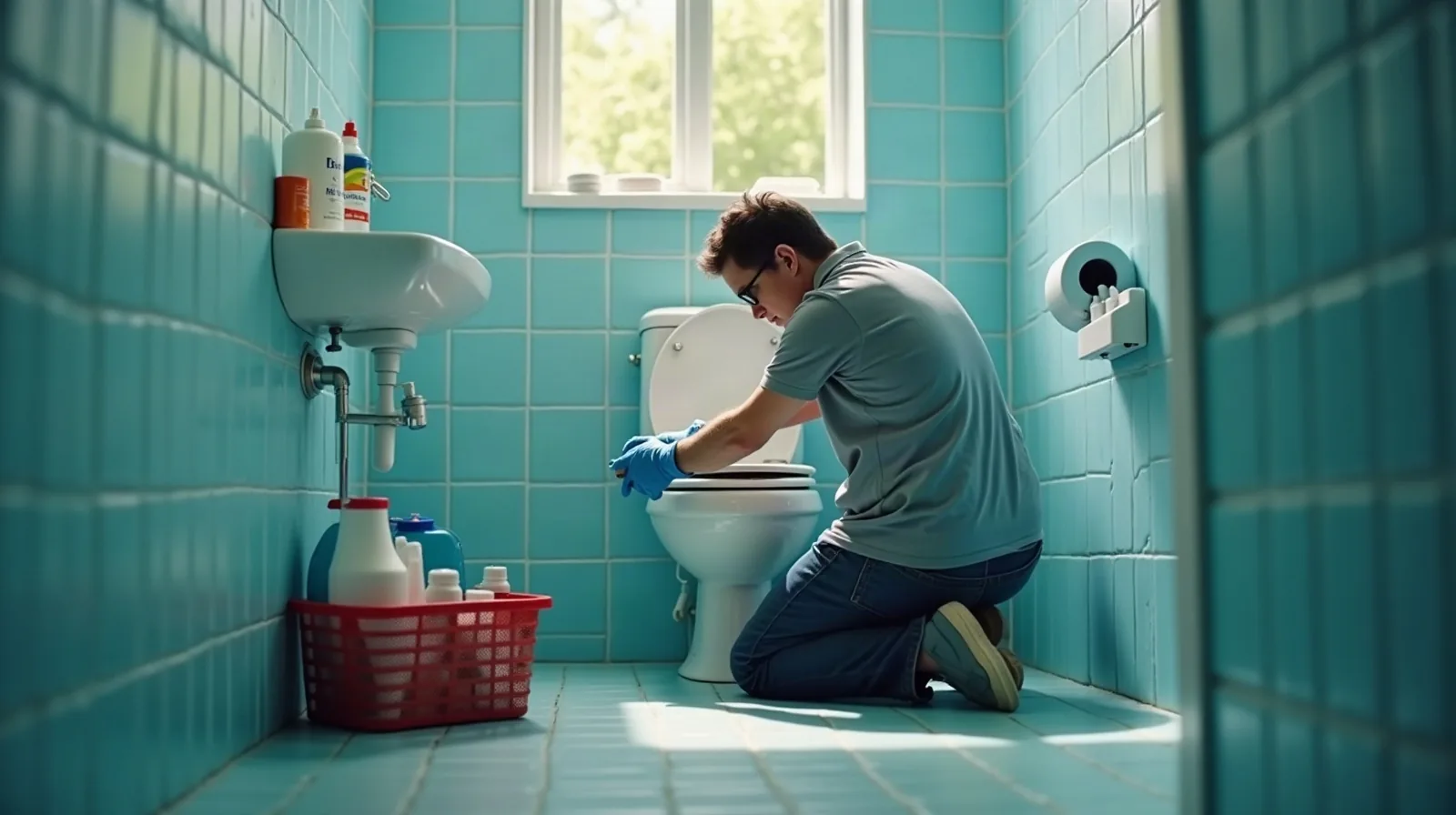
The floor-level connection where the toilet meets the tile, and the hinges holding the seat to the bowl, collect a surprising amount of grime — splashes, dust, and moisture that settle in a spot most people wipe around rather than wipe. A disinfecting wipe, or a cloth dampened with cleaner, run around the base, into the crevice where porcelain meets floor, and underneath both hinge covers (most lift or unclip with a light press) removes the buildup and the odor source along with it. This is also the fastest way to make an older toilet look and smell newly cleaned, since it's usually the most neglected surface in the whole routine.
How Often, Really
A toilet doesn't need a full deep clean every single time. A quick wipe of the seat, lid, and handle takes under a minute and is worth doing every few days, especially in a busy household. A real clean — bowl, rim, base, and hinges — once a week keeps everything from building up in the first place. The ring and the tank are the once-in-a-while jobs: treat the waterline ring whenever it's visibly forming, before it has time to harden further, and glance inside the tank every couple of months. Spread out that way, none of it feels like a chore — it's a five-minute weekly habit plus two occasional checks, and the toilet stays genuinely clean instead of just looking that way.
None of this requires anything more than a brush, a bottle of vinegar, and a few extra minutes in the right spots. Reach under the rim instead of stopping at the bowl's visible surface, treat the waterline ring with vinegar instead of scrubbing it in vain, check the tank a few times a year, and wipe the base and hinges every time you clean. Do that consistently and the toilet stops being the fixture that always looks a little off no matter how much you scrub — it just gets, and stays, clean.