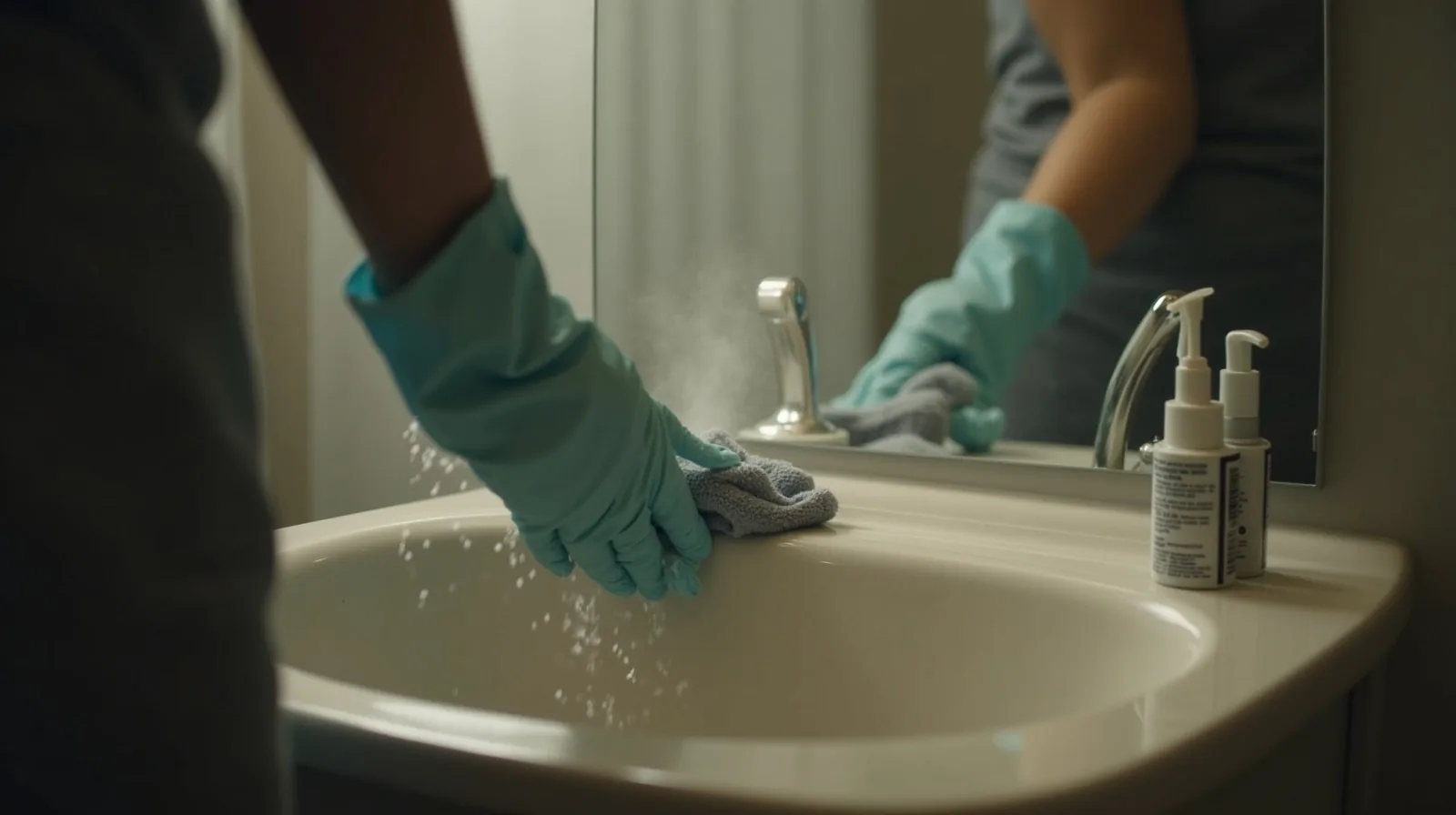
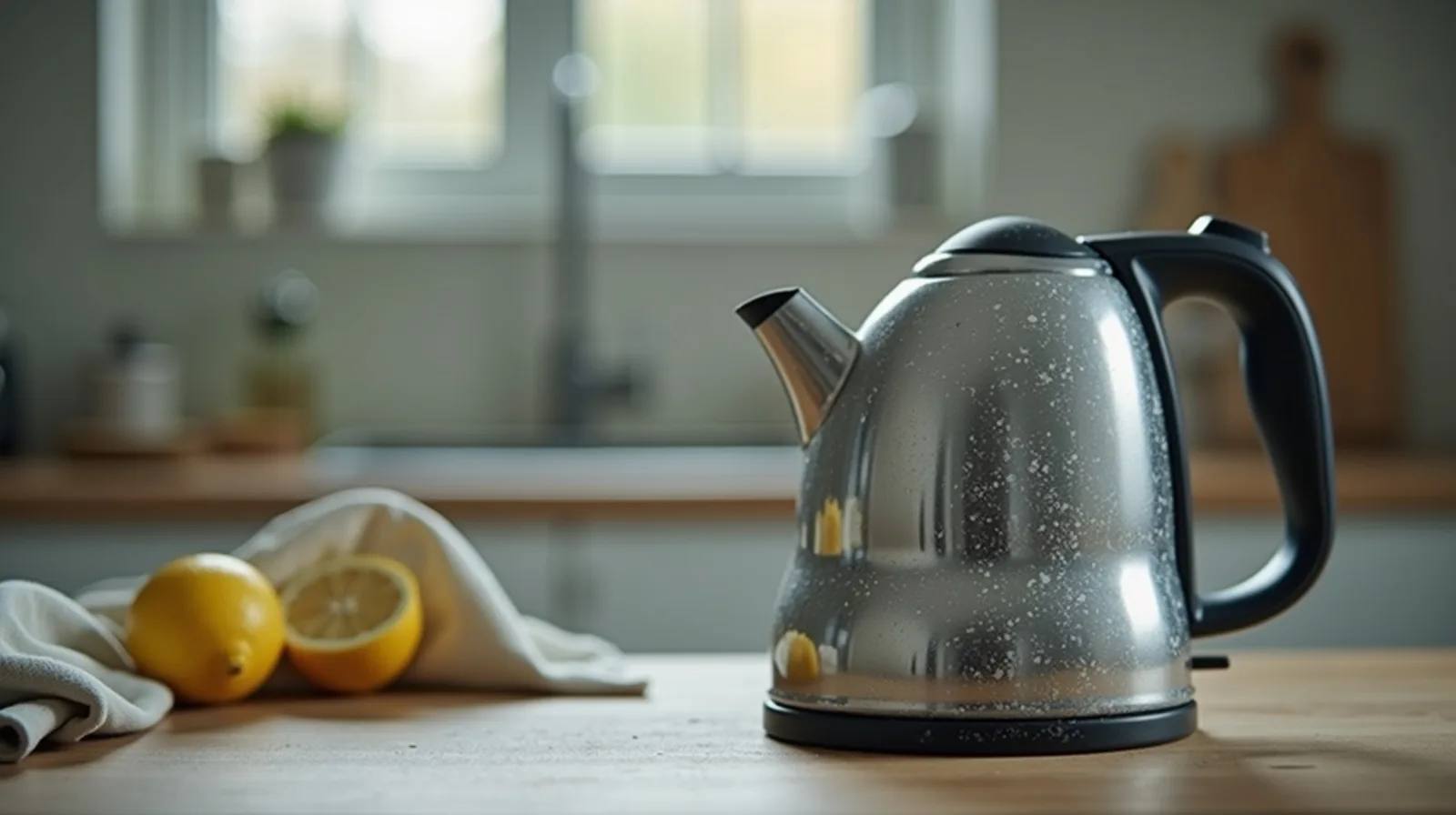
You wipe the faucet, the shower glass, or the kettle, and the cloudy white film just laughs at you. You scrub harder, try a stronger spray, maybe attack it with a scouring pad — and either nothing happens or you scratch the surface. The reason is simple and it changes everything: hard-water stains aren't dirt. They're mineral, and you can't wipe away a mineral. You have to dissolve it.
What those white crusts actually are
Hard water carries dissolved minerals, mainly calcium and magnesium. When the water dries or evaporates, the water leaves and the minerals stay behind, hardening into the chalky scale (limescale) you see on faucets, glass, tiles, and inside kettles. Because it's a hardened mineral bonded to the surface, ordinary soap and elbow grease do almost nothing — and abrasive pads just grind scratches into your fixtures while barely touching the deposit.
What actually removes it: a mild acid
Minerals like these dissolve in mild acid. That's the whole secret, and you probably have the acid already: plain white vinegar, or the juice of a lemon. The acid breaks the mineral bond so the scale wipes away with almost no effort. The trick is contact time — a quick spray-and-wipe won't work, because the acid needs a few minutes to do its job.
- Flat surfaces (glass, tile, chrome): soak a cloth or paper towel in vinegar, lay it directly on the deposit so it stays wet against the surface, and leave it ten to fifteen minutes. Then wipe — the scale comes off easily.
- Faucets and taps: for crusty buildup around the base and aerator, wrap the vinegar-soaked cloth around it, or fill a bag with vinegar and tie it over the tap so the whole fixture soaks.
- Kettles and inside surfaces: fill with a vinegar-water mix, let it sit (or gently warm it), then rinse thoroughly. The interior scale lifts away.
Where acid makes things worse
Here's the part that saves you from an expensive mistake: acid is great on glass, chrome, ceramic, and most tile, but it can etch and permanently dull natural stone like marble, granite, and travertine. Never reach for vinegar or lemon on a stone countertop or stone tile — you'll trade a water spot for a dull, rough patch that won't polish out. For stone, use a cleaner made for that stone instead. Also go gentle on any delicate finish and always rinse well afterward.
Stop the stains from coming back
Since the deposits form when hard water sits and dries, the durable fix is to not let it sit. A quick squeegee of the shower glass after a shower, a wipe of the faucet after you're done at the sink, and drying the kettle exterior all prevent the minerals from ever accumulating. It sounds like extra work, but a five-second wipe beats a fifteen-minute soak every time — and the fixtures stay clear on their own.
Once you know it's mineral, not mess, the whole job gets easier. Stop scrubbing, start dissolving, keep the acid off your stone, and wipe surfaces dry before the water can leave its mark.