Leftovers have a reputation problem: rubbery chicken, soggy fries, rice that’s hard at the edges and cold in the middle. Most of that isn’t the food’s fault. Reheating is mostly about putting back what storage took away — moisture, crispness, even heat — and each kind of food loses something different. Match the method to the food, and yesterday’s dinner can taste nearly as good as the first night.
The safety basics before the technique
Reheating is also the last safety checkpoint, so a few rules come first:
- Get it hot all the way through. Leftovers should reach 165°F in the center. A quick instant-read thermometer check beats guessing, especially for thick casseroles and stuffed foods.
- Reheat only what you’ll eat. Every round of cooling and warming gives bacteria another chance. Portion out a serving and leave the rest cold.
- Mind the clock on both ends. Refrigerate leftovers within two hours of cooking, and plan to eat them within three to four days. Frozen food keeps longer, but quality fades.
- Bring soups and sauces to a full bubble. A gentle simmer for a minute or two is a better signal than steam alone.
The microwave: fast, if you fix its two flaws
A microwave heats unevenly and dries food out. Both problems have easy fixes:
- Spread it out. Pile food in a shallow layer on the plate, with the thickest pieces toward the edge and a gap or dip in the middle. A heaped mound stays cold in the center.
- Cover it, and add moisture. A loose lid or an inverted plate traps steam. For dry foods like rice or bread, lay a damp paper towel on top.
- Use medium power and stop to stir. Fifty to seventy percent power in short bursts, with a stir or a flip in between, heats far more evenly than one long blast on high.
- Let it stand. Heat keeps moving for a minute after the timer ends. Resting evens out the cold spots.
The skillet and oven: where texture comes back
When the food had any crispness or browning to start with, the microwave is the wrong tool. Dry heat brings it back.
- Pasta, rice, and stir-fries: a skillet with a splash of water or a little oil, stirred over medium heat. The water turns to steam and loosens clumps, then cooks off.
- Pizza: a dry skillet over medium heat for a couple of minutes crisps the bottom, then a lid for a minute melts the cheese on top.
- Roasted vegetables and fried foods: a hot oven or toaster oven, around 400°F, spread on a sheet pan in a single layer. Crowding them steams them instead.
- Casseroles and lasagna: covered with foil at about 350°F so the top doesn’t dry out, then uncovered for the last few minutes to bring back the crust.
Foods that need special handling
- Rice: cool it quickly after cooking and refrigerate it within an hour or two. When reheating, add a spoonful of water, cover, and make sure it’s steaming hot throughout.
- Chicken and other lean meat: slice it, then warm it gently with a little broth or sauce in a covered pan. Whole pieces dry out fast on high heat.
- Fried food: an air fryer or hot oven on a rack lets air reach every side. The microwave turns breading limp.
- Steak and roasts: a low oven, around 275°F, with a splash of liquid in a covered dish keeps the middle from overcooking while it warms.
- Soup and stew: a pot over medium heat, stirred, with a splash of water or broth if it has thickened overnight in the fridge.
- Bread, rolls, and tortillas: a few minutes wrapped in foil in a warm oven, or a dry skillet for tortillas.
Store it so it reheats well
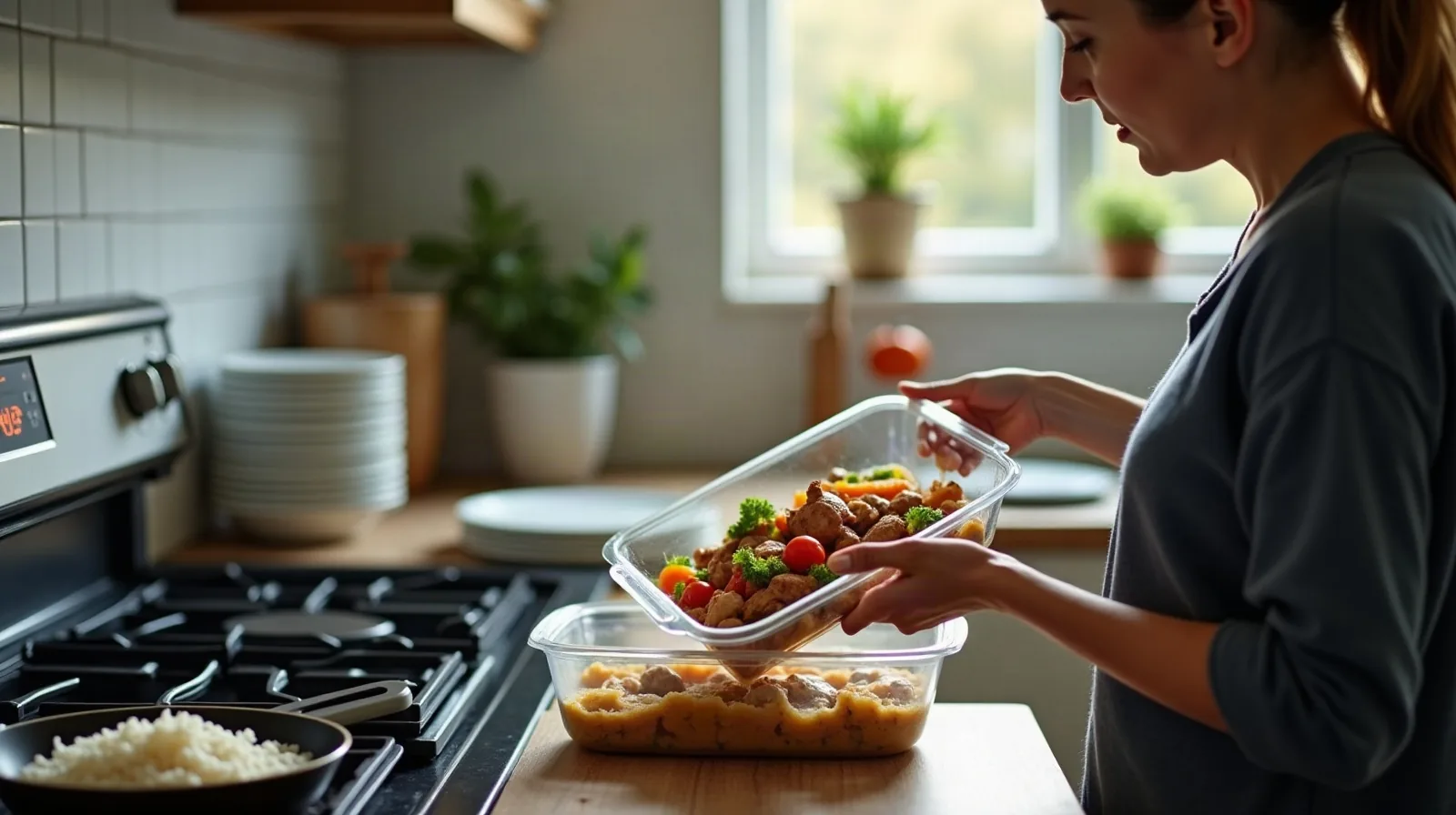
The reheat starts when you pack the leftovers. Cool food in shallow containers so it chills fast. Keep sauces separate from crisp items when you can, and store components apart — the chicken, the rice, the vegetables — so each gets the method it needs. A little extra liquid in the container for pasta and grains also pays off later. Date the lid, and when in doubt about how long something has been sitting, don’t reheat it.