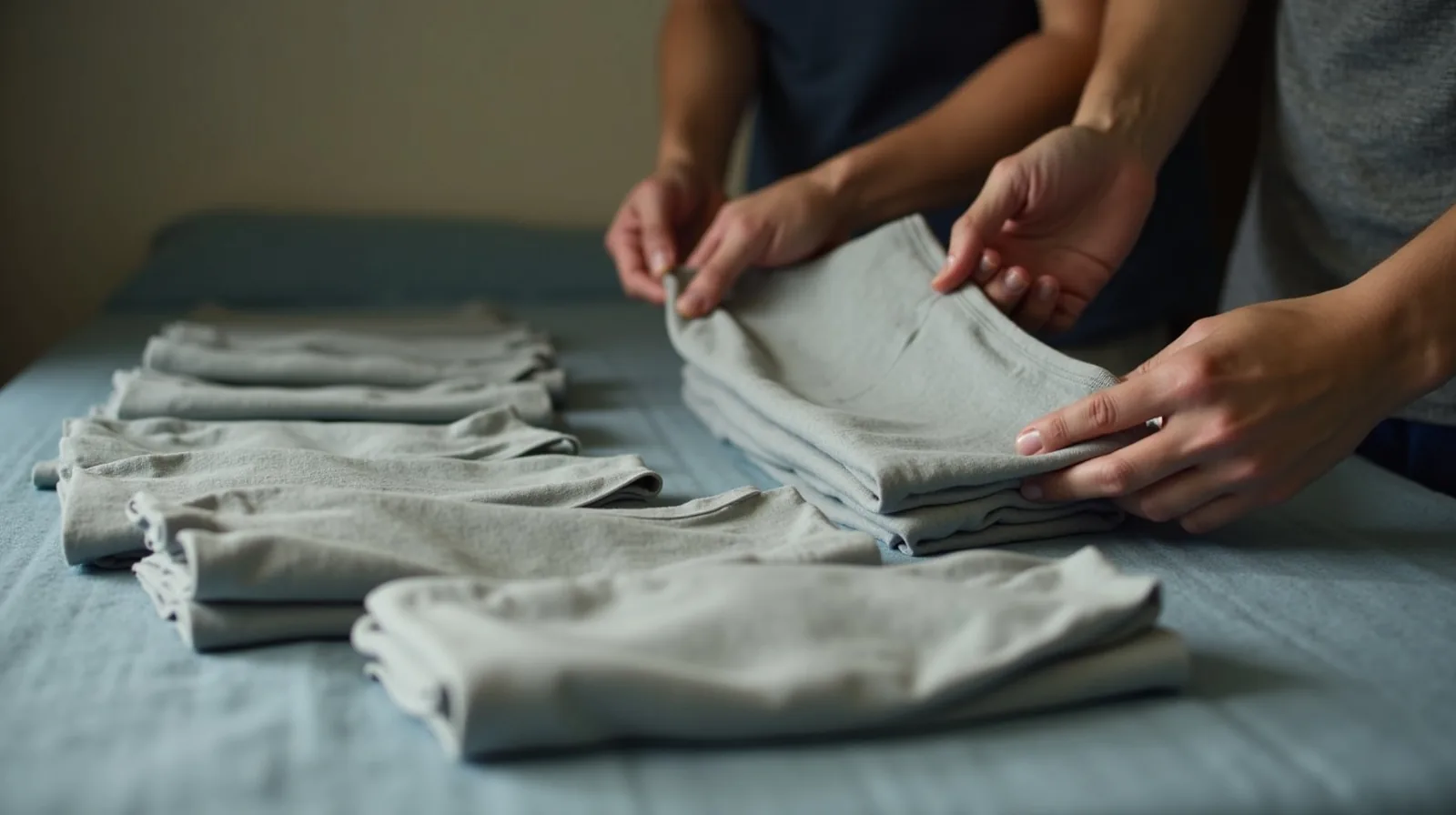
Clutter almost never arrives as a single big mess. It accumulates — a jacket over a chair, mail on the counter, a toy on the stairs, a charger on the table — each one small enough to ignore, until one day the whole room reads as chaotic and you can't point to when it happened. The professionals who reset homes for a living know that fighting the pile-up requires a habit, not a heroic weekend. The simplest one is the one-basket rule.
The rule, in one sentence
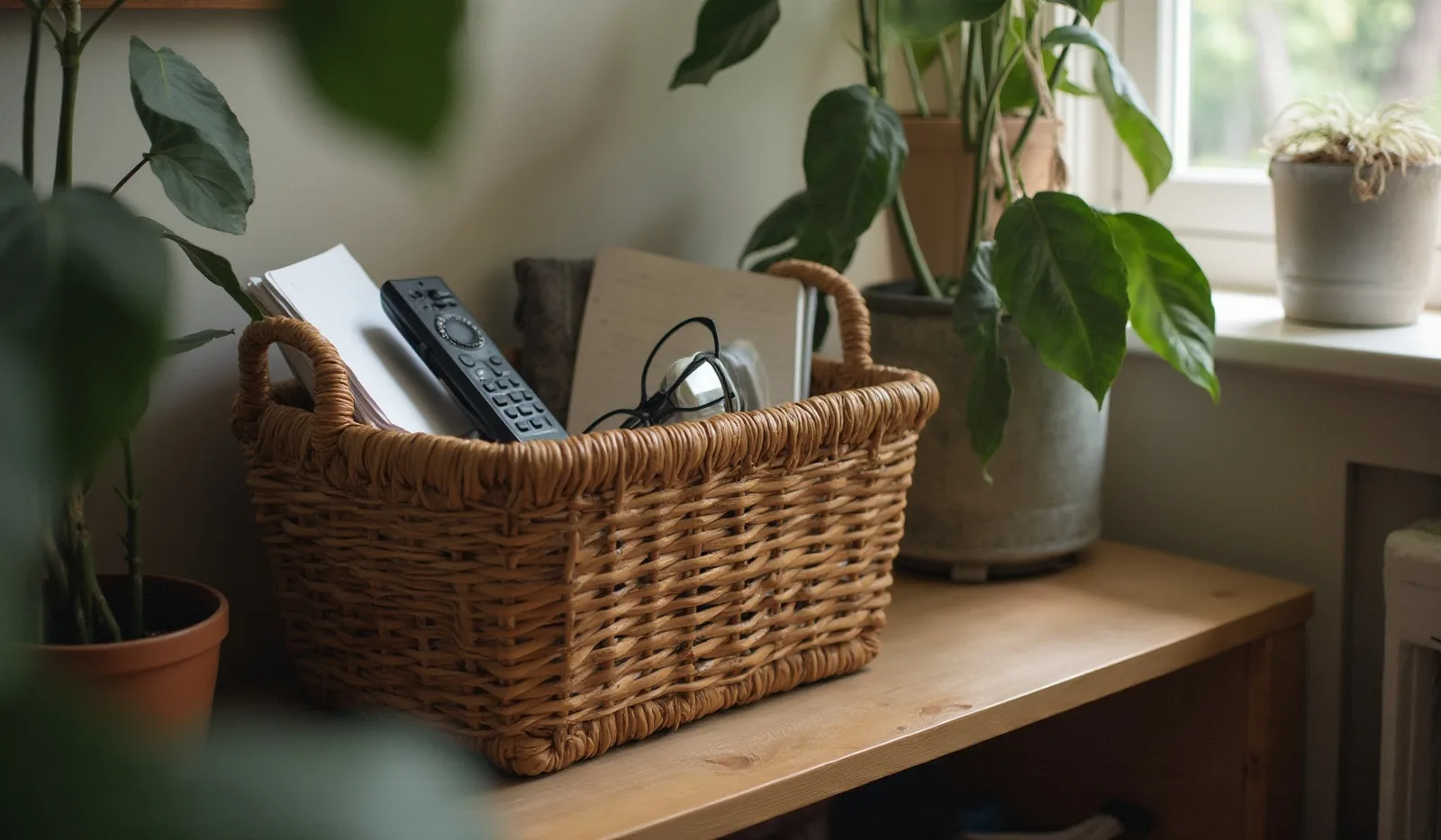
Put one attractive basket in each room that tends to collect clutter, and let it be the official home for things that don't yet have one — the daily drift of stuff in transit. That's it. Instead of items scattering across every surface, they gather in a single, contained, on-purpose spot.
Why a basket beats willpower
“Just put things away immediately” is good advice that nobody follows, because in the moment you're carrying groceries, answering a text, and letting the dog in. The basket lowers the bar to something you'll actually do: not put it away, just put it in the basket. One motion, no decisions. The clutter still gets corralled, and — crucially — the surfaces stay clear, which is what makes a room feel calm.
How to set it up
A few things make the difference between a helpful basket and just another pile:
- One per room, in the drift zone. Put it where clutter already lands — the entryway, the kitchen counter's end, the bottom of the stairs. You're not fighting the habit, you're catching it.
- Make it look intentional. A basket you like looks like decor, not mess. That matters — an ugly bin gets ignored; a nice one gets used.
- Give it a size limit. The basket is the boundary. When it's full, that's the signal to empty it — not to get a second basket.
The five-minute round that makes it work
A basket that only fills up is just a slower pile. The habit that completes the system is a short daily round: once a day — many people do it right before bed — carry each basket through and return its contents to where they actually live. Because everything's already gathered, this takes a few minutes instead of the half-hour it would take to hunt down strays one by one. Clear baskets, clear surfaces, fresh start tomorrow.
Why it keeps working when other systems fail
Most organizing systems fail because they ask you to make decisions at the worst possible moment — where does this go? — when you're busy and tired. The one-basket rule separates the two jobs: collecting happens instantly all day with zero thought, and deciding happens once, in a calm five-minute pass. Splitting them is the whole secret. It's why a fifteen-dollar basket outperforms a closet full of organizers you have to think about.
Start with one basket in the room that drives you craziest — usually the entryway or the kitchen. Live with it for a week and do the nightly round. Once you feel a room stay calm on its own, you'll want one everywhere.