
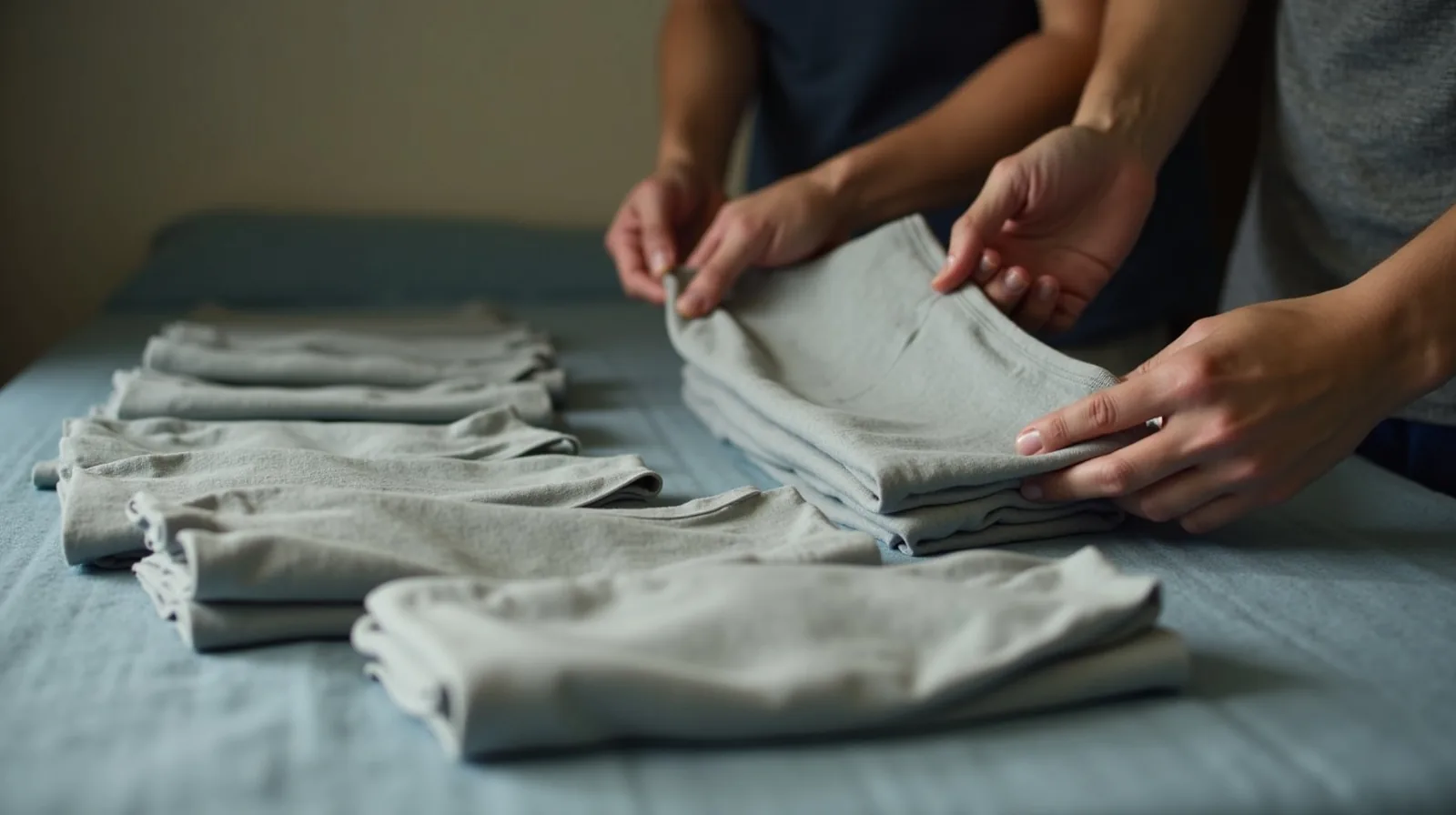
Open a typical clothes drawer and you'll find a stack — shirts piled flat, the ones you actually wear on top, the rest slowly crushed and forgotten at the bottom. Stacks waste space and hide everything but the surface layer, which is why you keep re-wearing the same three things. The fix is to stop stacking and start filing: fold each item so it stands upright, like books on a shelf. Suddenly you see every piece at once, you fit noticeably more in the same drawer, and it closes without a fight.
Why upright beats stacked
Filing works for two reasons. First, visibility: when every item stands on its edge, one glance shows you the whole drawer, so you wear more of what you own instead of digging. Second, density: upright folds are compact and uniform, so they pack tighter than a lumpy stack and don't collapse into each other. A drawer that used to hold ten shirts comfortably holds fifteen, and it stays neat because pulling one out doesn't topple the rest.
The basic fold (works for most tops)
Almost everything foldable becomes a tidy standing rectangle with the same moves: fold the item into a long strip about as wide as your hand, then fold that strip over on itself two or three times into a small, firm bundle that can stand on its own. The goals are a smooth outer face and enough firmness to keep it upright. A too-loose fold flops; a too-tight one wrinkles. After a few tries your hands find the size that fits your particular drawer, and then it's automatic.
The awkward stuff
A few items refuse to cooperate, but each has a trick:
- Bulky sweaters and hoodies get too thick to file neatly and can stretch on hangers. Fold them the same way but into a slightly larger bundle, and give them their own drawer or a deeper bin so they're not fighting thinner items for space.
- Fitted sheets — the eternal enemy. Tuck the corners into each other to square off the elastic edge, fold into a rectangle, and store the whole sheet set tucked inside its matching pillowcase so nothing wanders.
- Socks and underwear do best filed in a divided drawer rather than balled up. Balling stretches sock cuffs over time; folding them flat and standing them in a small bin keeps pairs together and cuffs happy.
Give the drawer some structure
Filing works even better with dividers. Inexpensive drawer separators — or even repurposed small boxes — create lanes that keep the upright files from sliding into one big jumble when the drawer opens and closes. Group by type: tees in one lane, long-sleeves in another, so refilling after laundry is mindless.
Keeping it up
The honest catch is that filing takes a little more care on laundry day than dropping a stack in. But it pays that time back every morning, and it's easy to maintain once the drawer is set up: fold straight from the dryer, drop each file into its lane, done. Because the system makes the drawer look good, you're also more motivated to keep it that way — a tidy drawer resists becoming a messy one.
Try it on a single drawer — your t-shirts are the easiest place to start. Refold the whole drawer into upright files once, and the next time you go to grab a shirt, you'll see the entire lineup at a glance and wonder why you ever stacked them.