Shoes rarely die of dirt. They die of cleaning — a hot wash that melts the glue, a harsh spray that strips the color, a sunny windowsill that warps the sole. The good news is that a handful of gentle steps, matched to what the shoe is made of, rescues most pairs, and none of it needs a specialty kit.
Start by Reading the Shoe, Not the Dirt
Before anything gets wet, work out what you’re cleaning. Check the label inside the tongue for care notes, then look at the upper: woven fabric and canvas, smooth or coated leather, suede or other napped material, or knit and mesh. Each reacts differently to water and soap. Then check the glue lines where the sole meets the upper. If those are already peeling, keep water use minimal and cleaning short.
A quick test helps on anything colorful: dab a damp white cloth on a hidden spot, like inside the tongue, and see whether dye comes off. If it does, stick to dry brushing and spot cleaning.
Dry-Brush First, Always
Most of the grime on a shoe is loose grit, and wetting it just turns it into mud that grinds into the fabric. Pull out the laces and insoles, knock the soles together to dislodge stones, and brush the whole shoe with a dry soft brush — an old toothbrush for seams and a clean paintbrush for tight spots. Pay attention to the welt, the narrow strip where the upper meets the sole, because that is where dirt hides. This one step often removes half the visible mess.
Canvas, Knit, and Mesh: Soapy Water and a Soft Brush
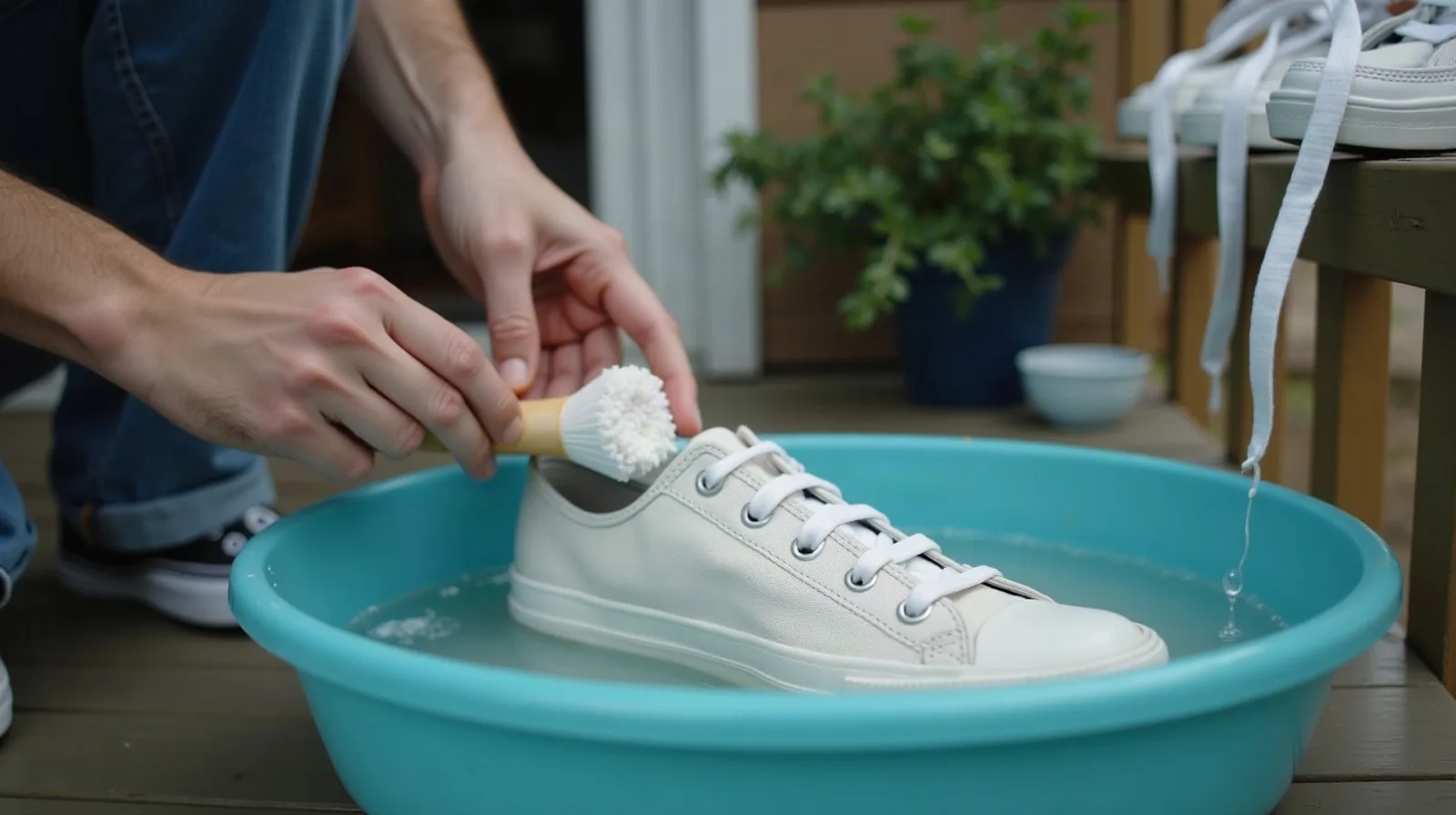
For fabric sneakers, mix a few drops of dish soap into a bowl of cool water. Dip a soft brush, shake off the excess, and scrub in small circles, working from the top of the shoe down toward the sole. Keep the foam on the surface rather than soaking the inside, since a wet lining takes ages to dry and can smell. Wipe away the suds with a clean damp cloth, and repeat on stubborn spots.
- Stubborn stains: a paste of baking soda and a little water, left for ten minutes before brushing, lifts most scuffs and everyday grime.
- Rubber toe caps and midsoles: a melamine sponge or a dab of baking soda paste on a toothbrush often removes scuff marks.
- Whites: avoid bleach, which can leave yellow patches on both fabric and glue. Repeated gentle cleaning works better.
Leather and Faux Leather: Wipe, Don’t Soak
Smooth leather needs very little water. Wipe the shoe with a cloth dampened in mildly soapy water, follow with a second damp cloth to rinse, and let the shoe dry fully before doing anything else. Once it’s dry, a small amount of leather conditioner on a soft cloth keeps the surface from cracking. Suede and nubuck are different: they need a dry suede brush or eraser and almost no moisture at all, since water leaves dark marks on them.
Laces, Insoles, and Soles
Laces and insoles are the quick wins. Soak laces in warm soapy water for twenty minutes, rub them against themselves, rinse, and hang them to dry; tuck them into a small mesh bag if you’d rather use the washing machine. Insoles should be wiped with soapy water on a cloth rather than submerged, because soaked foam stays damp for days. Soles can be scrubbed with a stiffer brush and plain soapy water, with a toothbrush for the grooves.
Machine washing is a last resort. If the care label allows it, remove the laces and insoles, place the pair in a pillowcase with a couple of towels to cushion the drum, and choose a cold, gentle cycle. Skip the dryer entirely.
Dry Them Slowly and Stuff Them
Drying is where most good cleaning gets undone. Heat from a dryer, radiator, or direct afternoon sun can shrink fabric, warp soles, and loosen glue. Instead, stuff each shoe with crumpled paper towels or clean white cloth to hold the shape and pull out moisture, then set the pair in a well-ventilated spot out of direct sun. Swap the stuffing once after an hour or two, since it gets damp. Most shoes take a full day to dry, so plan the cleaning for an evening and wear a different pair tomorrow.
Keep Them Fresh Between Cleanings
A few small habits stretch the time between deep cleans. Rotate between two pairs so each can air out for a day, let shoes dry before putting them in a closed closet, and sprinkle a little baking soda inside overnight to neutralize odor, tapping it out in the morning. A quick dry-brush after wearing them outdoors keeps grit from setting in, and a wipe of the soles at the door keeps it off the floors.