Most people can’t say where their home’s main water valve is. Fewer know which breaker kills the kitchen, or whether the gas meter has its own shutoff. That’s fine right up until the moment a supply line splits behind the toilet, an outlet starts to smell hot, or a repair person asks, “Can you shut the water off for me?” At that point, every minute spent hunting is a minute water spreads across a floor. The fix is a one-time, ten-minute walk-through done on a calm day.
The Three Shutoffs Worth Knowing
Every home has the same three utility lifelines, and each one has a spot where it can be stopped at the source:
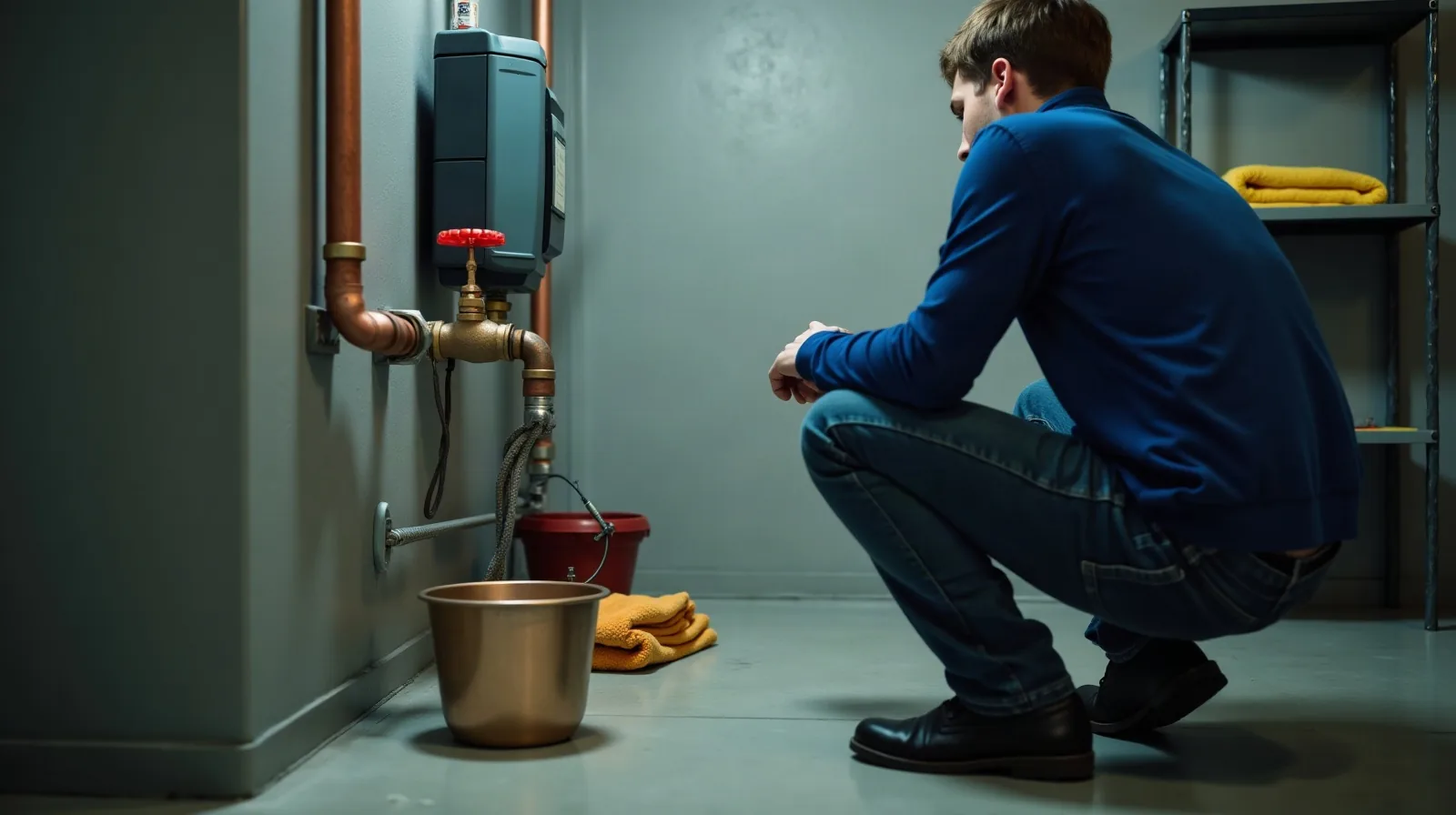
- Water. The main shutoff is a valve where the supply line enters the house — typically in a basement, a utility room, a crawlspace, a garage wall, or a closet near the water heater. In mild climates it can sit outside in a ground-level box near the water meter. Look for a round wheel handle or a lever handle on a pipe, usually close to the meter.
- Electricity. The main breaker is the largest switch in the breaker panel, usually at the top, often labeled “main.” Panels hide in garages, basements, hallways, and utility closets. Flipping it cuts power to the entire house.
- Gas. If the home uses natural gas or propane, the main valve sits at the meter or tank. A quarter-turn valve with a flat tab is open when the tab runs parallel to the pipe and closed when it sits crosswise. Gas is the one shutoff where the rule changes: more on that below.
Renters in apartment buildings often have these in a shared location, but the in-unit pieces still matter — most units have an individual breaker panel, and a shutoff under every sink and behind every toilet.
Test the Water Valve Once
Finding the valve is half the job; the other half is knowing it actually turns. Valves that haven’t moved in years can seize with mineral buildup, and the moment of an emergency is a terrible time to discover that a wheel handle snaps off in your hand. A gentle test fixes that:
- Turn the main off slowly. A wheel handle turns clockwise to close; a lever closes when it sits crosswise to the pipe. Stop if it fights you — forcing a stuck valve risks cracking it.
- Open a faucet at the lowest point in the house. If the water slows to a trickle and stops, the valve is closing fully. A faucet that keeps running steadily means the valve isn’t sealing and needs a plumber’s attention.
- Turn it back on gradually. Open the valve fully, then back it off a quarter turn so it doesn’t freeze in place. Let the air sputter out of the faucets before closing them.
The small shutoffs matter too. Each toilet and sink usually has its own little oval-handled valve on the supply line. Turning each one a few degrees once a year keeps it from seizing, and lets a single leaking fixture be isolated without losing water to the whole house.
Know Your Breaker Panel
A panel with faded or blank labels turns a minor outage into a guessing game. A short audit fixes it for good. Bring a helper, or use a lamp plugged into the room you’re testing, and flip one breaker at a time. Note which outlets, lights, and appliances go dark, then rewrite the label in clear words — “kitchen counter outlets,” not “kit.” Large appliances like the dryer, oven, and water heater usually have their own double-width breakers.
Two habits help. First, learn which breaker serves the room that holds the most water — the bathroom or laundry room — since that’s the circuit you’d want to kill fast during a leak. Second, if a breaker keeps tripping, don’t keep resetting it. A breaker that trips repeatedly is doing its job by flagging an overloaded or faulty circuit, and it’s a job for a licensed electrician rather than a stronger-handed reset. Never open the panel’s inner cover; everything described here happens at the switches on the front.
Gas Is the Exception
For water and power, the rule is simple: when in doubt, shut it off. Gas is different. If you smell the rotten-egg odor added to natural gas, the standard guidance is to leave the house immediately, without flipping switches or using a phone indoors, and call the gas utility’s emergency line or emergency services from outside. The gas company, not the homeowner, restores service afterward — turning a main gas valve back on yourself can reintroduce gas into lines that haven’t been checked.
So the useful prep for gas is different: know where the meter valve is, know that a wrench is needed on some models (and keep one nearby if so), and keep the utility’s emergency number saved in every adult’s phone. Individual appliances — the stove, the dryer, the water heater — also have their own small shutoffs on the pipe behind them, which is all most repairs ever require.
Label It and Tell People
Knowledge that lives in one person’s head isn’t much help when that person is at work. The last step takes five minutes:
- Tag each shutoff. A bright paper or plastic tag on the water valve, the main breaker, and the gas valve — the brighter, the better — makes them stand out in a cluttered basement.
- Clear the path. Keep boxes and shelving at least a few feet away from the panel and valves. A blocked panel is a code issue as well as a safety one.
- Stash the tools nearby. A flashlight, a pair of rubber gloves, and the valve wrench if one is needed. A small towel and bucket help with the water side.
- Walk everyone through it once. Teenagers, babysitters, and house-sitters can all handle a lever and a switch if they’ve seen it done. Add the locations to the family emergency notes or a note on the phone.
The payoff is quiet. Most people never use these knowledge-in-reserve skills in an emergency — but when a washing-machine hose lets go or a repair needs the water off, they turn a flooded-floor panic into a thirty-second, calm task. And since a few gallons of water a minute can do real damage before anyone finds the valve, saving even five minutes pays for the whole ten-minute setup.